

New blood donation eligibility rules took effect in Australia today, safely paving the way for gay and bisexual men and transgender people in long-term monogamous relationships to donate blood and platelets.
At the front of the queue to donate was Pride WA President Peter Foster who welcomed the recent changes to eligibility criteria.

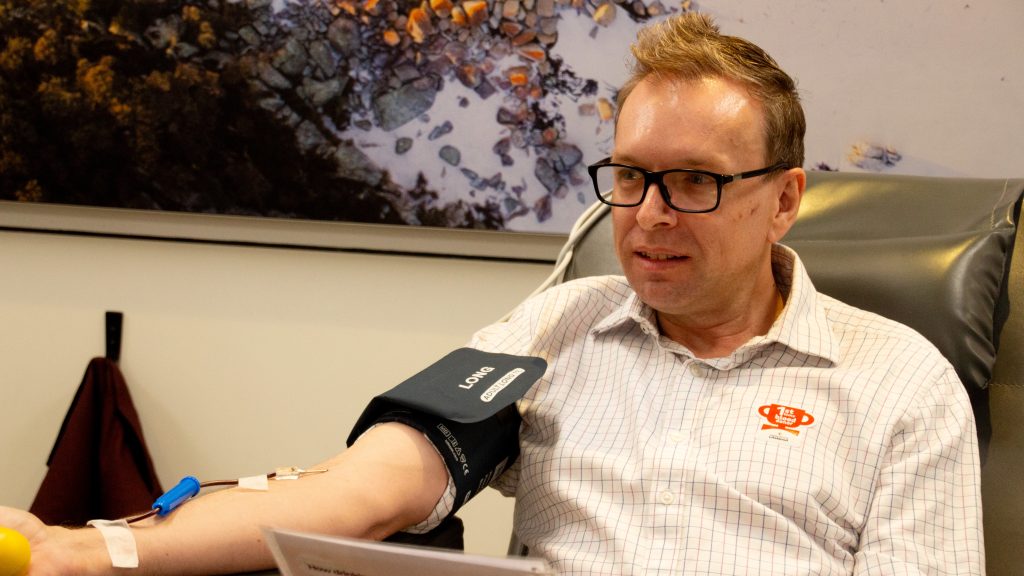
“The main reason why I wanted to come down today was to was to help save lives, but also to share to the wider community that there’s those of us in the LGBTQ community that can donate blood now.” Foster told OUTinPerth.
“They need to visit the website check their eligibility, and if they are in a monogamous relationship like I am, they may very well be eligible to come down and donate.”
Foster shared that he’d learned a lot from the staff as he went through his eligibility interview and sat in the chair for the first time.
“We know that a blood donation can save up to three lives. We are heading into winter. I understand from the staff here that they’re eager to get as many blood donations as possible.” he shared.
The physical process of giving blood took under ten minutes or the Pride Chair.
“It takes about an hour from checking in, from answering the questions, from sitting in the chair and following this, I’m going to be going to the refreshment lounge for a sausage roll. So I’m pretty excited about that!” Foster said.
From today, all donors will be asked the same sexual activity questions in the pre-donation
questionnaire, regardless of gender.
The change is part of Australian Red Cross Lifeblood’s ongoing work to make donation more inclusive while
maintaining the safety of donated blood.
It follows changes to sexual activity rules for plasma donation in July 2025, which has enabled 3000 new
donors to give close to 10,000 plasma donations to date.

Lifeblood Chief Executive Officer Stephen Cornelissen said this was an important milestone for blood
donation in Australia.
“Previous donor rules prevented many people from the LGBTQIA+ community from donating blood or platelets if they’d had sex within the past three months,” Cornelissen said.
“These latest changes mean many gay and bisexual men and transgender people in long-term, monogamous relationships will become eligible to donate blood or platelets for the first time.
“This is something we’ve been researching and working on for some time together with governments,
LGBTQIA+ advocacy groups and the broader community, and we’re excited to be welcoming many more new donors into our centres to donate blood and platelets from today.”
Cornelissen said patient safety would always be Lifeblood’s top priority, and some people will still need
to wait to donate blood.
“Under the updated rules, most people in long-term monogamous relationships will be able to donate blood, and many who remain ineligible will be able to donate plasma instead.
“We know previous rules have been difficult for people in the LGBTQIA+ community, so we’d like to thank them for their support during this journey towards a more inclusive donation experience.
“We hope many more people will feel welcomed in our donor centres from today, and sign up to become blood donors, as a result of this change.”
Lifeblood’s submission to change sexual activity eligibility rules for blood donation was approved by Australia’s regulator, the Therapeutic Goods Administration (TGA) in 2025, and included the latest research, risk modelling and community feedback.
It’s expected up to 20,000 extra donations of blood will be made each year as part of this change. Every week 33,000 donations of blood plasma and platelets are needed across Australia to help those undergoing cancer treatment, people with bleeding disorders, trauma and accident victims and many more.
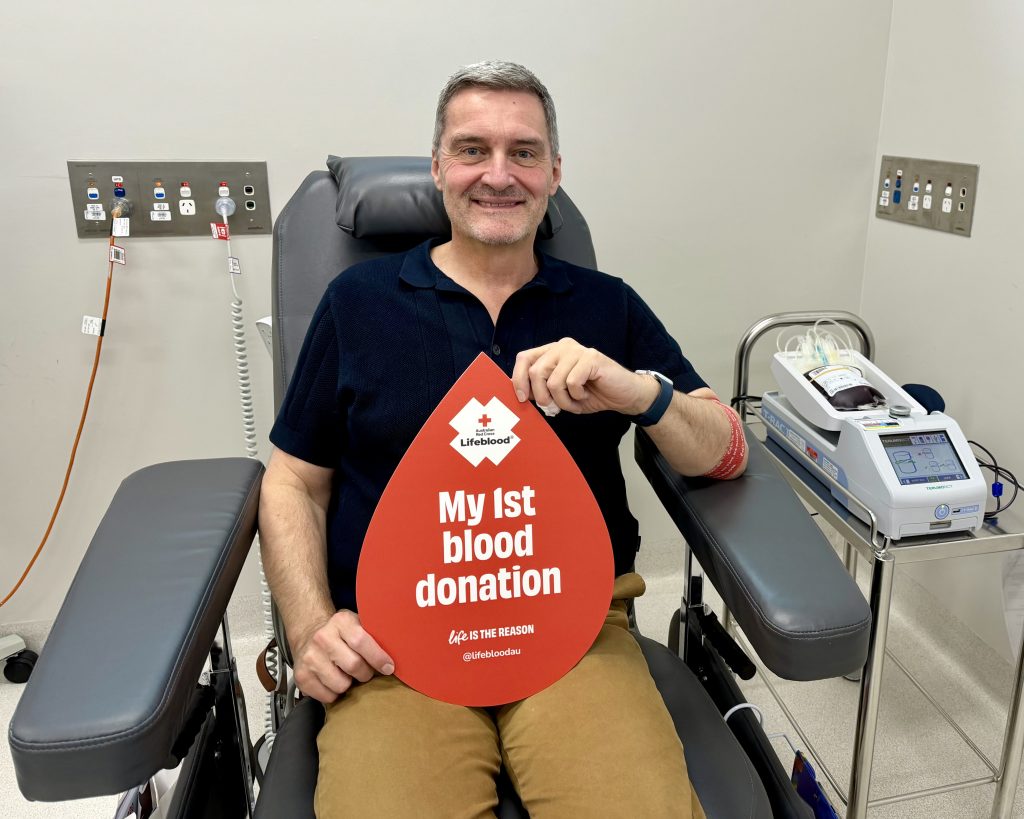
The change comes after years of lobbying for change spearheaded by the Let Us Give campaign. Veteran LGBTIQA+ rights advocate Rodney Croome has been a driving force of the push for renewed edibility rules, today he headed down to his local blood donation centre in Tasmania.
“After three decades of advocacy, and for the first time in my life, I was able to donate blood today.” Croome said.
“From today, gay men, and bisexual men and transgender women who have sex with men, are able to give blood in Australia without the traditional three-month abstinence period. All donors are now asked the same questions about sex regardless of the gender of our sexual partners.”
“I donated because I want to help other Australians in need, but also because I want to encourage other gay, bisexual and transgender Australians to donate.”
“I know some gay men are wary about donation. They might have been turned away in the past, or feel resentment about the old ban. I want my donation to encourage newly-eligible donors to put all that behind us, roll up our sleeves and give the gift of life.”
Despite the new rules, Croome says there is still room for improvement.
“There are still problems with the new donor regime. Those who may have not been monogamous in the recent past should not be subject to a six-month wait time. Three months is considered more than enough in the UK, US and Canada. It should be here too.”
“I felt excited and proud at being able to give blood and make a difference.”
“A big thank you to the staff at the Devonport Lifeblood Collection Centre for their support and to everyone who made this moment possible.”
Croome said that his years of campaigning was partly to end discrimination, but more importantly to open a door to thousand more being able to become regular donors.
“The main reason we campaigned to lift the old gay blood ban was to ensure there is more safe blood for Australians in need.”
“I urge gay, bisexual and transgender people who are newly-eligible to donate to make a booking at their local blood collection centre.” he reiterated. “It’s time for us to roll up our sleeves and give the gift of life.”
To donate blood, visit www.lifeblood.com.au or call 13 14 95