


Having Spent Life Seeking
Kae Tempest
Jonathan Cape
Walking the streets of the seaside town of Edgecliff late at night, Rothko encounters Constance, soaked to the skin, her face covered with cuts and sores. She explains that she needs to be out working the streets to make another couple of pounds, but it is difficult to attract clients because of her infected foot. After they chat for a few minutes, Rothko pulls out three twenty-pound notes and offers them to her, asking her to find shelter and spend some time out of the rain.

As Rothko returns to walking the streets, with their dog Donovan loyally following, Constance calls out, “Oi, mate.” Rothko turns.
“Are you a boy or a girl?”
“I don’t know,” Rothko replies. “Maybe both,” they say with a shrug of their shoulders.
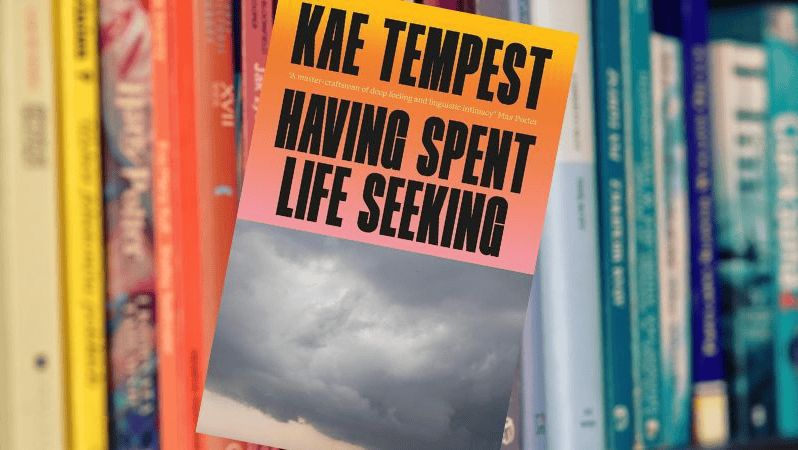
In Kae Tempest’s second novel, Having Spent Life Seeking, we follow Rothko, who lives on the edges of society. Recently released from prison, Rothko is finding it difficult to adjust to a world where so much has changed. Some people’s lives have moved on, while others have barely travelled forward at all.
Slowly, we meet the different people orbiting around Rothko: their family members, a tangled web of complicated relationships and trauma, and the other people existing on the edges of life, like Rothko — unsure of where they belong or which direction they should be heading.
Halfway through the book, we travel back decades to when Rothko was a teenager discovering the world and themselves. Cautiously stepping into friendships, sex and relationships, we rediscover these characters at a different point in their lives and gain a deeper understanding of the people they become.
Kae Tempest is a master at creating fascinating, multi-layered characters, with each one revealing another part of the story. The prolific creative has written fiction and non-fiction, poetry, plays and five albums, building a body of work that explores identity, connection and the human experience.
The world Tempest creates is grey, gloomy and often dark. As Rothko walks the streets late at night, free from the expectations and burdens of others, the novel prompts us to consider what we fail to notice in our own lives: how many people pass unseen and what stories they carry.
The intricate stories of parents, old friends and new acquaintances also encourage us to reflect on who we were, who we are, and who we might still become.