

Pauline Hanson says she is no longer campaigning against marriage equality and that gay and lesbian people are welcome in her party. However, she remains personally opposed to the Sydney Gay and Lesbian Mardi Gras and has said she believes sexuality should remain a private matter.
When Parminder Singh, a former Western Australian One Nation candidate, recently gave an interview in which he described gay and lesbian people as being mentally ill, it sparked a scramble by politicians from the right-wing party to distance themselves from his remarks, defend past and recent comments about the LGBTQIA+ community from senior party members, and navigate conflicting public messages about the party’s position.

Singh was a candidate for the Legislative Council at the last state election, and his profile remained active on the party’s website as a member of its team. That was until the ABC began asking questions about his interview with comedic provocateur Mr Sikkant, after which his profile was quickly removed.
Not only did Singh claim gay people were mentally ill, he also suggested people who were not heterosexual were the result of poor parenting.
One Nation WA leader Rod Caddies quickly told the media that Singh was not reflecting the views of the party.
“He wasn’t authorised to say them things. He was an ex-candidate, and now he’s just the same as you or any other person,” he said.
“He’s a person who is maybe still a supporter of One Nation, but he’s no longer a candidate.”
Across the political spectrum, Singh’s comments were condemned. The member for Perth, Labor’s John Carey, said the statements had the potential to affect vulnerable young people.
“It means that any young person who’s unsure of their place in the world will be a little bit more frightened, a little bit more worried about where they sit,” he said.
Some questioned whether the comments of a former candidate were newsworthy. However, One Nation has recently argued that it is now a more professional organisation than in the past. The party says candidates are subject to greater scrutiny, members with extreme views have been removed from its ranks, and it now represents everyday Australians.
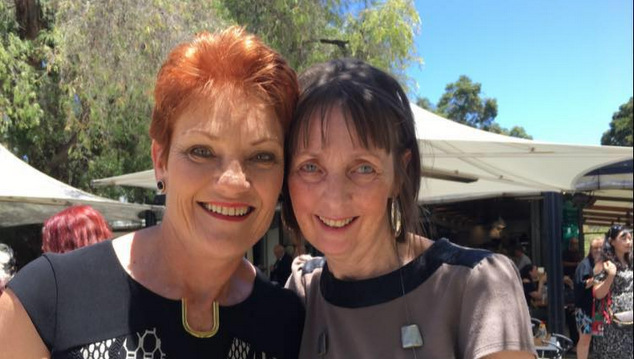
Party representatives argue it has moved on from candidates such as Michelle Meyers, who ran in the 2017 Western Australian state election.
When Meyers claimed that the LGBTQIA+ community was building support for marriage equality through a secret mind-control program similar to one developed by Nazis, the party stood by her. When she described families with same-sex parents as “fake families”, the party again defended her. When she said the sight of a rainbow made her sad because LGBTQIA+ people were sexually confused and needed therapy to change, the party once more stood by her.
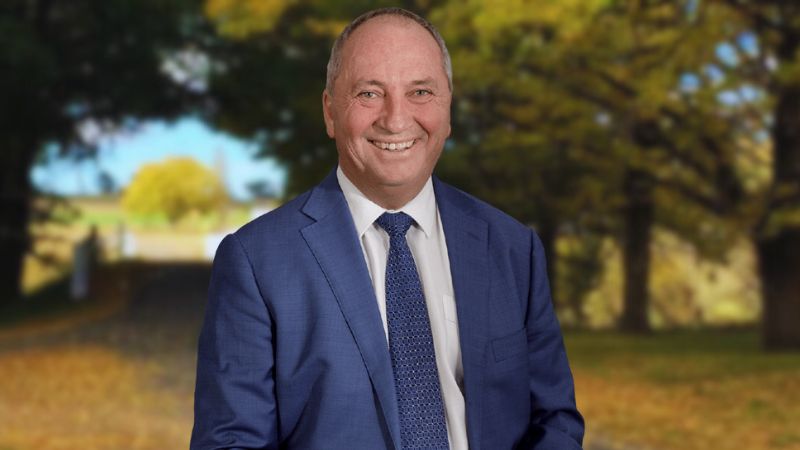
Nearly a decade later, some senior figures in One Nation are keen to argue that the party can also be a political home for LGBTQIA+ Australians.
Federal member Barnaby Joyce responded to Singh’s comments by saying that removing his profile from the website sent a message that One Nation welcomes gay people. Since defecting from the National Party to One Nation, Joyce seems to have taken up the unofficial role of explaining what the party really means when in times of trouble.
“He obviously doesn’t know One Nation because we’ve got a surprise for him. We have quite a large proportion of gay people,” Joyce said.
He then added that One Nation was “one of the gayest parties in Australia”.
Joyce, who himself once argued that marriage equality should be allowed because opposition to it could negatively affect Australia’s economy, is correct on one level. It is true that some senior figures within the party identify as LGBTQIA+, including the party’s National Director and South Australian MP Jason Virgo.
However, the party has also promoted proposals and inquiries relating to transgender issues, including measures critics argue would restrict the rights of transgender people. One Nation representatives have repeatedly called for inquiries into gender-affirming healthcare.
Singh later apologised for his comments, saying he respected everyone. However, he continued to defend his criticism of Pride events, describing them as an “advertisement” that attracts young people.
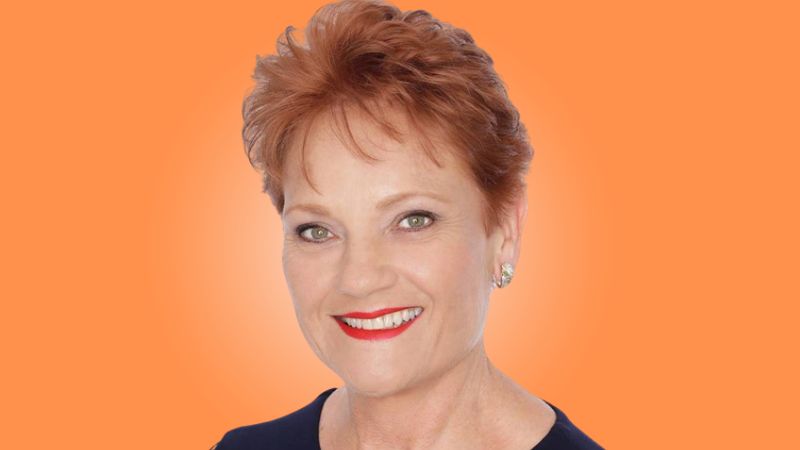
Soon afterward, party leader Pauline Hanson was asked about her own views. Hanson has been a vocal opponent of marriage equality and transgender inclusion in the past, and has for decades criticised the Sydney Gay and Lesbian Mardi Gras.
In 1996, Hanson participated in a now notorious interview on 60 Minutes in which she declared her opposition to Mardi Gras.
“I don’t like it, because it’s promoting something that is not natural,” Hanson said.
The same interview also featured Hanson’s famous “Please explain?” response when she was asked whether she was xenophobic, a phrase that later became closely associated with her political brand.
Not long afterward, Hanson became a regular subject of satire within the LGBTQIA+ community. A giant papier-mâché version of her head appeared in the Mardi Gras parade, accompanied by dancers wearing chip-inspired costumes. Satirist Simon Hunt created his Pauline Pantsdown drag persona and achieved widespread attention with the song I Don’t Like It, which sampled Hanson’s comments about Mardi Gras.
Three decades later, Hanson was again asked about her views during an appearance on News24, formerly known as Sky News.
“I still don’t like the gay Mardi Gras, but that’s my opinion,” she said.
“Have I ever been to one? No. Do I intend to go? No, I don’t.
“I think your own personal sexuality should be kept behind closed doors. It’s no one’s business to do it out there with the gay Mardi Gras anywhere.
“I know it brings a lot of tourists to the country. I know it brings a lot of money. I know all this, but that’s my personal opinion. But anyway, good luck to them if they want to do that.”
Activist Anthony Venn-Brown, who has written extensively about the intersection of religion and sexuality, criticised Hanson’s remarks, arguing that her comments effectively encouraged people to return to the closet.
“Closed doors? That’s a closet darling, been there, done that. It’s a killer,” he wrote on social media.
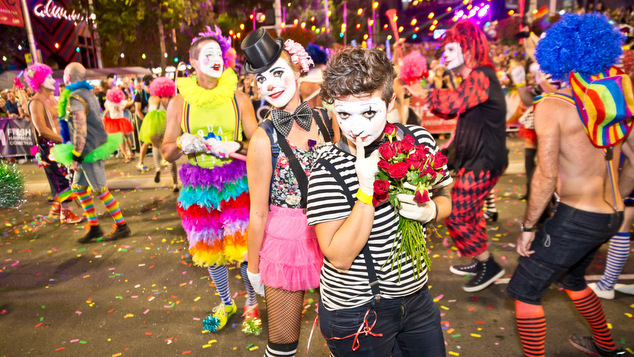
Sydney Gay and Lesbian Mardi Gras responded by publicly inviting Hanson to attend the 2027 event. Their PR department clearly missed a trick by failing to declare that they actually are the “gayest party in Australia”.
The organisation described Mardi Gras as a celebration, a protest and a commitment to the principle that LGBTQIA+ people should not be required to live their lives behind closed doors, regardless of who might prefer that outcome.
“For someone who says she’s never attended Mardi Gras, we’d argue Pauline Hanson has been participating in her own special way for decades. She’s inspired floats, drag queens, costumes and even a dance track, Pauline Pantsdown’s I Don’t Like It. She’s certainly contributed a lot of material,” Mardi Gras said.
The invitation received a mixed reaction within parts of the LGBTQIA+ community. Within 24 hours, Mardi Gras issued a clarification, saying some of its intended message had been lost, and they posted an updated telling everyone what they’d misunderstood. It was a Joycean move.
The organisation stressed that it “utterly rejects” Hanson’s suggestion that LGBTQIA+ people should keep their identities behind closed doors. However, it maintained that she would be welcome to attend the event and engage with members of the community.
“Hanson says she’s never attended or watched the Parade. We say it’s required viewing. Who knows? Maybe when she sees the tears, the smiles, the anger and the joy, and looks into the eyes of the people her words affect, she might change her mind. Perhaps she’ll feel something. And isn’t that part of why we march?”
At the same time, media attention also focused on comments about transgender people made by Western Australian senator Tyrone Whitten, Queensland senator Malcolm Roberts, and Hanson herself.
“There’s male, there’s female, and then there’s mental illness,” Whitten said during an online interview, in which he also suggested parents who affirm their transgender children were committing “child abuse”.
In 2024, Hanson criticised transgender healthcare during a podcast appearance with former footballer Sam Newman.
“We’re allowing children under the age of 18 to have life-changing operations that destroy their lives, ending up like vegetables, just destroyed, locked away in their bedrooms,” Hanson said.
However, medical guidelines generally require individuals to be at least 18 before undergoing gender-affirming surgery. While rare exceptions exist in some circumstances, such cases involve extensive medical assessment and specialist oversight.
If One Nation hopes to expand beyond its traditional support base, it will likely need to appeal to a broader range of voters. Recent comments by party representatives have reignited debate over the party’s stance on LGBTQIA+ issues.
While Hanson’s comments have been on her dislike of the Sydney Gay and Lesbian Mardi Gras, presumably she is not happy with Pride celebrations in other towns and cities across the nation. Pride celebrations are not only in every capital city, but also many major towns. Here is Western Australia Albany Pride, Busselton Pride, Broome Pride and Port Hedland Pride have all become annual events. Will One Nation seek to limit these events in the future too?
The journey of the last week has given us an update on One Nation’s views of LGBTIQA+ Australians, not mentally ill, but definitely not okay to be transgender, can get married – but just don’t tell anyone about it, keep in the closet and stop having parades.