

OPINION
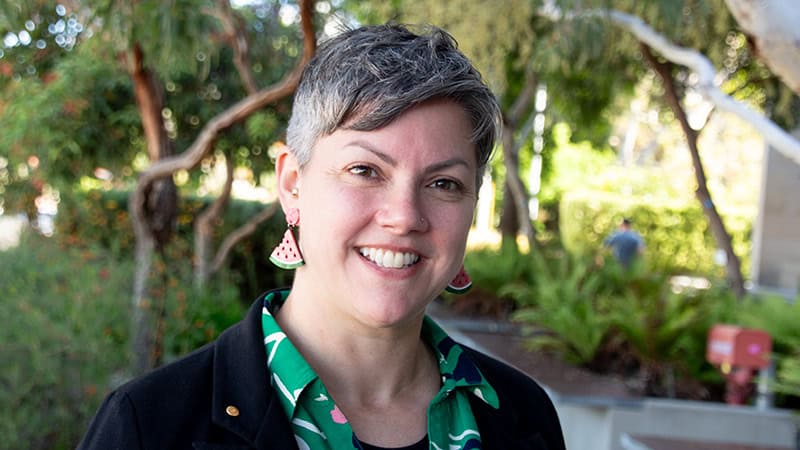
Dr Misty Farquhar OAM is the CEO of Western Australia’s LGBTIQA+ peak body Rainbow Futures WA
A few weeks ago, WA Attorney General Tony Buti introduced the Equal Opportunity Bill, the long overdue overhaul of the 1984 Equal Opportunity Act, into the Parliament.

Getting our issues prioritised by governments, let alone acted on, has never been easy. It’s especially challenging in today’s fractious, polarised political environment. So after years of advocacy grounded in deep consultation with our members and the broader LGBTIQA+ community, seeing the Bill actually tabled in the Legislative Assembly felt momentous.
And yet we and many other LGBTIQA+ advocates still exist in a constant state of disappointment. Of course we do; we wouldn’t be doing our jobs otherwise.
With every achievement, our collective instinct is to focus on what went wrong. What is X doing in this legislation? Why didn’t they listen to us about Y? All advocacy groups want everything to be better than it is. That’s a good thing in the main: it keeps us going back for more, constantly trying to improve laws and policies that affect our communities. It means we don’t just accept the first offer on the table.
But it does mean we forget to take a moment and look at what we’ve managed to achieve together.
Take this Bill, for example.
It isn’t perfect; no legislation ever is. Some of that comes down to circumstances (they can only go so far on the issue of religious exemptions without coming into conflict with Federal legislation), some of it comes down to the Government’s assessment of what it can get through the upper house, and some if it is frankly down to choices that were made during the drafting process which could charitably be described as “odd.”
But when compared with equivalent legislation across the country, it’s incredibly good – not just for us, but for everyone. Groups representing unions, women, Aboriginal organisations, mental health groups and people with disabilities are championing the passage of this legislation too.
Religious exemptions will become a shield to protect people and institutions of faith, instead of a sword for bigots to swing at people they personally disapprove of. It also introduces a positive duty for employers to prevent discrimination, harassment and vilification, protects survivors of domestic and family violence from discrimination, closes loopholes allowing discrimination against trans and gender-diverse people, and introduces the first anti-vilification laws protecting the LGBTIQA+ community in WA’s history.
It’s true that there are sections of it that could be better. Intersectional discrimination issues – a priority issue the WA Law Reform Commission recommendations – aren’t being picked up properly. The definition of vilification left a lot to be desired.
There’s also a complex issue, which we’re following up on, about how gender recognition in this legislation interacts with gender recognition under the Births, Deaths and Marriages Registration Act.
It’s also true that there are issues it doesn’t deal with. Hate crimes aren’t part of this legislation; the Equal Opportunity Act only covers civil matters, not criminal. Legislation to ban conversion practices, promised in the wake of the Esther House inquiry three years ago, still hasn’t
materialised. And recognition of the issues faced in medical settings for people with intersex variations is still limited.
On the other hand, the Gender Reassignment Board is history, surrogacy is legal, we’ve got more ongoing funding for LGBTQIA+ service providers than ever before, and the most dramatic overhaul of LGBTQIA+ rights in 25 years is being debated in Parliament. The Government is willing to spend their political capital and time to pass this Bill; they’ve also been genuinely engaging with us to address our concerns.
Once the legislation passes the Legislative Assembly, it’ll go to the Legislative Council where, if experience is anything to go by, debate is likely to be long and nasty.
In the lead up to that, we’ll be talking with MPs about our remaining concerns, and asking those that oppose this Bill to engage with kindness and respect to minimise the impact on our community. And no matter what happens, we’ll also have to fight hard to get that long overdue ban on conversion practices.
But for now, let’s experience the gravity of this moment. The law is changing because our community fought to change it. Because of that, thousands of young people will grow up in a State where you can’t be sacked for who you are or who you love. It’s actually quite wonderful.
We need to get better at seeing our community’s achievements for how amazing they are. Because hopefully, there’s more of them to come.