

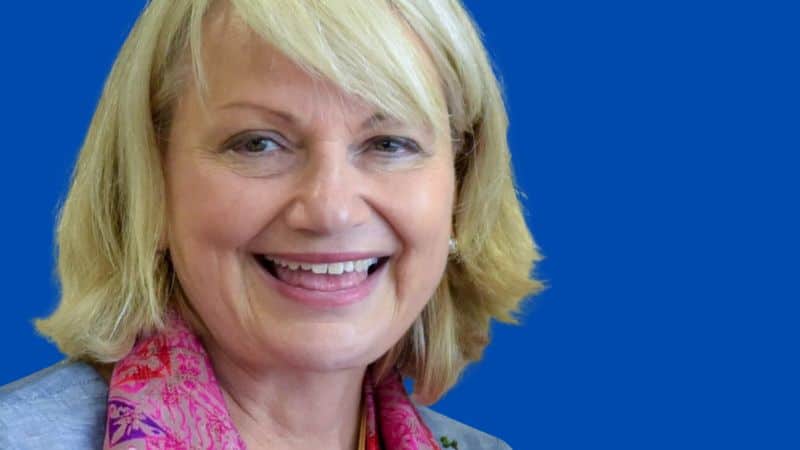
Dr Sharman Stone, who served as Minister for Workplace Participation in the Howard government, has died aged 75.
Dr Stone died through Voluntary Assisted Dying in Shepparton, surrounded by her three children.

Following her death, she has been remembered for her many achievements, including a notable public defence of transgender women during a 2016 appearance on the ABC’s Q&A.
Her family said she “died on her own terms” after a long battle with glioblastoma, an aggressive form of brain cancer.
Dr Stone earned a PhD in economics from Monash University and also held a Graduate Diploma of Education alongside an undergraduate arts degree. Before entering politics, she held a variety of roles, including Manager of International Development at the University of Melbourne, Director of Communications for the Victorian Farmers Federation, and farmer. Alongside her husband Doug Stone, and independently, she authored numerous publications on topics including race relations, the environment, geology and Aboriginal affairs.
She was elected to federal parliament at the 1996 election when John Howard’s Liberal government came to power, representing the former Victorian seat of Murray. She held the seat for 20 years.
In January 2006, she was appointed Minister for Workplace Participation. Following the Coalition’s defeat at the 2007 federal election, she became Shadow Minister for Environment, Heritage, the Arts and Indigenous Affairs. Later, under Opposition Leader Malcolm Turnbull, she moved to the Immigration and Citizenship portfolio.
Dr Stone announced her retirement from politics in 2016 and was later appointed Australia’s Ambassador for Women and Girls.
During a 2016 appearance on Q&A, Dr Stone spoke in support of legal protections and respect for transgender people while appearing alongside feminist author Germaine Greer.
Greer reiterated her view that transgender women should not be regarded as women. She said she had previously believed only people with two X chromosomes were women but had since revised that position to recognise some intersex women.
The author said she recognised people born with intersex variations but not people who identified as transgender.
Dr Stone, who was still a member of parliament at the time, argued that many societies recognised a broad spectrum of sexuality and gender identity.
“We’ve got to treat the individual with utmost respect and recognise where they feel they belong in whatever sex or transsexuality [sic]; they must not experience any discrimination, they must have protection in the law,” Dr Stone said.
She also stated that she recognised transgender women as women.