

The teachers sipped sugar-laden coffee in their first-floor common room. It had the best vantage point of the school assembly yard and yet their cold indifference to the fights that took place in the quad was disturbing; for Glen was openly gay and was the constant target of the school kids wolf-pack brutality.

Many a time I came to his aid and I too bore the brunt of closed fists and punches, such was the fear and hatred of difference. The time was 1969; the school, Crow’s Nest Boys High School in Sydney.
16,000 kilometres away in Greenwich Village, New York City the same parallels were being played out. It was illegal to be gay; there were no protections under the law.
Stonewall Inn was no Hilton. It had no air-conditioning; glasses were rinsed out in cold water barrels but it was a safe sanctuary where gay men and women could gather and one of the few bars in NYC where men could dance with men. Run by the Mafia, Stonewall did not have a liquor licence and was a frequent target of police brutality towards its patrons.
Sydney in the 1960s was no different; the Bottom’s Up Bar at the Rex Hotel, in Kings Cross was also a target, as police would regularly go there to ‘rough up the queens’, in a city and a time when poofter bashing was considered a rite of passage for some.
The same was happening in Greenwich Village. In accordance with the NYC State law, you could be arrested at any time for not wearing three articles of gender-appropriate clothing. This law made the drag queen a principal target and many were beaten up and arrested. It was a ticking time bomb!
In the early hours of Saturday, 28 June 1969, nine policemen raided Stonewall. Patrons were roughed up and many refused to show ID. They were marshalled outside to be taken away in cop cars, only this time things did not go the way it had before.
Fierce resistance particularly from the trans women and drag queens, who famously they did a Rockette-inspired chorus line, singing; ‘We are the Stonewall girls, we wear our hair in curls, we wear our dungarees, above our Nellie knees.’ Infuriated, the cops attacked the drags with their fists and batons.
The crowd also witnessed a lesbian who was handcuffed and being ‘roughed up’ by the cops, but when she yelled ‘Aren’t you going to do something?’, that’s when the crowd started to riot, overturning police cars and throwing bottles and debris.
Police reinforcements were called and the nine officers barricaded themselves in the bar as a crowd now numbering around 400 rioted. The police barricade was continually breached and the bar was set alight. More riot police were assigned and put out the fire. As dawn approached, the crowd dispersed.
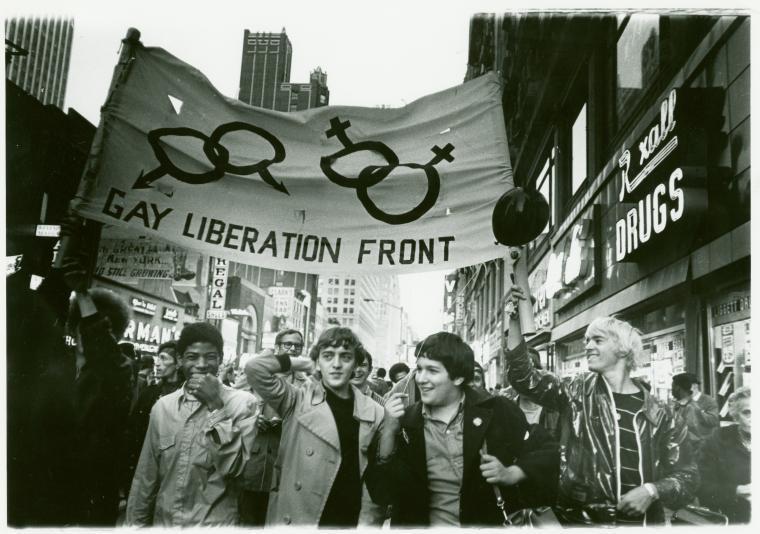
Jerry Hoose, founding member of the US Gay Liberation Front and Stonewall rioter remarked “In one year, we went from a bunch of hidden people who fought back in the dark, to being thousands of people marching in the sunlight to Central Park, on the first USA Gay Pride parade”.
To help promote the 1978 National Homosexual Conference, the Gay Solidarity Group organised the first march in Sydney, on Saturday 24th June at 10pm. Stonewall and Sydney were now linked, both survivors of police brutality.
Last year, the NSW Government and NSW Police publicly apologised to the participants of Sydney’s first gay rights march (78ers); and in that same year, former President Obama declared that Stonewall Inn be America’s first National Monument dedicated to LGBTI+ rights.
Terry Larder
Support OUTinPerth
Thanks for reading OUTinPerth. We can only create LGBTIQA+ focused media with your help.
If you can help support our work, please consider assisting us through a one-off contribution to our GoFundMe campaign, or a regular contribution through our Patreon appeal.