

‘I am trying to cut down, or stop from having unsafe sex,’ said Troy.

‘It’s probably sixty percent to unsafe to forty percent safe. I’ve caught gonorrhoea twice, I’m not proud of that.’
Troy, whose name has been changed for confidentiality, is a Perth gay man in his early 20s. He knows the dangers of unsafe sex but admits that sometimes it’s too ‘awkward’ to stop and put on a condom. According to national research, Troy represents a minority of men from the gay and Men who have Sex with Men (MSM) community. In 2009, the Pleasure and Sexual Health (PASH) study examined how gay men were affected by pleasure when making decisions about sex. Over 2000 people were surveyed and it revealed that the majority of gay men had safe sex most of the time.
However, researchers also wrote at the time that ‘for many, HIV is no longer the absolute threat it once posed and their attitudes to risk are more relaxed than even they care to admit themselves’.
It continued that risk takers, especially men who engaged in unprotected sex with casual partners, needed factual, non-emotive information to make their own decisions. Yet, the authors strongly recommended that health promotion through ‘community development and engagement’ were also required.
Australian Medical Association WA President David Mountain believes people may have become desensitized to health promotion messages about unsafe sex.
‘I would suspect that even among gay men there has been a significant amount of complacency over the past few years,’ Mountain said.
‘I suppose people need to hear the stories of what it’s like to live with HIV. Yes, you can live with it and you can have good, productive, interesting lives but it has significant downsides from being on continual medication and having to be careful.’
‘There are many reasons why using protection during intercourse is better for you because it’s not just HIV, it’s the other diseases and many of them are life-long.’
Last month, the AIDS Council of NSW (ACON) launched a new online campaign called The Big Picture which is aimed at keeping men informed about the risks of unsafe sex.
Although the website is NSW-specific, ACON’s Director of Community Health, Geoff Honnor said it was important to keep guys in the picture since there were still some common misconceptions ‘kicking around’.
‘Responses to some of the more commonly asked questions about HIV are also included and we hope they’ll stimulate a bit of discussion and lots more questions, which we’ll be happy to field,’ he said.
‘So, in offering information updates, Big Picture also acknowledges the importance of the informed choices that gay men make about maximising pleasure and minimising risk – choices that ultimately deliver better outcomes for all of us.’
In Western Australia, the WA AIDS Council runs a number of programs targeted at gay men and MSM who are more likely to engage in unsafe sex. Such programs include Safe Sex No Regrets, Project X and Sex in Other Cities which provide information about safe sex for same-sex attracted men.
There is no silver bullet as to why people continue to have unsafe sex. Millions of dollars are invested into health agencies annually to inform specific groups like gay men of the consequences of unsafe sex (not to forget the hundreds of volunteer hours also given). While there is plenty of information available, men like Troy continue to defy the message.
‘It just happens I guess. Although I’ve cut down having anal sex at all, pretty much, it just happens,’ Troy said.
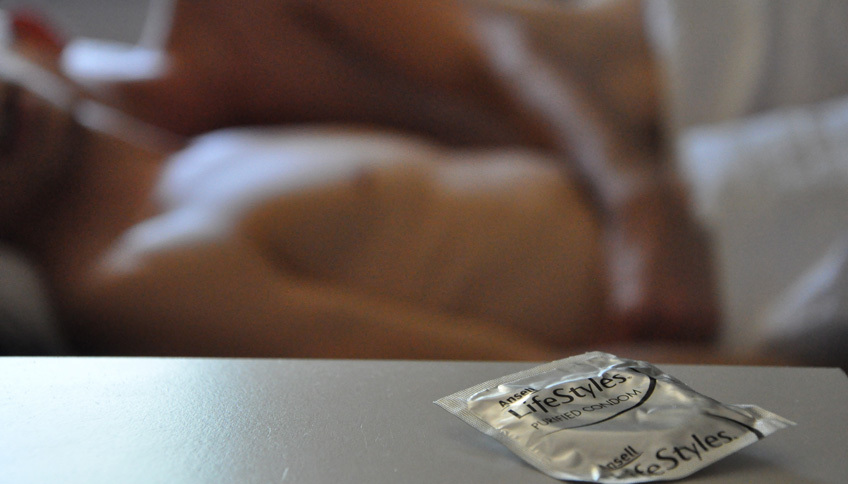
‘Even though I’ve got condoms in my draw, sometimes there just isn’t the right time to say, “Hold on a minute while I slip this on, or hold on a minute while I slip this on you.” You just want to sort of get on with it.’
For more information about safe sex for same-sex attracted men, visit www.waaids.com.au.
The statistics
Sexual Health Testing
84 %
Gay men that get tested for HIV.
38 %
Gay men who had unprotected
anal sex with a casual partner in the
past six months.
47 %
Gay men who felt ‘very confidant’ in
not having HIV despite not getting tested.
Figures from the Pleasure and Sexual Health Study, 2009.
Benn Dorrington