


The Federal Government has committed to formally apologising to LGBTIQA+ Defence personnel and veterans harmed by decades of discriminatory military policies, with advocacy groups welcoming the move while calling for financial redress.
Estimated reading time: 8 minutes
The Australian Government will formally make a historic apology to LGBTIQA+ Defence personnel and veterans who experienced discrimination because of their sexual orientation or gender identity under past discriminatory policies.

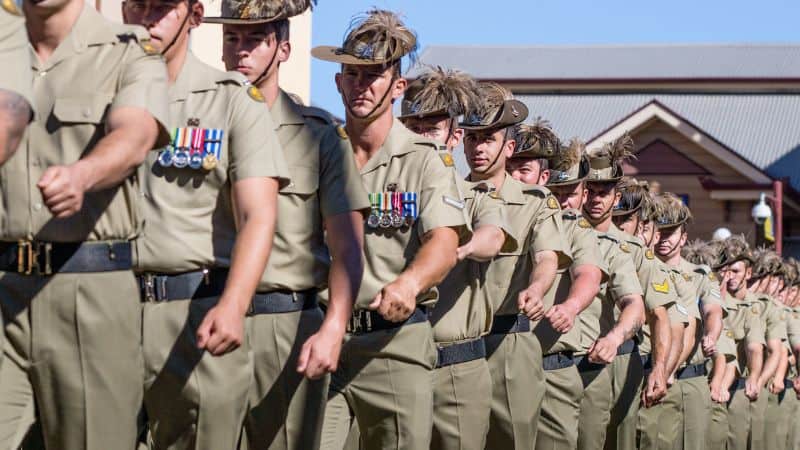
Government commits to historic apology for LGBTIQA+ Defence personnel and veterans
A ban on gay and lesbian personnel serving in the military was lifted by the Keating Labor Government in 1992, making Australia one of the more progressive countries in allowing people to serve openly in the military. Transgender people have been able to serve since 2010.
Before these changes were implemented, there were decades of efforts by officials to identify LGBTIQA+ personnel within the ranks and remove them from service. The treatment of these personnel was highlighted during the Royal Commission into Defence and Veteran Suicide, which delivered its final report in 2024. A subsequent Senate inquiry heard further evidence about how the policies affected people who were forced out of their careers.
Today, the Defence Force Discipline Amendment (RCDVS Implementation and Related Measures No. 1) Bill 2026 passed Parliament, with the Government indicating it would also make a formal apology to those affected by anti-LGBTIQA+ policies, while also abandoning plans to cap veterans’ allied health support at a $5,000 threshold.
Speaking in the Senate, Jenny McAllister, the Minister for the National Disability Insurance Scheme, announced:
“The government will make a formal apology, acknowledging the harm experienced by LGBTIQA+ personnel and veterans as a result of historical discriminatory practices at the appropriate time.”
Senator McAllister said the laws that existed before 1992 were “discriminatory” and the Government was now “righting this historical wrong” by allowing former service personnel to have records relating to consensual homosexual service offences extinguished.
The Minister’s announcement followed a speech by Greens Senator Nick McKim, who said LGBTIQA+ people affected by the former rules did “suffer significant distress and did suffer significant harm as a result of discriminatory policy settings.”
McKim called for the apology to be delivered by the Prime Minister in the House of Representatives.
In a media statement later in the day, Senator McKim expanded on his views.
“An apology is welcome and long overdue, but it must come from the Prime Minister as well as the Chief of the Australian Defence Force,” Senator McKim said.
“An apology given in the Parliament by the Prime Minister would create a moment for genuine national reckoning, reflection and healing.
“The apology must be accompanied by financial redress for LGBTIQA+ personnel and veterans who were punished simply because of who they were.
“People lost employment, income and housing, and many suffered profound impacts on their mental health. Financial redress cannot undo that harm, but it would provide a tangible acknowledgement of the injustices that were inflicted.”
The Greens senator called on the Albanese Government to establish an inquiry to determine the appropriate amount of redress and how it should be provided.
“Apologies matter, but so does the acknowledgment of harm through the provision of redress.”
The announcement has also been welcomed by LGBTIQA+ organisations that have spent years campaigning for action.
GRAI Welcomes Reforms and Commitment to an Apology
GRAI (GLBTI Rights in Ageing), based in Western Australia, welcomed the passage of the reforms and the commitment to a formal apology. GRAI has lobbied on the issue since 2024, but says this work builds on decades of advocacy by veterans and human rights campaigners.
“This is first and foremost their moment,” GRAI chair David Gibson said.
“People lived through these policies. Others spent years making sure their stories were not forgotten. GRAI has simply tried to help carry that work forward and make sure nobody was left behind.”

One of GRAI’s concerns with the original legislation was that its focus on historical homosexual service offences risked overlooking those who never received a criminal conviction. Many were instead investigated, administratively discharged, forced to resign or had their careers quietly ended because of their sexuality or gender identity.
“When GRAI appeared before the Senate inquiry, our concern was pretty simple. If we recognised the convictions but not the people dealt with administratively, we risked creating another group of forgotten veterans,” Gibson said.
The Government’s response provides for Defence records to recognise separations connected to historical discriminatory policies. Importantly, while the Bill itself addresses historical homosexual service offences, the proposed administrative recognition extends more broadly to veterans affected by discrimination on the basis of sexual orientation or gender identity.
“That distinction matters,” Gibson said.
“History was rarely as neat as the legislation written about it decades later.
“Some people were convicted. Some were discharged. Some were pressured to leave. Whatever the mechanism, the message they received was the same: there was no place for them in the Defence Force because of who they were.”
GRAI also said the promised apology should be delivered in Parliament by the Prime Minister.
“These were not the actions of a few individuals. They were laws, regulations and policies of the Australian state,” Gibson said.
“Defence acknowledging its history matters enormously. But the apology needs to come from the nation, through the Prime Minister.
“It needs to say plainly: you served Australia, what was done to you was wrong, and we are sorry.”
GRAI has also urged that calls for further consideration of financial redress should not delay the apology or implementation of reforms already agreed.
“There may be more work to do on redress. That should not stop us doing what we already know needs to be done,” Gibson said.
“We have had the Royal Commission into Defence and Veteran Suicide. We have had submissions, evidence from veterans and a Senate inquiry into this legislation.
“We do not need another inquiry to tell us that the discrimination happened.
“For older veterans in particular, time is not an abstract thing. Some have waited decades for this acknowledgement. Others did not live to see it. So let’s not make them wait again.”
David Gibson is among those affected by the previous discriminatory laws. In an interview with The Guardian, Gibson said he served in the Army during the 1980s, when homosexuality remained illegal in much of Australia.
He entered the military after high school and was posted to Townsville, where he said the Defence Force conducted what he described as “witch hunts” to identify homosexual personnel. He said he still does not know how the military became aware that he was bisexual, but that he was interrogated about his sexuality and superiors demanded that he name others he suspected might be gay, lesbian or bisexual. In 1989, he was discharged and forced to seek a new career.
Just.Equal Calls for a Financial Redress Scheme
Just.Equal Australia welcomed the Government’s announcement but argued that financial redress is also required.
Spokesperson Rodney Croome said more than an apology was needed.
“We welcome an apology as an important step towards healing the wounds of the past, but financial redress is also required for those who suffered discrimination and dishonourable discharge because of who they were.
“LGBTIQA+ veterans who faced discrimination, including dishonourable discharge, suffered the loss of employment, income and sometimes housing, a loss of self-confidence and sometimes severe impacts on mental health.
“Many also suffered the loss of a vocation and a sense of purpose that military service bestowed.
“Redress is not intended as full compensation for all these harms, but it will acknowledge the injustice that was inflicted.”

Croome highlighted that most state and territory governments have apologised for former criminal laws against homosexuality. Last year, Tasmania became the first jurisdiction in Australia to allow financial redress for those charged and convicted under former state laws against homosexuality and cross-dressing.
Redress for former LGBTIQA+ service personnel who were discriminated against and discharged because of who they were is available in both Canada and the United Kingdom.
Croome said the Federal Government should follow the lead of Tasmania and close allies such as Canada and the UK.
“Apologies matter, but so does the acknowledgement of harm through the provision of redress.
“We call for an inquiry to hear from LGBTIQA+ veterans, and to determine what the redress amounts should be and how they should be disbursed.”
DEFGLIS Welcomes Commitment to an Apology
DEFGLIS (Defence LGBTI Information Service) also welcomed the announcement of an apology.
“For too many years, dedicated Australians who volunteered to serve their country, putting service before self, were investigated, intimidated, arrested, discharged or forced to conceal who they were. Their service was no less honourable, and their commitment to Australia was no less selfless and valuable.”
DEFGLIS said the outcome was only possible because of the work of advocates, researchers and parliamentarians who helped bring Australia to this moment. The organisation acknowledged the work of the Royal Commission into Defence and Veteran Suicide, but said the greatest thanks should go to the people who came forward and shared their “deeply personal and often painful experiences so the truth of what occurred could no longer be overlooked.”
“To every LGBTIQA+ person who has served in silence, who was mistreated, or whose service ended simply because of who they were; we see you, we honour you, we thank you for your service, and hope that you take solace in the fact that though you could not, generations to come will be able to serve with pride.”