

Comedian Margaret Cho stands up for more than just laughs – she stands up for the community she believes in. OUTinPerth unearths the serious side of one of America’s funniest femmes.
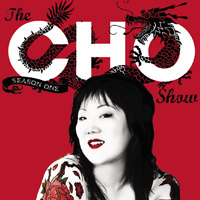
There is playing on impropriety for a punchline and then there is Margaret Cho. From describing to a live audience the time she shat her pants in L.A. traffic to painting herself naked in front of her parents, the 40-year-old Korean-American fearlessly goes where no other comedian will.
On her latest project, the Cho Show, Cho and her ‘Glam Squad’ are the real and uncensored characters in a planned storyline that places Cho in situations that would mortify and horrify lesser comediennes.

‘I really did get anal bleaching. I did get a G-shot. That hurt like crazy because I was also on my period. It was so awful. I was on my period and then I got a needle in my vagina.’
Of another episode, Cho quips, ‘Taking gay boys camping was hilarious. Going camping without lesbians, that’s never a good idea.’
Yet, to think the Cho Show is just another comedy gimmick from the inane masses of YouTube personalities and bad reality programming misses an underlying seriousness and commitment to GLBT causes.
For Cho, who identifies as queer and has talked of her attraction to men, women and trans* people, GLBT rights are more than just a celebrity cause du jour.
‘I grew up in San Francisco and the late 70s were all about Harvey Milk, so the people that I really looked up to were all young gay men and women who were just so in love with Harvey Milk and it taught me to be political. After Harvey Milk was assassinated, seeing all the candlelight vigils was really amazing,’ explains Cho. ‘Also to grow up during the plague of AIDS, to really witness the gay community recover from literally a plague, it was incredible – my political life has always been there since I was a child.’
As an adult, Cho has been a regular at Pride celebrations. In 2008, she was the Chief of Parade for the 30th anniversary Mardi Gras in Sydney and spent the northern hemisphere summer at the various San Francisco Pride fetes along with Gus Van Sant and his cast of merry (milk)men.
When Van Sant’s movie Milk, about the life of Harvey Milk, was released, Cho ‘cried from beginning to end’ at the live footage of Milk-led rallies against Proposition 6 in the 1970s.
‘It was so perfect to every last detail and they used a lot of archival footage… Sean Penn looked like him, it was crazy,’ said Cho, then adding, unable to resist a punchline. ‘Doesn’t every one want Dennis Franklin to be your boyfriend? He was like the perfect political First Lady!’
Cho saw in Milk what many activists in California did, an eerie parallel between Milk’s fight for Proposition 6 and the current battle over same-sex marriage and Proposition 8.
‘When Prop 8 passed people were just literally bursting into tears and openly weeping. People were out in the streets. It was so painful. I hadn’t seen that type of public outrage since Harvey Milk’s assassination.’
That Cho should feel so connected to a film about Harvey Milk and the movement he galvanized is oddly appropriate. Though the Cho Show is very different from the historical biopic, the underlying sentiment, political hopes and individual beliefs of the protagonists of both are very similar.
Like the movie Milk, the Cho Show is a rare representation of gay characters as themselves, rather than the bit parts and stereotypes they are typically reduced to. According to Cho, the Cho Show’s centres on a ‘queer family’ that is ‘very functional, very loving, very gay’ and that ‘serves as a microcosm of what is happening in queer families nowadays.’
Additionally, Cho, like her childhood hero, has been an outspoken activist for her cause and community, in this case the ‘No to Prop 8’ campaign. In the wake of Proposition 8, Cho attended rallies throughout the state and regularly devoted her widely read blog to the gay rights battle in California. Moreover, Cho has called for the community to unite, particularly in its inclusion of trans* people.
‘The transgendered community are really important and integral to our movement. They are the community that a lot of times that can’t hide their queerness so they receive the greatest amount of hate crimes and homophobia. They really are the frontlines of the gay community, and they are the ones that receive most of the violence… I can’t say that the gay community in general is supportive of them in the way they have to be… The trans community is very important to me and I always want to chastise the greater gay community for not being as inclusive as they should.’
So, while Cho embraces the ridiculous for laughs, sticks needles where needles most certainly should not go and bleaches where the sun don’t shine, she also pushes her audience to look at what we accept and what we don’t, who we embrace and who we don’t, and in doing that to examine the broader importance of GLBT rights.
‘It’s more about retaining or reclaiming our humanity that it is about any sort of marriage issue or partnering. It’s like are we equal or are we not? That’s the basic truth of it. To me, it’s a very deep and important struggle and it’s symbolic of a greater issue.’
Megan Smith