


Michael Jackson’s legacy endures despite the controversies that filled the second half of his life – and followed him into death.
His music is still played on radio stations around the world. He remains one of the most‑streamed artists globally, there is a Cirque du Soleil show based on his music, MJ: The Musical is coming to town soon, and another stage production built around his catalogue is headed for London’s West End. Now comes Michael, a big‑budget biopic that opens in cinemas today.

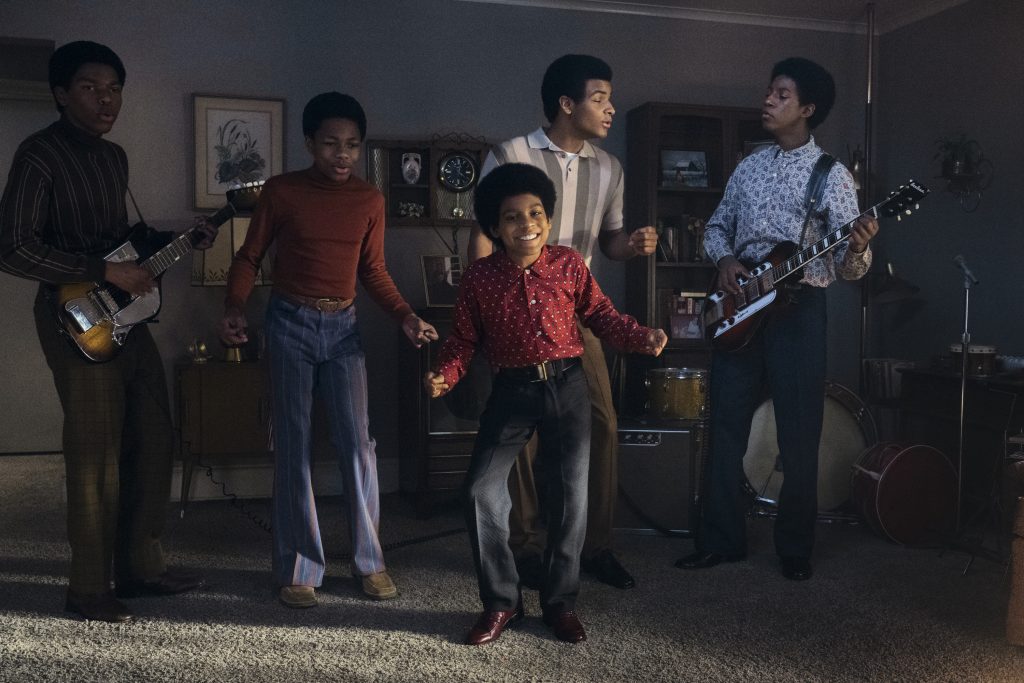
The film tells the story of Jackson’s life, beginning with his childhood in Gary, Indiana, where his domineering father shaped five of his sons into a tightly controlled soul band: The Jackson Five. After being discovered by Motown Records, they became chart sensations. In the late 1970s, Jackson found solo success when he began working with producer Quincy Jones.
Their first collaboration, Off the Wall, arrived at the tail end of the disco era. A few years later, Jackson set out to make a more ambitious album. In 1982, he released Thriller, which became the highest‑selling original album in US history; only the Eagles’ greatest hits compilation has sold more copies.
Michael presents Jackson at his most sympathetic, portraying him as an awkward child prodigy who simply loved making music. The film highlights how he broke racial barriers at a time when the fledgling MTV network played few Black artists. He was among the first musicians to produce music videos as large‑scale cinematic events. Deprived of a normal childhood, the film suggests, Jackson clung to his love of toys, board games and pets. Yes, he owned a giraffe, a llama and Bubbles the chimpanzee – and who wouldn’t, if they could?
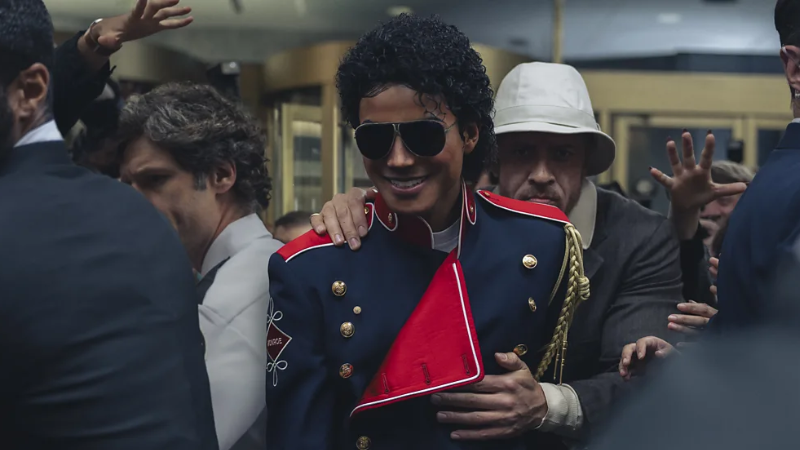
This is also where the film’s most obvious problem lies. Produced by the late singer’s estate, it is far from an objective depiction of his life. Instead, it feels closer to fantasy than biography.
What the film does not include is any mention of the multiple allegations of child sexual abuse that dominated the second half of Jackson’s life. There is no reference to the controversy over antisemitic lyrics, his dramatic change in skin colour (which was attributed to vitiligo), his marriages to Debbie Rowe and Lisa Marie Presley, his children, or his death.
An impressive creative team assembled to bring this dramatised slice of Jackson’s life to screen. The film is directed by Antoine Fuqua, known for Training Day, Olympus Has Fallen and The Equalizer trilogy. The screenplay was written by John Logan, whose credits include Gladiator, Skyfall, The Aviator and The Last Samurai.
A version of Logan’s original script leaked online, revealing that the film initially included references to the child sexual abuse allegations. The story reportedly opened with police raiding Jackson’s Neverland Ranch.
Those scenes were filmed, but the production team later discovered that the legal settlement with Jordan Chandler – the first accuser – contained a clause preventing the incident from being depicted in a film. The oversight proved costly, with reshoots reportedly costing $50 million.
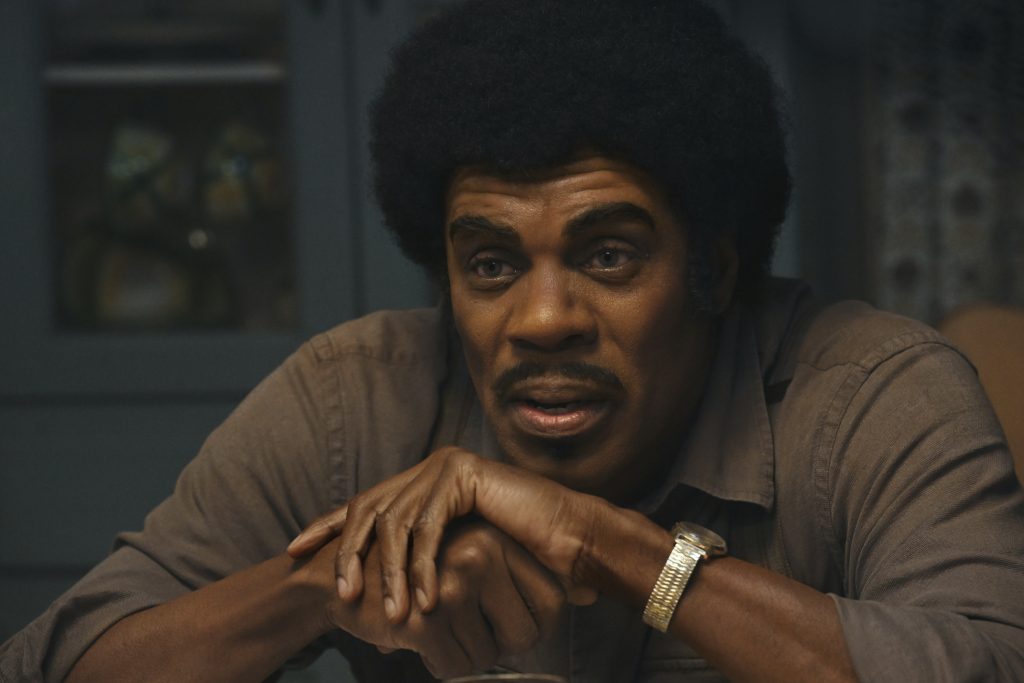
The resulting film charts Jackson’s rise from a small steel town to global superstardom. Colman Domingo plays his manipulative and abusive father, Joseph, who beats his children and delivers stern lectures about discipline and winning. Nia Long portrays mother Katherine, who quietly attempts to protect her children and temper her husband’s cruelty.
Stepping into the title role is Jackson’s nephew, Jaafar Jackson, the son of Jermaine Jackson. Some viewers may be distracted by the fact that he shares a name with a certain villain from Aladdin, but it’s worth noting that one of his siblings is named Jermajesty. Despite limited acting experience, Jaafar delivers an admirable performance, convincingly capturing both the physicality and stage presence of his late uncle.
There are notable omissions elsewhere. As the Jackson family sits around the dinner table in Gary, several members of the clan are missing. There is no depiction of sister Janet Jackson—who reportedly asked not to be included. Older sister Rebbie is also absent, and the film’s treatment of Jackson’s brothers is uneven.
While it is mentioned that Jermaine left the family band when they moved from Motown Records to Epic Records in 1976, there is no acknowledgement that younger brother Randy took his place. When the siblings reunite for the Victory album and tour—a period heavily featured in the film—only five brothers appear on stage instead of six.
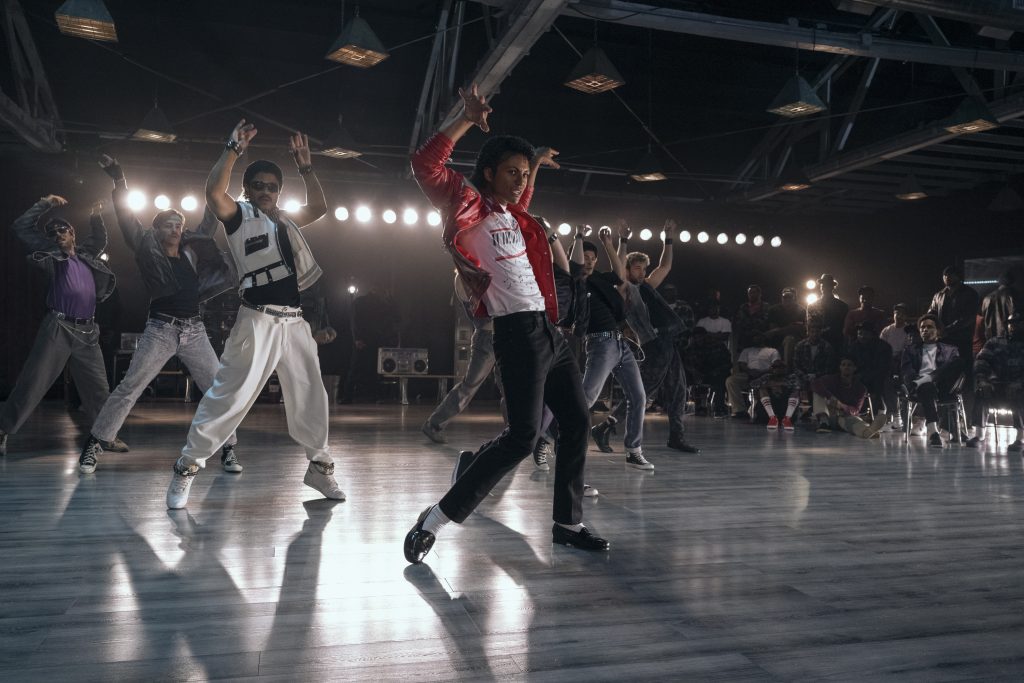
The film also includes some extended concert scenes, oddly we have a very drawn out rendition of Human Nature during the Victory tour scenes. The story skips over the recording of We Are the World, presumably a legal nightmare for the filmmakers needing to get sign off of many stars who are still alive, and Michael Jackson is presented as a genius songwriter toiling away late at night in his home studio – Jackson did wrote many of his hits but half of them came from other songwriters.
What the film does remind us is that Jackson broke down barriers for Black artists, and at the height of his fame, and for many years afterwards Michael Jackson mania was huge. That highpoint of his career has maybe been forgotten as times gone by. But showing the highs, without the lows, the good without the allegedly bad, the fame without the corruption of character, is all pure fantasy.
What we’re left with is a simplified storyline of the singer’s life that comes across as a well made TV movie. Dedicated fans will love it, but this is not the story of Michael Jackson, this is a blatant PR move to salvage a very damaged legacy and reputation.
Michael arrives in Australian cinemas today.