


Isadora Duncan was a pioneer of modern dance whose performances were acclaimed in Europe and the United States. She died on this day in 1927 at the age of 50.
Duncan was born in San Francisco, but after her parents divorced when she was a young child, she moved with her mother and siblings to Oakland, California, where the family lived in poverty. She attended school only until the age of ten and then worked alongside her siblings, teaching other children how to dance.

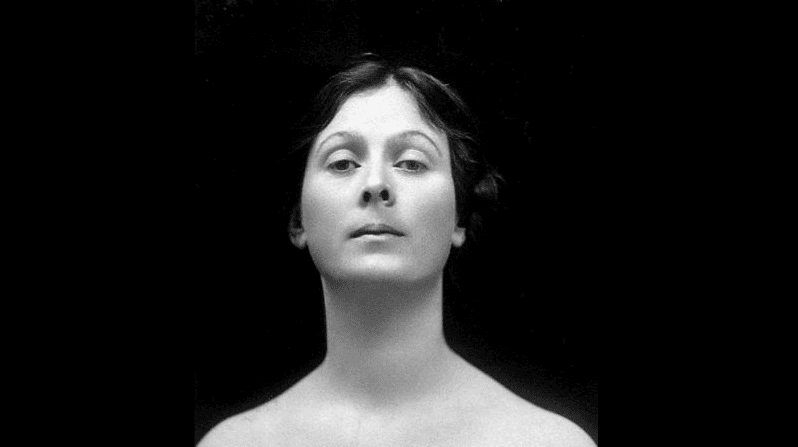
After a stint in New York, she moved to London, where she found fame through her improvised and unusual dance style. She often performed in the homes of wealthy families. With the money she earned, she began creating larger works for the stage in London and later Paris. By the turn of the twentieth century, she was performing across Europe. She also opened schools in Berlin and Paris to teach her approach to movement and dance.
With the outbreak of the First World War in 1914, Duncan relocated to New York. In 1921, she moved to the Soviet Union, where she founded a new dance school. When she did not receive the support she had been promised by the Soviet government, she returned to the West in 1924.
Duncan lived an unconventional life for her era. She had three children, all born outside marriage, but none survived to adulthood. Her daughter, Deirdre, was born in 1906; the child’s father was theatre designer Patrick Craig. Her son Patrick, whose father was Paris Singer, one of the many sons of sewing machine magnate Isaac Singer, was born in 1910. Both children died in 1913 when the car in which they were travelling with their nanny plunged into the River Seine. Duncan also gave birth to a son in 1914, but he died shortly after birth.
In 1922, while living in Russia, she married the poet Sergei Yesenin, who was 18 years her junior. They separated the following year, and he died by suicide two years later. Some historians have suggested that Duncan had a romantic relationship with the poet and playwright Mercedes de Acosta, with whom she exchanged affectionate letters. Others, including friends and family members, have disputed this interpretation.
Duncan spent her final years moving between Paris and the Mediterranean, often accumulating substantial debts at hotels. She died in 1927 in Nice, France, following a tragic motor vehicle accident.
She is widely remembered as one of the founders of modern dance, and numerous large-scale works have been created in recognition of her influence on the art form.