

Victorian Police raid Tasty, resulting in a $10 million lawsuit
On 7 August 1994, dozens of police officers entered the Tasty nightclub event in Melbourne and detained 463 people over a period of seven hours. Patrons were subjected to strip searches and, in some cases, cavity searches.
Tasty was a regular club night known as a popular alternative venue that attracted a large number of LGBTI patrons. During the raid, armed police detained hundreds of people, and some patrons were reportedly forced to undergo strip searches in view of others at the venue.

The exact reasons for the raid remain unclear. Victoria Police later suggested it was prompted by reports of drug activity at the club. However, some community advocates and commentators have argued that homophobia may also have influenced the decision to target the venue. Despite the large number of people present, only two drug-related arrests were made, and all charges were later dropped.
A group of patrons who attended the event later pursued legal action against Victoria Police. The case resulted in compensation payments that totalled up to $10 million.
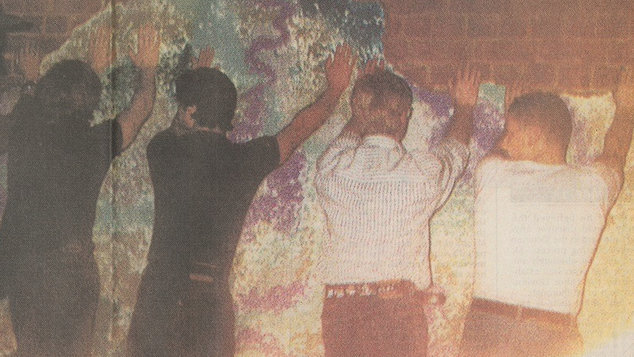
Ten years after the raid, the documentary The Tasty Bust Reunion captured the recollections of many people who were detained that night.
In 2014, twenty years after the event, Victoria Police formally apologised for its actions. Speaking at the Victoria Police Museum, Acting Chief Commissioner Lucinda Nolan acknowledged the long-term impact the raid had on the relationship between police and the LGBTI community.
“The events that took place that night caused distress to people who were in attendance and had a significant impact on the relationship between Victoria Police and the wider LGBTI community,” she said.
“It is therefore appropriate, as we near the 20th anniversary of this incident, that Victoria Police extends a sincere apology to the community members who were affected by events on that night.
“We also extend a general apology to the broader LGBTI community for the impact this event has had on our relationship over the past two decades.”
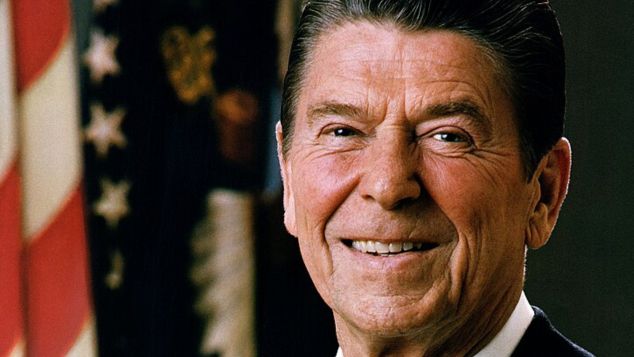
Ronald Reagan says “AIDS” for the first time
The disease that would later become known as AIDS was first identified in 1981. In 1982, the acronym AIDS was officially adopted. However, it took five more years before US President Ronald Reagan publicly used the term in a speech or official remarks.
On this day in 1987, Reagan used the word “AIDS” publicly for the first time. His administration’s response to the crisis has since been widely criticised by historians, public health experts and LGBTQIA+ advocates. By the time Reagan publicly addressed AIDS, more than 37,000 Americans had been diagnosed with the disease and more than 21,000 had died.
The president had made only limited public references to the epidemic during his time in office. In 1985, he expressed scepticism about medical advice stating that children living with HIV could safely continue attending school.
Alongside his slow response to the AIDS crisis, Reagan was also publicly opposed to many aspects of the gay rights movement. During the 1980 presidential campaign, he stated that he could not support what he described as an “alternative lifestyle” and said:
“My criticism is that [the gay movement] isn’t just asking for civil rights; it’s asking for recognition and acceptance of an alternative lifestyle which I do not believe society can condone, nor can I.”
The AIDS epidemic and the federal government’s response remain subjects of significant historical debate and continue to be examined by scholars, public health experts and LGBTQIA+ communities.
Remembering Kermit Love
Puppeteer Kermit Love was born on this day in 1916. While he worked on many artistic projects during his long career, he is most fondly remembered for his contributions to The Muppet Show and Sesame Street.
Love designed the iconic characters Big Bird and Oscar the Grouch, both of whom were performed by Caroll Spinney.
He also helped design Mr Snuffleupagus and Cookie Monster. Later, he mentored Kevin Clash, who would go on to become closely associated with Elmo and help develop the character into one of Sesame Street‘s most recognisable figures.
Love shared a life with his partner, Christopher Lyall, for more than 50 years. He died in 2008 at the age of 91.