

In 1987 US President Ronald Reagan started to take action on HIV
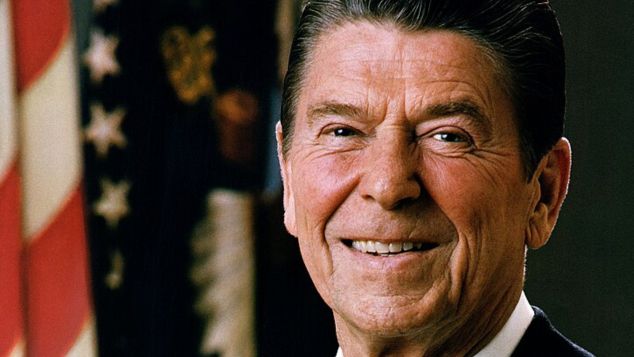
On this day in 1987, the commission formed by President Ronald Reagan to address the growing HIV epidemic in the United States met for the first time.
Reagan had been widely criticised by HIV/AIDS advocates for failing to respond more quickly to the epidemic after HIV was first identified in 1981. In late June 1987, he signed an executive order appointing W. Eugene Mayberry, chief executive of the Mayo Clinic, to chair the new commission.

In the lead-up to the group’s first meeting, considerable attention focused on who would be appointed to the commission, with some conservative politicians arguing that members of the LGBT community should be excluded.
The commission included sex educator Dr Teresa L. Crenshaw, who opposed promoting condom use as a means of preventing HIV transmission; Catholic Cardinal John O’Connor; and conservative politician Penny Pullen, who advocated mandatory HIV testing before marriage. However, the commission also included an openly gay member with direct experience in HIV community advocacy.
Dr Frank Lilly, a geneticist, had served on the board of Gay Men’s Health Crisis, a community-led organisation that was at the forefront of providing support to people affected by HIV and advocating for greater government action. Lilly became one of the first openly gay people appointed to a federal advisory role by a US president.
His appointment attracted criticism. Republican politician and New Hampshire representative Gordon Humphrey argued that the President “should strive at all costs to avoid sending the message to society, especially to impressionable youth, that homosexuality is simply an alternative lifestyle”. Humphrey also said Reagan should have appointed heterosexual experts to the commission instead.
Many advocates feared that a commission dominated by conservative voices would fail to recommend meaningful action to address rising HIV infection rates in the United States. However, the commission’s report, delivered a year later, surprised many observers. It called on the government to invest US$20 billion and implement a ten-year national strategy to combat HIV/AIDS.
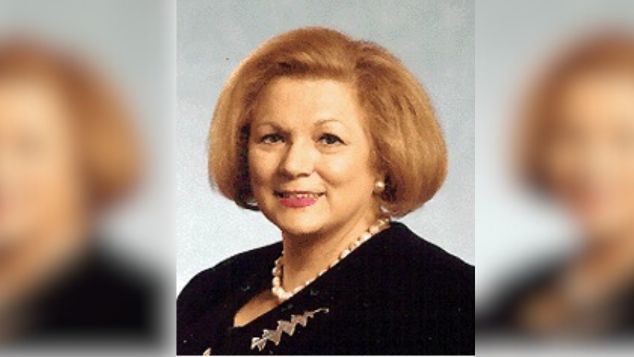
In 1991 NSW politician Franca Arena caused a furor by saying there were “innocent” and “other” people with AIDS.
Although elected as a Labor Party member, she sat as an independent during her final two years in Parliament.
In 1991, Arena chaired a parliamentary inquiry into financial assistance for people who had acquired HIV through medical treatment or blood products. She was criticised after reportedly suggesting there was a distinction between those who acquired HIV medically, whom she considered “innocent”, and those who acquired the virus through sexual contact or drug use.
Arena also said that the New South Wales AIDS Council (ACON) was dominated by gay people. Her comments drew condemnation from LGBTIQA+ advocacy groups, most prominently ACT UP.
The controversy generated several days of newspaper headlines and extensive debate on Sydney talkback radio. While some commentary criticised Arena’s views, other commentators argued she was being treated unfairly by LGBT activists and advocacy organisations.
Days later, Arena held a news conference accusing gay activists of planning a poster campaign that would have outed her sons as gay. Arena claimed a group called Queer Nation was behind the proposed campaign and said she had been informed of it by a journalist from The Sydney Morning Herald.
No evidence of a poster campaign has subsequently emerged in public reporting, and no such campaign occurred. Nevertheless, newspapers published extensive coverage of the allegations and claims that gay activist groups were targeting the politician. One headline read “Vicious Gay Campaign Against Franca Arena”, while another feature article was titled “Gay Guerillas Come Out to Prey”.
In her autobiography, Arena later spoke about how discovering that her twin sons were both gay years earlier had been a devastating experience for her, saying it left her “broken hearted”.
“Both boys told us that they were homosexuals and that they had had relationships. I know that our sons were, by then, adults and most people would think that they were entitled to have whatever relationships they wanted, but we had been a very close family and my husband and I were broken-hearted,” Arena wrote in an extract published by The Sydney Morning Herald.
She also wrote: “It is a lot easier to accept other people’s gay sons and daughters, but it is a different thing when you discover that your only two sons are both gay. It was the realisation that we would never have a family, that little Franca would never be born and that our family would die with us.”
Arena said she experienced severe depression during that period and attributed part of her response to her religious beliefs and views regarding family. She later wrote that she experienced suicidal thoughts.
The politician also expressed strong criticism of Sydney’s gay community and accused a counselling service at Sydney Hospital of failing to maintain confidentiality regarding her sons’ sexuality.
“I learned months later that they had gone to the gay counselling service at Sydney Hospital, next to Parliament House, but it was a really militant gay counselling service, staffed by people who would not have helped our sons in understanding the way we felt.
“On the contrary, the information that the two sons of a member of parliament were gay was spread instantly and in no time at all the whole gay community knew. So much for the supposed confidentiality of counselling services!” Arena wrote.
Arena later reconciled with both sons. In 2002, she said she no longer had an issue with their sexuality.
Australian composer Lyle Chan later incorporated the episode into a large-scale musical project documenting Australia’s experience of the HIV/AIDS epidemic.
Chan had been a member of ACT UP in the United States and, after arriving in Australia in 1990, joined the local branch.
The following year, he attended Arena’s parliamentary committee hearings to protest efforts to distinguish between “innocent” people living with HIV and others living with HIV. After the hearing, he unexpectedly found himself standing near Arena in the corridors of Parliament House and began questioning her views.
He recounted the interaction on his website.
“This was unplanned. The unexpected proximity with her made my activist training kick in. I started directing questions at her, fully expecting answers – doesn’t she realise she’s pitting people with AIDS against one another by throwing crumbs and asking them to scramble for scraps? Why can’t she focus on the important issues, like getting new drugs for people to live longer, rather than giving them meaningless money to spend during their painfully shortening lives?” Chan recalled.
“With every question that she refused to answer, I raised my voice. She tried to walk away but I followed her until she disappeared through a door. All the media had left by then, except Channel 9. It was the only station to catch it on camera, to the chagrin of other media who tried to grab interviews later but didn’t have the “money shot” of the confrontation moment. And then I was ejected by security.”
han said that while he strongly disagreed with Arena’s position, he later came to appreciate that she may have been experiencing significant personal challenges at the time.
Three sections of his expansive classical work reflect on this episode in Australia’s HIV/AIDS history. The movement is titled Mark and Adrian Are Her Sons.
Listen to all of String Quartet and AIDS Activist’s Memoir in Music.
OIP Staff, This post was first published in 2023.
Do you need some support?
If you are struggling with anxiety or depression, support and counselling are available from:
QLife: 1800 184 527 / qlife.org.au
QLife are a counselling and referral service for LGBTQIA+ people.
DISCHARGED: info@discharged.asn.au / discharged.asn.au
Discharged is a trans-led support service with peer support groups for trans and gender diverse folks.
Lifeline: 13 11 14 / lifeline.org.au
Beyondblue: 1300 22 4636 / www.beyondblue.org.au