

The Social Reckoning | Dir: Aaron Sorkin |★★★★½
Aaron Sorkin’s screenplays and television scripts have explored how people in power navigate issues of ethics and morality: in the military (The American President and A Few Good Men), in politics (The West Wing), news media (The Newsroom) and in technology (The Social Network).
The 2011 film The Social Network scored Sorkin a screenplay Oscar. It was all about the beginnings of Facebook in 2004, by a group of Harvard University students who wanted a fun way to communicate, and keep in contact with people they went to high school with.

As the nerdy co-founders fought for ownership of the technology, with Mark Zuckerberg (Jesse Eisenberg) claiming victory, the number of Facebook users had expanded to 500 million by the end of the film.
With the number of Facebook users exploding to approximately 2.8 billion in the next fifteen years, there have been many controversies including leaked documents, and a damning series of articles in The Wall Street Journal on Facebook being aware of the ill-effects of their expanding platform, and a congressional hearing.

Based on a true story, and written and directed by Sorkin, the film revolves around three main characters. Investigative reporter Jeff Horwitz (Jeremy Allen White) is not really interested in social media, and is a pen and paper man who leaves no digital footprint.
Ferociously intelligent Facebook engineer Frances Haugen (Mickey Madison) loves her job. She has been making notes on how an algorithm to optimise user engagement had the effect of creating rage and increasingly radical views. Importantly, nobody at Facebook is interested in hearing what she has found.
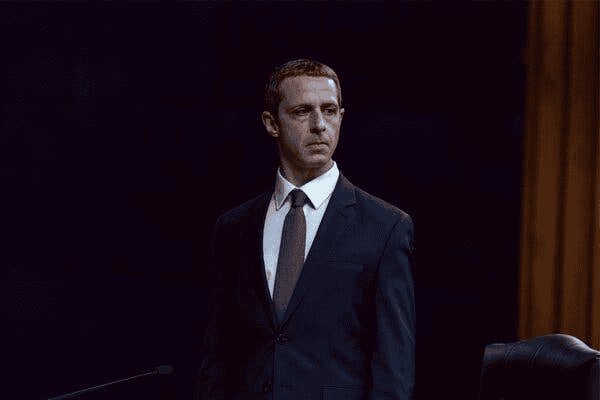
A robotic Mark Zuckerberg (Jeremy Strong) is used to making all the decisions about his company, and his drive to keep user retention high means that some of his initiatives have resulted in morally questionable outcomes.
In the run-up to the 2020 American elections, with COVID beginning to take over the world, the tension mounts as Haugen decides to become a whistle-blower, and the Wall Street Journal decides to publish Horwitz’s “Facebook Files”.
Zuckerberg maintains that Facebook is just a corkboard, and he is not responsible for what people post. But just how much has it been responsible for the current political polarisation? You’ll have to see The Social Reckoning and make up your own mind.
Lezly Herbert