

Warning: This article contains mentions of sexual assault
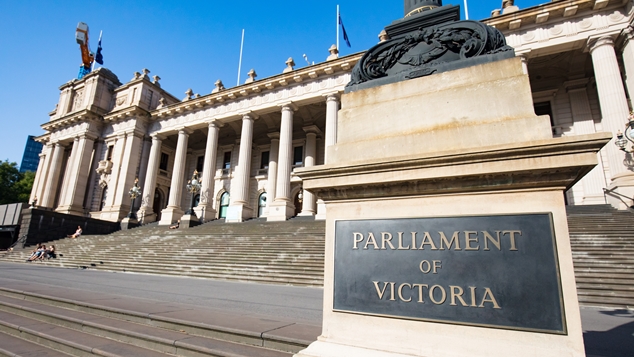
This week Victoria’s upper house passed a motion which will see the state government begin consultation on an alternative, online sexual assault reporting option.
The motion moved by Derryn Hinch’s Justice Party MLC Stuart Grimley noted the Victorian Law Reform Commission (VLRC) report – Improving The Justice System Responses to Sexual Offences – which found that 87% of survivors do not report sexual violence to the police.

Grimley’s successful motion called on the Andrews Government to commit to implementing a Sexual Assault Reporting Option (SARO) which would allow victim-survivors to report a range of crimes to designated agencies and received appropriate support.
Professor Georgina Heydon, Criminology and Justice Studies at RMIT University says an alternative reporting platform for sexual assault must be both evidence-based and survivor-centered, and work to eliminate barriers for those who are less likely to report.
Professor Heydon and RMIT are part of the research team leading the Alternative Reporting Options Research Project, funded by the Australian Institute of Criminology.
“Victoria’s current reporting system for sexual assault is inadequate for most sexual assault survivors,” Professor Heydon says.
“Research has long identified the persistent under-reporting of sexual assault to police and the criminal justice system, with the most recent statistics suggesting only 13% of sexual assaults are ever reported.”
“This figure is likely much lower for certain communities who face significant barriers to reporting their experiences, such as Aboriginal and Torres Strait Islander people, LGBTQIA+ people, and those from culturally and linguistically diverse backgrounds.”
Professor Heydon also notes some victim-survivors distrust police, and are reluctant to take the issue to trial due to their treatment during that process.
“Rape myths and victim-blaming attitudes are also still persistent in society, meaning victim-survivors may not feel their experience was ‘serious enough’ to report, or they may blame themselves, creating further barriers to reporting and seeking help,” Professor Heydon continues.
“Due to these issues which lead to vast under-reporting, only a tiny fraction of sexual assault offenders are ever prosecuted and convicted. This commitment by the Victorian Government aims to both improve the reporting process in the hope that it leads to more convictions, and importantly improves access to support for survivors, about half of whom never seek support either.”
“Our research has demonstrated that an alternative reporting system can be designed to address critical gaps. Such a system can enable a victim-survivor to tell their story and be connected with therapeutic support services. This system would also allow collection of data about a wide range of experiences. This can be sent to police to better inform their operations. Above all, such a system gives survivors options and agency.”
The consultation’s outcomes will be required to be tabled in Victorian Parliament by September this year.
OIP Staff
Do you need some support?
If you are struggling with anxiety or depression, support and counselling are available from:
QLife: 1800 184 527 / qlife.org.au (Webchat 3pm – midnight)
QLife are a counselling and referral service for LGBTQIA+ people.
DISCHARGED: info@discharged.org.au / discharged.org.au
Discharged is a trans-led support service with peer support groups for trans and gender diverse folks.
Lifeline: 13 11 14 / lifeline.org.au
Beyondblue: 1300 22 4636 / www.beyondblue.org.au

You can support our work by subscribing to our Patreon
or contributing to our GoFundMe campaign.