


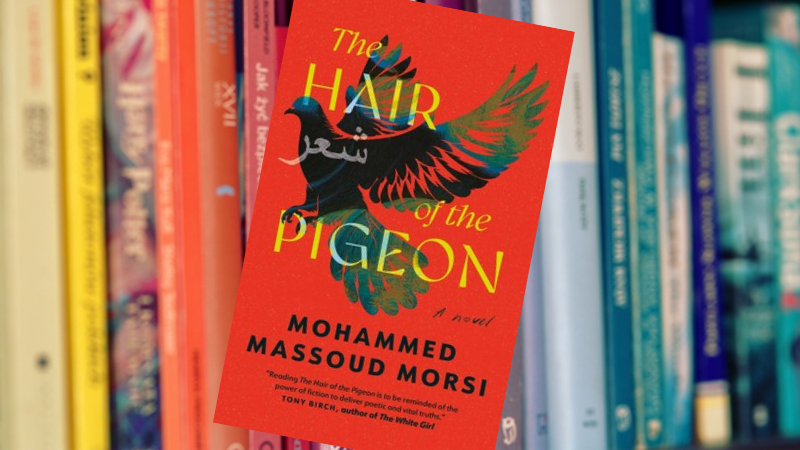
The Hair of the Pigeon
by Mohammed Massoud Morsi
UWA Publishing
Yarmouk Refugee Camp in Syria came into being to house Palestinians fleeing their homeland and seeking refuge, initially from the Arab-Israeli War in 1948 and 1949.

Located near the city of Damascus, the densely populated area was an urban quarter with no tents or slums. It had schools, hospitals and shops, but lives were still constrained for its inhabitants, many who believed that they would eventually be returning to their homes.
In The Hair of the Pigeon, Yarmouk is home to three seventeen year olds – Ghassan (who narrates the story), Sama (the girl whose eyes mirror the sky) and Badawi (who is into football, fist fighting and fast-money schemes). They live with parents and grandparents who carry histories of displacement and trauma.
Yarmouk is also home to a ‘tangle of fates’. The people have alliances, jealousies and prejudice, and there is violence and crime, just like all other places in the world. There are also spies living there, and people disappear on a regular basis, with many of these people ending up in a prison known as ‘the branch of death’.
When the Arab Spring ignites a wave of protests and violence across the region, tensions escalate in the refugee camp as well and the teenagers get caught up. A combination of circumstance and secrets send them in different directions.
When Yarmouk comes under siege, desperate decisions have to be made to survive. From the atrocities of war and military rule; to difficulties of being a refugee; to surviving against all odds and the enduring power of love, the three of them end up in present-day Copenhagen where old alliances are rekindled, old resentments resurface, and healing begins.
Winner of the 2025 Dorothy Hewett Award, this exciting and insightful novel is a powerful tale of love, betrayal and survival in the midst of turbulence that spans many years. Massoud Morsi has crafted very personal stories which real people like Ghassen and Sama shared with him … stories that unfortunately have echoes in present day Middle East.
Lezly Herbert