


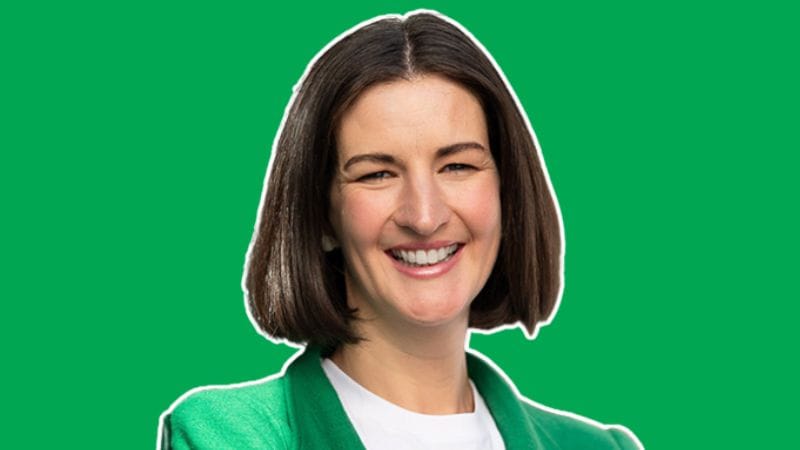
Victorian Liberal leader Jess Wilson is set to become the state’s youngest-ever premier since Federation after a sweeping victory at Saturday’s state election.
The 36-year-old Liberal leader, who entered parliament only one term ago and rose to the leadership position just over a year ago, secured a landslide win over the three-term Labor government led by Ben Carroll.


Jess Wilson’s Liberals decisively win government
Based on current counting, the Coalition is projected to win 66 seats, while Labor is expected to hold just seven. One Nation is projected to win two seats, the Greens eight seats, and one seat is expected to be held by an independent.
Labor’s crushing defeat and the Greens’ success mean the environmental and social justice-focused party could become the official opposition for the first time in an Australian jurisdiction.
Wilson is the third woman to become Victoria’s premier. Her victory marks a significant moment in the state’s political history.
Labor Premier Joan Kirner became the first woman to hold the role in 1990 following the resignation of John Cain but lost the 1992 election. Former premier Jacinta Allen stepped down in July after almost three years in the role.

In her victory speech, Wilson acknowledged many supporters had voted for the Coalition for the first time.
“I know that for many of you this is the first time that you have ever voted Liberal. And for others, it was the first time you have ever given us your preference,” Wilson said.
“I realise that you have lent us your vote. We don’t own it.”

Labor reduced to just a handful of seats
For outgoing premier Ben Carroll, the election brought not only the loss of government but also the loss of his own seat of Niddrie in Melbourne’s north.
“This is a significant loss for Labor,” Carroll said.
“It’s not the result we wanted, but it is a result we accept.
“As leader of the party, I take full responsibility. Democracy is both beautiful and brutal. Beautiful, because we get to witness the will of the people. And brutal, because it is so difficult and painful to lose.
“But Victorians have spoken. And their message is clear. They want change.”
Greens poised to become the official opposition
The Greens increased their representation by retaining Brunswick, Richmond and Melbourne while winning Pascoe Vale, Preston, Northcote and Footscray from Labor, and Prahran from the Liberals.
Speaking to media on Sunday morning, Greens leader Ellen Sandell said it would be “absolutely historic” if the party became the official opposition.
Asked whether there had been any consideration of working more closely with Labor, Sandell was cautious in her response.
“We will have enough seats and enough power to be a strong and progressive opposition,” she said.
The shift continues a broader trend away from Australia’s traditional two-party system, with many electorates now functioning as three- or four-candidate contests.

One Nation falls short of ambitious goals
Following gains at South Australia’s state election earlier this year, One Nation entered the Victorian campaign hoping to significantly expand its parliamentary representation.
In recent weeks, however, party officials tempered expectations.
While the party has secured two lower-house seats, Victorian leader Warren Pickering failed to win the eastern suburbs seat of Pakenham, which was won by Liberal candidate Radmila Dyson with an 11.87 per cent swing.
One Nation may ultimately secure three lower-house seats, including Lara and Melton, while Sunbury remains in doubt. The party is also expected to win up to eight upper-house seats.
Although One Nation received around 20 per cent of first-preference votes statewide, preference flows limited its success in translating votes into lower-house victories.