


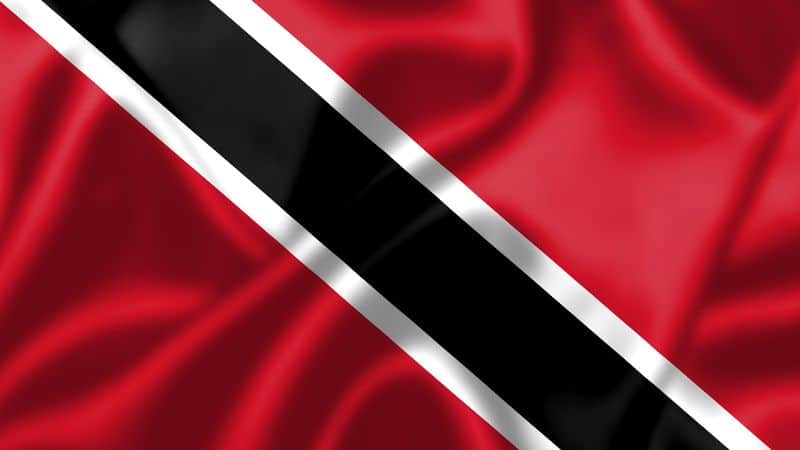
The United Kingdom’s top appeals court has ruled that Caribbean nation Trinidad and Tobago must remove laws that criminalise homosexuality.
Although the country is a sovereign nation, it retains the United Kingdom’s Judicial Committee of the Privy Council as its final court of appeal. The ruling represents the final avenue of appeal in the case and no further appeals are possible.
The decision is a victory for activist Jason Jones, who filed a challenge to the nation’s laws in 2017. Jones argued that the so-called “buggery” laws were unconstitutional. The laws state that anyone found guilty of the offence can face a five-year prison sentence and, while it’s been many years since they were last enforced, activists argue they continue to send a message that homosexuality is unacceptable.
“Those laws cannot be regarded as reasonably justifiable in a society that has a proper respect for the rights and freedom of the individual,” said Judge Philip James Sales of the Judicial Committee of the Privy Council.
“The current understanding of the fundamental individual right to respect for private and family life is that it protects such a core part of human identity as one’s sexual orientation and the sexual activities carried on in private between consenting adults to give expression to that identity,” Sales said.
“Laws which seek to criminalise such activities cannot be justified.”
Reacting to the decision, Jones described it as a “stunning victory”.
“To discriminate against somebody simply because of who they choose to love is simply ridiculous,” he said during an interview with Associated Press.
The journey through the court process has taken Jones almost a decade. Trinidad’s High Court found the laws were unconstitutional in 2018, but a local appeals court reversed the decision in 2025. Trinidad’s Court of Appeal later allowed Jones to make a further appeal to the British court. The country’s government and church groups remained opposed to removing the laws.
In recent years homosexuality has been decriminalised in many Caribbean jurisdictions, including the Bahamas, Anguilla, the British Virgin Islands, the Cayman Islands, Montserrat, the Turks and Caicos Islands, Barbados, Dominica, St Lucia, and Antigua and Barbuda. However, homosexuality remains outlawed in Grenada, Jamaica, and St Vincent and the Grenadines.
Jones has spoken about how singer Nina Simone served as an inspiration for his advocacy work. The entertainer visited the country in 1984 and a 19-year-old Jones spent three weeks working with her.
“Nina was the one who said, ‘Jason, get off this rock and go see the world,’” Jones shared.
After discovering an embracing LGBTIQA+ community while living overseas, and losing many friends to the AIDS crisis, Jones set about changing the laws in his home country.
“This judgment will have a domino effect across every country that has the Privy Council as its supreme court. It will change many millions of people’s lives,” Jones said in a statement.
“I’m looking forward to going home, switching off everything and living with this moment for a while.”
He said the effects of the judgment may take decades to become fully apparent.
“We may not see the benefits of this for 50 years. What a judgment says in a courtroom and what happens in your home and workplace are two entirely different things.
“I don’t focus on changing hearts and minds. I have done this for my community, for our hearts and minds, so that we can stand proudly and at least say we are not criminals,” he said after the judgment was handed down.
Veteran LGBTIQA+ rights campaigner Peter Tatchell, who was at the courthouse for the judgment, said the decision would have an effect across many countries in the Commonwealth.
“There will certainly be LGBT people and human rights defenders in at least a dozen countries who will now use this Privy Council judgment to push for decriminalisation in their home countries. It sets an absolute gold standard for decriminalisation.”
Téa Braun, chief executive of the Human Dignity Trust, which advocates for the removal of anti-LGBTQ+ laws around the world, said there was hope the case signalled a continuing regional trend of tackling “antiquated laws” that “violate the human rights of LGBTQ+ people”.
“This issue continues to be litigated in domestic courts across the region, and we hope the trend, which began with a judgment in Belize in 2016 and was followed by Antigua, Barbados, St Kitts, Dominica and St Lucia, will continue,” she said.