


Forget Mary Poppins and Maria von Trapp, in 1982 Julie Andrews became Count Victor Grazinski
Victor/Victoria is a 1982 American musical comedy film directed by Blake Edwards and starring his wife, actor Julie Andrews.
Set in Paris in 1934, the film tells the story of struggling singer Victoria Grant. Having hit rock bottom, Grant meets gay cabaret performer Carroll “Toddy” Todd (Robert Preston), and together they hatch a plan.

Victoria pretends to be a man who is a female impersonator. Toddy introduces her to a local nightclub owner as Count Victor Grazinski, a Polish performer who has just arrived in town, and soon “Victor” is the toast of Paris. Victoria is now a woman pretending to be a man pretending to be a woman.
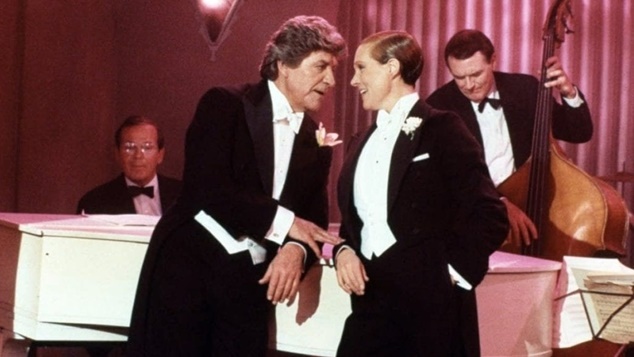
The film explores themes of gender and sexuality, and it was praised for its progressive portrayal of LGBTI characters during a time when such representation was rare in Hollywood.
The song Le Jazz Hot is the film’s most memorable musical number. It was composed by Henry Mancini with lyrics by Leslie Bricusse.
The story has been told many times. The film is a remake of the 1933 German musical comedy Victor and Victoria. In 1934 it was remade in France as George and Georgette, and an English‑language version appeared the following year titled First a Girl. In 1957 it was remade again in West Germany, again titled Victor and Victoria.
Blake Edwards’ film was nominated for seven Academy Awards, winning a trophy for Best Original Score. Julie Andrews lost out to Meryl Streep in Sophie’s Choice. Robert Preston was nominated for Best Supporting Actor, but the award went to Louis Gossett Jr. for An Officer and a Gentleman. Lesley Ann Warren was nominated for Best Supporting Actress but lost to Jessica Lange for her work in Tootsie.
Over a decade later Edwards and Andrews adapted the show into a Broadway musical. Preston, who like Andrews was a huge Broadway star, declined to take part, saying he did not believe it would be successful.
The production played for 734 performances and 25 previews, closing on July 27, 1997. Liza Minnelli took over the lead role for a short period, and later Raquel Welch replaced Andrews in the show.
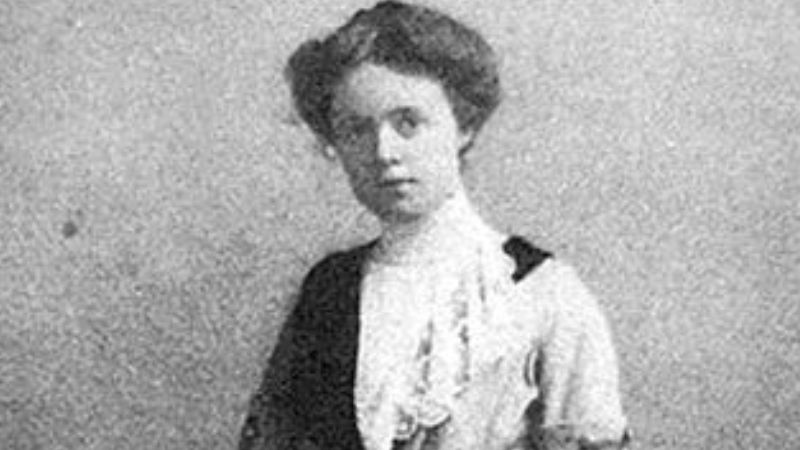
Writer I. A. R. Wylie is born in Melbourne in in 1885
Ida Alexa Ross Wylie was born in Melbourne in 1885. She would become a novelist, screenwriter, poet and suffragette supporter whose work gained wide acclaim.
Her father, Alec Wylie, was a Scottish MP who fled to Australia to avoid creditors he owed money to. Divorced from his first wife, he remarried in Australia, wedding a farmer’s daughter, Ida Ross, and their daughter bore both their names.
The couple moved back to London when young Ida was three years old, but her mother passed away shortly afterwards. After attending a finishing school in Belgium and studying in England and Germany, she began publishing short stories and released a series of novels set in India.
She had never visited India but relied on accounts from friends who had lived there to create her fictional world. She also wrote a steady stream of novels set in Germany, where she lived in the early 20th century.
Returning to London in 1910, she became involved with the suffragette movement and became close friends with Rachel Barrett. Together they created the underground newspaper The Suffragette.
In 1917 the pair travelled to America, bought a car and journeyed across the country from New York to San Francisco. Wylie eventually settled in Los Angeles, where she began selling her stories to Hollywood film studios. Between 1915 and 1953, more than 30 movies were made based on her work.
Wylie became involved with physician Sara Josephine Baker, who is remembered for her groundbreaking work in public health and tackling infant mortality rates. While the pair never publicly acknowledged that they were lesbians, people who knew them have described them as partners.
In the 1930s Wylie and Baker settled on a farm in New Jersey alongside another pioneering woman, Dr Louise Pearce. The three lived together until Baker died in 1945. Pearce passed away in August 1959, and just a few months later, in November, Wylie also died at the age of 74. Wylie and Pearce are buried alongside each other.
During her life Ida Alexa Ross Wylie published more than 50 novels, working right up until the time of her passing.
Her 1942 work Keeper of the Flame was adapted into a film starring Spencer Tracy and Katharine Hepburn, directed by George Cukor. Her short story Four Sons was adapted for the screen twice — first in 1928 by director John Ford, and again in 1940 by director Archie Mayo.
OIP Staff