

Western Australia’s long-promised ban on conversion therapy practices is unlikely to be introduced in 2026, with Premier Roger Cook telling OUTinPerth that “the wheels of parliament move slowly”.
The Premier said his government was a “progressive government” and highlighted the passage of surrogacy legislation last year, as well as reforms to Western Australia’s outdated Equal Opportunity Act introduced last month. However, when asked for a timeline on conversion therapy legislation, he declined to commit to a specific timeframe.

The Premier first committed to examining conversion therapy practices in 2018 when he was Health Minister. The government later announced it would develop legislation following the damning report into the operations of Esther House in 2022.
In 2024, the government said it had run out of time to address the issue during its second term, but made an election commitment to introduce legislation if re-elected in 2025. In January, Attorney-General Tony Buti renewed that commitment on the International Day to End Conversion Therapy, stating that legislation would be introduced before the end of 2026.
With just nine sitting days remaining for the Legislative Council this year, advocates pushing for the legislation have expressed concern that it may have slipped from the government’s agenda. Tasmania recently passed conversion therapy legislation through its lower house, leaving Western Australia as the only Australian state without protections, while the Northern Territory also lacks equivalent legislation.
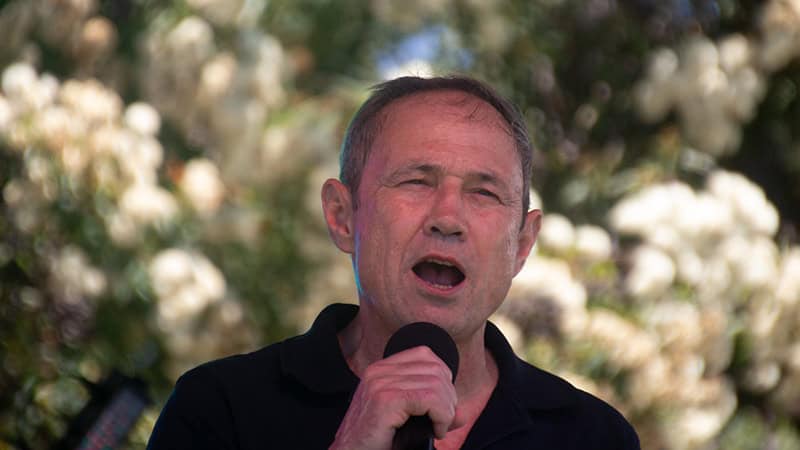
Attorney-General Tony Buti’s office did not respond to inquiries from OUTinPerth regarding the government’s commitments. OUTinPerth therefore asked the Premier about the issue when he attended PRIDEFEST Fair Day to celebrate with the local LGBTIQA+ community.
“What we do know is that the wheels of parliament move slowly,” Premier Roger Cook said.
“We’re excited that we got the Equal Opportunity legislation in. It will make sure that Western Australia stays a much safer, more peaceful and inclusive community.”
Asked again for a timeline on the introduction of conversion therapy legislation, the Premier said the government was continuing to consider its options.
“We’re looking at all those options. Last year we had our surrogacy legislation go through, this year we’re having our equal opportunity legislation.
“We’re a socially progressive government and we’re looking at all opportunities,” Premier Roger Cook said.
While opponents of bans on conversion therapy practices often argue legislation is not needed because the most extreme practices the legislation outlaws are a thing of the past, in Western Australia there is clear evidence of practices occurring more recently.
The report into the activities at Perth’s religious based facility Esther House highlighted Western Australia’s lack of legislation specifically outlawing conversion practices and suppression practices that aim to change a person’s sexuality or gender.
Last year Medical Journal Australia published a new analysis of a study they published back in 1987. The report from Dr Robert Kosky reported that eight children who were removed from their families for long stretches and treated in a Perth hospital facility located at Stubbs Terrace reportedly ceased expressing gender behaviour that did not align with their birth gender.
The paper argues that the patients gender dysphoria was a result of poor family dynamics, and it could be corrected during a long hospital stay. Upon the release of the report the government said it was confident that similar practices were not being used in government facilities today.