


On this day in 1989, the cash box for the Westside Observer was stolen
The Westside Observer was for many years a key source of news and information for Perth’s LGBTIQ+ communities. When it launched in 1988, the A5‑sized magazine cost $2 a copy, but the cover price was abandoned not long after.
Back in the late 1980s, when homosexuality was still officially illegal in Western Australia, queer press could only be picked up in venues like Connections, The Red Lion and a handful of adult shops.

To pay for the magazine, readers were asked to place their $2 into a cash jar that sat beside each stack of the latest issue.
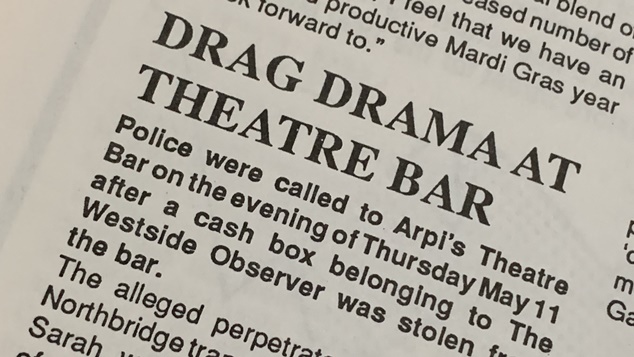
On 11 May 1989, there was an incident at Arpi’s Theatre Bar at the Perth Concert Hall, a popular haunt for the LGBTIQ+ community.
Staff noticed the cash tin for the magazine had suddenly disappeared. Suspicion turned to a woman and her male companion who had been sitting nearby.
Staff confronted the woman in the venue’s bathroom, where she was found with the missing cash tin. She threatened them with a syringe, claiming it was infected with HIV.
Police arrived and arrested the pair, who later pleaded not guilty to the offence. A week later, the cash tin at Connections Nightclub was also stolen, but on that occasion the culprit escaped.
In the June edition of the Westside Observer, the incident was reported. The author lamented, “This sort of conduct should be frowned on by the gay community. It’s not only stealing, but stealing from ‘family’.”
The article also argued that more needed to be done to avoid reinforcing negative perceptions of the community in the eyes of police and the general public.
Shortly after these incidents, the business model for LGBTIQ+ publishing changed. The magazine dropped its cover charge and became free for anyone who wanted a copy.
That value has continued through the Westside Observer, shOUT, and now OUTinPerth — where there are still no paywalls.
You can always drop some money in our digital cash box though, by signing up to Patreon.
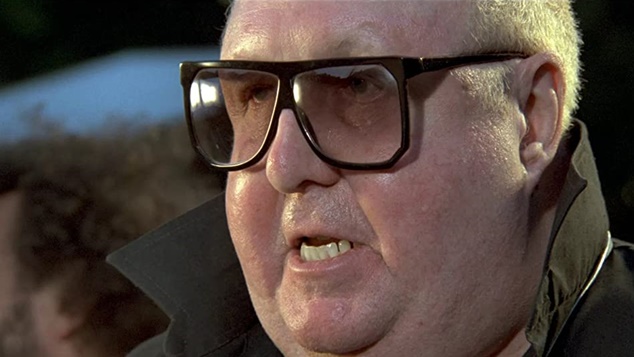
Australian actor Frank Thring was born on this day in 1926
Frank Thring was born in Melbourne in 1926. While he was known as Frank Thring Jr in his youth, he was actually Francis William Thring IV — his father, grandfather and great‑grandfather had all carried the same name.
His father was a film producer in the 1920s, notably producing the silent feature The Sentimental Bloke, in which the younger Thring also appeared. Sadly, Frank Thring III passed away in 1936 when his son was just 10 years old. The family operated Melbourne radio station 3XY, and at fifteen, young Frank began working there as both a thespian and an announcer.
After serving in the Air Force during World War II, Frank began acting on stage in 1945. Within a decade he was starring in shows in London’s West End. He later moved to Hollywood, where he took on some of his most memorable roles, including Pontius Pilate in the 1959 film Ben‑Hur and Al Kadir, Emir of Valencia, in El Cid.
Over the following decades he worked across film, theatre and television, appearing in Against the Wind, Bodyline, Skippy the Bush Kangaroo and Mad Max Beyond Thunderdome.
Thring was known for his flamboyant persona and was a regular guest on chat shows, where he entertained audiences with his sharp wit and storytelling. He also wrote a regular column for TV Week. He almost always dressed in black, with his collar upturned and a large medallion around his neck.
He married actress Joan Cunliffe in the 1950s, but the marriage ended in divorce. She later became the manager of both Rudolf Nureyev and Dame Margot Fonteyn. Frank Thring died from oesophageal cancer in 1994 at the age of 68.
Take a look at Frank Thring proving to be a challenging guest for Craig McLachlan — who was filling in for Steve Vizard — on an edition of Tonight Live in the early 1990s. The language and comedy are very much of their time.
OIP Staff, This post was first published in 2021.