


In 1968 Andy Warhol was shot by Valerie Solonas
Artist Andy Warhol gained fame and acclaim in the 1960s as part of the Pop Art movement. He created his famous paintings of Campbell’s Soup Cans and portraits of cultural icons such as Elvis Presley and Marilyn Monroe.
His studio space, The Factory, was a hotbed of creativity, and he branched out into filmmaking and music. His surrounding community included people he dubbed “superstars”, including Nico, Joe Dallesandro, Edie Sedgwick, Viva, Ultra Violet, Holly Woodlawn and Candy Darling. On the periphery of The Factory scene was feminist writer Valerie Solanas.

In 1967, Solanas published the SCUM Manifesto, a separatist feminist work that argued for the elimination of men. She had originally trained in psychology but dropped out of graduate school to focus on her writing. Solanas was open about being a lesbian despite the conservative climate of the 1950s and hosted a college radio show in which she offered advice on how to oppose male power structures.
She met Warhol in 1967 and asked him to produce her play Up Your Ass, giving him a copy of the script. At the time, police were regularly raiding The Factory, and Warhol reportedly believed the script might be a police plant due to its explicit content. Warhol later told Solanas he had lost the script, although members of his circle believed it may have been destroyed. As compensation, he paid her $25 to appear in his film I, a Man.
On 3 June 1968, Solanas entered The Factory and shot Warhol and art critic and curator Mario Amaya. Amaya sustained only superficial injuries, but Warhol was critically wounded. One of the three bullets fired struck him, causing severe damage to his spleen, stomach, liver, lungs and oesophagus.
Warhol was rushed to hospital, where he underwent a five-hour operation to save his life. He suffered the effects of his injuries for the remainder of his life, and the assassination attempt had a profound impact on both his personal life and his subsequent work.
Solanas surrendered to police the following day and stated that she believed Warhol exerted excessive control over her life. She was later diagnosed with paranoid schizophrenia and placed under the supervision of the Department of Corrections for three years.
After her release, Solanas continued to harass Warhol and others, primarily by telephone. She was arrested again in 1971 and spent periods in psychiatric institutions before fading from public view. She was reportedly living on the streets of New York in the mid-1970s before relocating to California.
Solanas died of pneumonia at the Bristol Hotel in San Francisco in 1988 at the age of 52.
Warhol died the previous year, aged 58, following medical treatment for his gallbladder. Although the surgery was initially described as routine, a later review concluded that it carried greater risk than first acknowledged, partly due to complications stemming from his 1968 injuries.
The shooting was dramatised in the 1996 film I Shot Andy Warhol, in which Lili Taylor received acclaim for her portrayal of Solanas, while Warhol was played by Jared Harris. Director Mary Harron sought permission to use music by The Velvet Underground but was refused by Lou Reed, who expressed concern that the film might be perceived as glorifying Solanas.
Reed and John Cale later included a song addressing Solanas on Songs for Drella, their 1990 concept album about Warhol, in which Reed conveyed strong condemnation of her actions.
A fictionalised version of Solanas also appeared in the television series American Horror Story: Cult, portrayed by Lena Dunham.
In 1999, the script of Up Your Ass that had been given to Warhol decades earlier was rediscovered in a case of lighting equipment belonging to Factory associate Billy Name. The play was staged in 2000 as a musical by a San Francisco performance group.
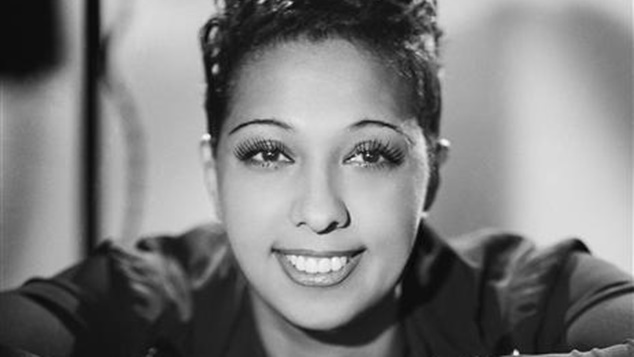
Josephine Baker was so much more than a performer with banana
The iconic image of Josephine Baker is of her performing in a Paris nightclub in the 1920s wearing only a skirt made of artificial bananas and a necklace. Her 1927 appearance at the Folies Bergère in the revue Un vent de folie encapsulated the new-found sexual freedom of the Roaring Twenties and the jazz age.
Baker was far more than a cabaret performer. During her life she was a celebrated singer, a civil rights activist and, during the Second World War, a French Resistance agent.
Born on this day in St Louis, Missouri, in 1906, her birth name was Josephine McDonald. She grew up in an impoverished area characterised by rooming houses, brothels and apartments without interior plumbing, and she often went hungry.
She dropped out of school at the age of 12 and was married at 13 to her first husband. Divorced a year later, she married for a second time in 1921 when she was just 15. Although that marriage also ended in divorce six years later, she retained the surname Baker for the rest of her life.
After finding early success as a comic dancer in St Louis, she moved to New York and appeared in Broadway revues. In 1925 she sailed to Paris, where she became a theatrical sensation. Alongside her celebrated banana-skirt performance, she also appeared on stage with her pet cheetah, which wore a diamond collar.
In Paris, Baker befriended writer Ernest Hemingway, posed as a model for Picasso and was a contemporary of playwright Jean Cocteau. As her fame grew, she toured internationally, although her performances were sometimes opposed by church groups who considered them immoral.
During the 1930s she appeared in films and began recording music. She returned to the United States to perform in the 1936 Broadway production Ziegfeld Follies, but the show was poorly received by critics. After returning to France, she married industrialist Jean Lion, renounced her American citizenship and became a French citizen.
During the Second World War, Baker assisted the French Resistance, relaying information about German troop movements that she overheard at social gatherings. After the war she was awarded the Chevalier of the Legion d’honneur by French President Charles de Gaulle.
In the 1950s she returned to the United States for a successful nightclub tour, during which she refused to perform for segregated audiences. As a result, she was accused of having communist sympathies and her working visa was revoked. She did not perform in the United States again for nearly a decade.
In the 1960s Baker became an outspoken supporter of the civil rights movement and joined Dr Martin Luther King Jr at the March on Washington in 1963. She was the only woman to address the crowd, speaking about the contrast between the honours she received abroad and the discrimination she faced in her homeland.
Baker continued performing throughout the 1960s and 1970s. In 1975 she starred in a new revue celebrating 50 years of her career. The production was a major success and its opening night audience included Shirley Bassey, Mick Jagger, Sophia Loren, Diana Ross and Liza Minnelli.
Four days after the opening, Baker was found unconscious in her room, surrounded by glowing newspaper reviews. She had suffered a cerebral haemorrhage and died on 12 April 1975 at the age of 68.
Married four times, her third marriage to Jean Lion lasted three years. In 1947 she married her fourth husband, French composer Jo Bouillon, and they divorced in 1961. Baker was bisexual and had relationships with women throughout her life. Figures often cited among her lovers include blues singer Clara Smith, novelist Georges Simenon, jazz singer Ada ‘Bricktop’ Smith and writer Colette. It has also been suggested that she may have had a relationship with painter Frida Kahlo.
Baker adopted ten children in what she described as her “rainbow tribe”, intending to demonstrate that people of different backgrounds could live together in harmony.
In August 2019, Josephine Baker was honoured on the Rainbow Walk of Fame in San Francisco’s Castro district. She has since inspired generations of performers. Shirley Bassey has cited her as a major influence, Diana Ross has paid tribute to her in stage shows, and Beyoncé has portrayed her on stage. Numerous films, miniseries and plays have also been created about her life.
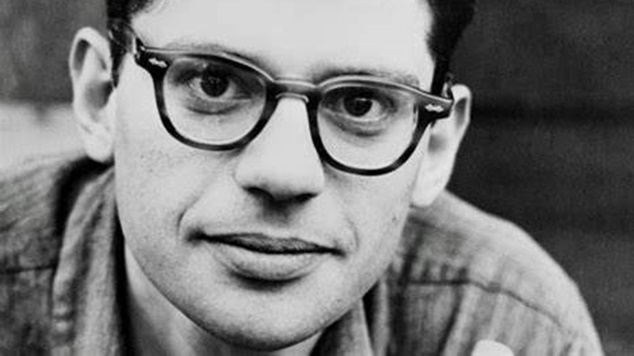
Poet Allen Ginsberg was born on this day in 1926
Allen Ginsberg was one of the most influential poets of the 20th century. He was close friends with writers Jack Kerouac and William S Burroughs, and together they formed the core of the Beat Generation literary movement.
Ginsberg’s best-known work is Howl, first published in 1956. The poem sees Ginsberg denounce what he viewed as the destructive forces of capitalism and social conformity in the United States. In the work he was also openly candid about his homosexuality and his relationships with several men, including his long-term partner Peter Orlovsky. The book was challenged by authorities and became the subject of a landmark obscenity trial in 1957, at a time when homosexual acts were widely criminalised across the United States.
Ginsberg continued writing throughout his life and was a highly visible supporter of numerous political protests and social causes. He collaborated with a wide range of artists, including Philip Glass and Bob Dylan.
In 1996 he reached a new generation of listeners with the song Ballad of the Skeletons. The rock track saw him team up with composer Glass and former Beatle Paul McCartney. It received heavy airplay on Australia’s youth radio station Triple J and reached number eight in that year’s Hottest 100.
Toward the end of his life, Ginsberg suffered from congestive heart failure. He died at his home on 5 March 1997. In the days leading up to his death, he reportedly contacted friends one by one to say goodbye. He wrote his final poem only days before he died, titled Things I’ll Not Do (Nostalgias).
At the time of Ginsberg’s death, he had been in a relationship with Peter Orlovsky for 43 years. Orlovsky died in 2010.
Harry Potter actor Daniel Radcliffe portrayed Ginsberg in the 2013 film Kill Your Darlings.