


Maureen Duffy, the writer who authored more than 60 works and served as a trailblazing gay rights activist, has died at the age of 92. Duffy passed away on Wednesday 27 May 2026.
Her career spanned novels, plays, screenplays, poetry and non-fiction. In the 1960s she began publicly campaigning for gay rights and became one of the first prominent lesbians with a public profile in the United Kingdom.

Duffy’s activism began before Britain decriminalised homosexuality and continued for many decades. She campaigned for the rights of people living with HIV at the outbreak of the AIDS crisis and unsuccessfully fought against the introduction of Section 28 under the Thatcher government. A humanist, she also campaigned for animal rights and was a prominent voice for authors’ rights.
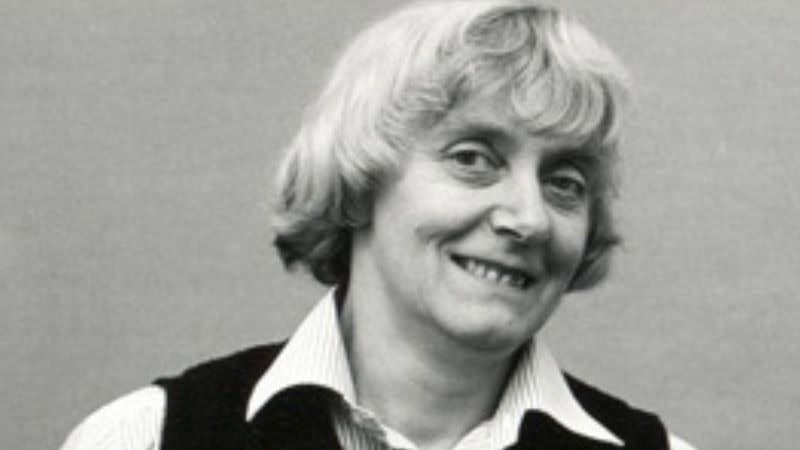
In 2025 she was named the inaugural recipient of the Royal Society of Literature Pioneer Prize. The prize, founded by author Bernardine Evaristo, is awarded annually to a woman writer aged over 60 for a period of 10 years.
Duffy was raised by her mother in Sussex after her father left the family when she was just two months old. When she was 15 years old, her mother died. She then moved to East London to live with extended family members.
While studying at King’s College London in the 1950s she completed her first play. After graduating she became a teacher, spending two years in Naples before returning to teach at secondary schools in London.
In 1961 she became a full-time writer, producing screenplays for television. Her first novel, That’s How It Was, was published in 1962 and drew heavily on her experience of working-class life.
In 1966 she published The Microcosm, set in a lesbian club and depicting lesbians of different ages and backgrounds. The novel was notable for challenging prevailing stereotypes and expanding representations of lesbian life.
In 1968 she was one of several women commissioned by Joan Plowright to write plays with all-female casts for the National Theatre. Rites, a black farce set in a women’s public toilet, climaxes with the characters attacking a man who has entered their space, only to discover too late it is a woman wearing a suit. Another of Duffy’s plays, Washouse, was set in a laundromat run by transgender women.
Among her novels was a London-based trilogy comprising Wounds (1969), Capital (1975), and Londoners: an Elegy (1983). LGBTIQA+ characters appear throughout her work, and in some cases characters’ gender is deliberately left undefined. Duffy was also widely praised for portraying the multicultural life of London.
Activist Peter Tatchell paid tribute to Duffy, describing her as “a true humanitarian”.
“I remember her with great affection, admiration and appreciation,” he said.