


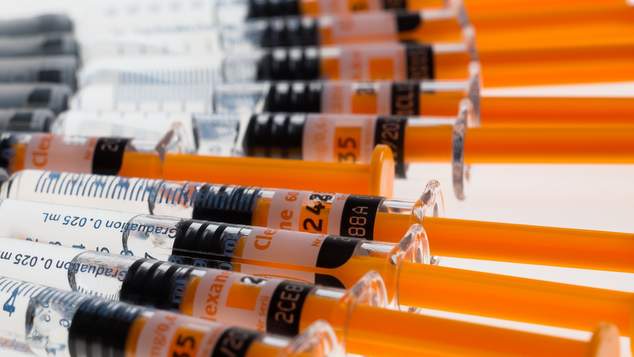
A monthly injection of HIV medication could be as effective as a daily pill regime in treating HIV according to two recent studies.

The results of two trials were presented at a health conference in Seattle last week, their findings showing the a monthly injection was as effective as a daily oral three drug regimen.
Research has shown that most people being treated for HIV would opt for a once a month injection over the daily pill taking practice.
The study found that nearly all participants who switched to the long-acting injectable regimen preferred it over their previous treatments.
The research was undertaken by ViiV Healthcare, the data was presented at the 2019 Conference on Retroviruses and Opportunistic Infections (CROI) in Seattle, Washington. The two trails are known as Flair and Atlas, and this is third phase of their testing process.
ViiV’s two-drug combo is a combination of its cabotegravir and Janssen, a Johnson & Johnson company’s, Edurant (rilpivirine). The combo is injected every four weeks.
“With FLAIR and ATLAS, we now have positive results from two pivotal Phase III studies demonstrating that this long-acting, once-monthly injectable regimen has similar efficacy, safety and tolerability to a daily, oral three-drug regimen for the treatment of HIV,” said John C. Pottage, Jr., ViiV’s chief scientific and medical officer.
“We are also encouraged by patient preference data showing that nearly all participants who switched to the long-acting injectable regimen preferred it over their prior oral therapy.”
The trials were conducted over 48 weeks and in both trials around 1% of the participants experiences a resistance to the medication. The company is also investigating if it’s possible to administer the medication in a bi-monthly regime.
The results from the studies will be used to make applications to regulatory bodies in the hope of making the treatment more widely available. For people living with HIV the development means treatment for the virus would change from taking medication 365 days a year, to just 12 clinic appointments.
OIP Staff