

The International Olympics Committee (IOC) has announced a new policy on transgender women’s participation, implementing a ban across all sports.
The decision, which will come into effect for the 2028 Summer Olympics in Los Angeles, follows an announcement last year from US President Donald Trump who said athletes who are transgender would not be granted visas.

In the announcement the IOC said eligibility for any female category event at the Olympic Games or any other IOC event, including individual and team sports, is now limited to biological females, determined on the basis of a one‑time SRY gene screening.
New policy limits women’s events to ‘biological females’ using genetic testing
The organisation said their decision would not be retroactive, and only applies to the top level of sporting events and not grassroots or community sport.
“The policy explains that, for all disciplines on the sports programme of an IOC event, including the Olympic Games and for both individual and team sports, eligibility for any female category is limited to biological females,” the organisation said.
Checking athlete’s sex will be via a genetic test conducted by analysing saliva, a cheek swab or a blood sample, a process which they described as an unobtrusive option.
IOC President Kristy Coventry released a video outlining the policy change. Coventry took over the leadership of the IOC in March 2025.
Australian legal, human rights and sports bodies warn rules may breach national laws
Sport and human rights advocates are calling on the Australian Sport Commission, Australian Olympic
Commission, and all national sport organisations to reject the new eligibility guidelines.
They argue that the proposed IOC policy will make all women targets for harassment and abuse, saying investigations often involve coerced medical exams, disclosure of intimate health information, and media scrutiny that can permanently harm atheltes.
“If enacted, the Guidelines would likely breach Australia’s anti-discrimination laws, the National Integrity
Framework, and Elite Youth Athlete Guidelines. No international sport organisation can override Australian law with a policy and a press conference,” a collective of human rights advocates said in a media release.
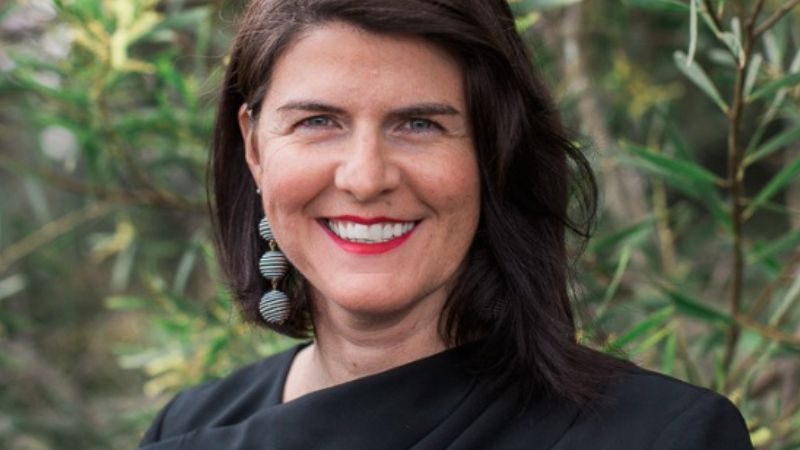
Nikki Dryden, Human Rights Lawyer and Olympic Swimmer is one person who voiced concern over the new rules.
“This isn’t just about transgender or intersex athletes, this impacts every girl playing Australian sport today. If these rules are adopted, it could mean that when you sign your daughter up to play sport, she may be subjected to sex testing just to participate.
“Worse, it creates a culture where someone like a coach, an official, or even another parent, feels entitled to question whether your daughter ‘looks female enough’ to belong.
“That is not protecting women’s sport. That is policing girls’ bodies. And once sport starts deciding which women are ‘acceptable’, no woman or girl is truly safe.
“As a human rights and sport lawyer, I can say clearly that the IOC’s new guidelines will be unlawful in Australia. Mandatory sex testing and blanket bans directly conflict with the Sex Discrimination Act, our sporting National Integrity Framework, and our safeguarding obligations to children.
“Australia already has world-leading, evidence-based policies that ensure competition integrity, safety and inclusion. Moving toward exclusionary invasive rules is not only unnecessary, it is a step back over 25 years that exposes athletes and organisations to serious legal and integrity risks.” Dryden said.
Equality Australia has also raised concerns. Legal Director Heather Corkhill says the new rules may see Australia breach our human rights obligations.
“The IOC’s approach risks breaching Australia’s obligations to protect fundamental human rights, undermining the right to non-discrimination and violating athletes’ rights to bodily autonomy and privacy.
“International sporting bodies can’t just override our strong state and federal discrimination laws by encouraging unfair, differential treatment based on sex, gender identity and sex characteristics. Sporting bodies should be putting the rights and dignity of all women athletes front and centre, ensuring they can compete free from invasive scrutiny and discrimination.” Corkhill said.
“In Australia, many sporting organisations have taken a balanced and practical approach and we hope to see that continue despite today’s decision. Sport should start from a place of inclusion. Blanket bans risk sidelining human rights in favour of simplistic, one-size-fits-all rules.” Corkhill said.
Ben Cork, the National Program Manager at Pride in Sport, said the blanket ban was unnecessary.
“International sport already has effective, evidence-based frameworks in place. A blanket ban is unnecessary and risks undermining the inclusive progress many sports have made.
“As Australians, sport plays a vital role in our communities. What matters most every weekend when we come together to kick, run or paddle is that everybody has the chance to have a go and feel part of something.
“Good inclusion is about finding practical, fair ways for everyone to participate. This decision from the IOC does not support that goal and may place sporting organisations at risk of breaching Australian law and acting inconsistently with the National Integrity Framework. It instead risks creating environments where some people feel excluded from the very communities sport is meant to bring together.” Cork said.

Experts say mandatory sex testing risks discrimination, privacy violations and athlete harm
Human Rights legal expert Professor Paula Gerber from Monash University described the IOC’s approach as “blunt and discriminatory”.
“This decision is deeply troubling because it turns trans people into a target of exclusion and sits uneasily with core human rights principles of equality, dignity and non-discrimination.” Professor Gerber said.
“Blanket exclusion and coercive testing of transgender athletes is a blunt and discriminatory response that is not supported by science and violates international human rights law. Mandatory genetic sex testing and rigid biological criteria as a condition for participation in the women’s category violates fundamental and universal human rights as set out in the International Covenant on Civil and Political Rights, including the right to equality, non-discrimination, dignity, privacy and bodily integrity.
“As several UN Independent Experts have noted, binary definitions of sex reinforce harmful stereotypes and erode progress toward substantive gender equality. Any testing of athletes needs to be individualised and evidence based, not arbitrary and degrading.
“The IOC’s decision is not particularly surprising given that the next Olympics are in the US, where President Trump seems to be on a mission to eradicate trans people. His campaign against trans people includes requiring visa applicants to the US to disclose their sex assigned at birth, and if it differs from the gender marker on their passport or other official documents, they risk visa denials or allegations of fraud.
“This recent change to immigration laws makes it highly unlikely that any trans athletes will be traveling to the US for the 2028 Olympics, regardless of the IOC decision. The IOC should revisit its decision ahead of the 2032 Olympics in Brisbane.” Professor Gerber said.
Associate Professor Morgan Carpenter at University of Sydney School of Public Health, and InterAction for Health and Human Rights called for the new policy to be abandoned.
“The introduction of mandatory genetic testing is coercive, lacks a medical indication, and stigmatises an already stigmatised population of women with intersex variations registered female at birth.
“Similar regulations were abandoned at the turn of the century due to the harms they caused, and I look forward to these regulations being similarly abandoned.” Associate Professor Carpenter said.
AOC supports IOC decision as critics call for policy to be abandoned before Brisbane 2032
The Australian Olympic Committee has backed the new policy, despite concerns about human rights breaches.
LA 2028 chef de mission Anna Meares said she empathised with anyone hurt by the IOC’s announcement, but applauded president Kirsty Coventry’s stance.
AOC president Ian Chesterman also voiced his support for the exclusion of transgender women.
“This is a challenging and complex subject and at the AOC we approach it with empathy and understanding. The IOC’s decision applies to elite Olympic sport,” Chesterman said.
“This decision provides clarity for elite female athletes who compete at the highest level and demonstrates a commitment to fairness, safety and integrity in Olympic competition, all of which are fundamental principles of the Olympic movement.”
Do you need some support?
If you are struggling with anxiety or depression, support and counselling are available from:
QLife: 1800 184 527 / qlife.org.au
QLife are a counselling and referral service for LGBTQIA+ people.
DISCHARGED: info@discharged.asn.au / discharged.asn.au
Discharged is a trans-led support service with peer support groups for trans and gender diverse folks.
Lifeline: 13 11 14 / lifeline.org.au
Beyondblue: 1300 22 4636 / www.beyondblue.org.au