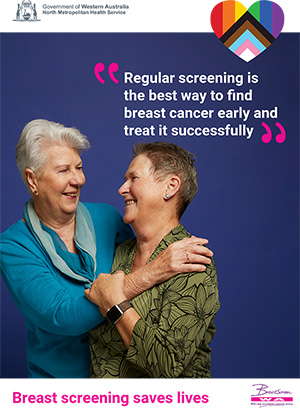


The WA Cervical Cancer Prevention Program recently produced a brochure for lesbian women to raise awareness of the need for regular Pap smears in preventing cervical cancer. There are several myths regarding lesbian women’s risks of developing cervical cancer, which the brochure hopes to dispel. One of these myths is that lesbian women are not at risk of developing cervical cancer because they don’t have sex with men. Another myth is that the Human Papilloma Virus (HPV), of which some strains are high-risk and can cause cervical cancer, is less common in lesbians and that they cannot pass HPV to each other. There is also a mistaken belief that cervical abnormalities are less common in lesbian women.
Research indicates that rates of cervical abnormalities and HPV are similar for both lesbian and heterosexual women. HPV is commonly spread through genital skin-to-skin contact during sexual activity, including female-to-female sex.

WA Cervical Cancer Prevention Program Research Officer Shamila Kumar and Health Promotion Officer Stacey Mansfield were responsible for conducting the preliminary research for the brochure, setting up a reference group of lesbian women and developing the brochure in consultation with the reference group. The brochure provides lesbian women with information about Pap smears and the link between HPV and cervical cancer and gives suggestions for overcoming barriers that lesbian women may experience in seeking health care.
Cervical cancer is one of the most preventable cancers. Since the national cervical screening program was introduced in 1991, rates of cervical cancer mortality have dropped by 55 percent. Cervical cancer can take up to 10 years to develop. Pap smears can detect abnormal cells long before they develop into cancer, so don’t risk your health – if you have not had a Pap smear in the last two years, make an appointment with your GP or women’s health centre today. One test, 15 minutes, every 2 years is all it takes.
For more information regarding the brochure or Pap smears, call the WA Cervical Cancer Prevention Program 13 15 56.
—
Maria Bonar is Health Promotion & Recruitment Coordinator for the WA Cervical Cancer Prevention Program.