


‘The Wizard of Oz’ was released in 1939
Iconic film The Wizard of Oz made its debut on this day in 1939. The film became a favourite of queer communities around the world, leading to the code phrase “friend of Dorothy”.
The adaptation of Frank L. Baum’s 1900 novel was a success when it was first released, but it would not make a profit for the studio until it was re-released in the late 1940s.

The story of Dorothy and her dog Toto being swept away by a tornado to the mysterious Land of Oz, where she befriends a Scarecrow, Tin Man and Cowardly Lion, has been a children’s classic for generations.
It spawned a stack of memorable songs, including Over the Rainbow, Follow the Yellow Brick Road, If I Only Had a Brain, We’re Off to See the Wizard and Ding-Dong! The Witch Is Dead.
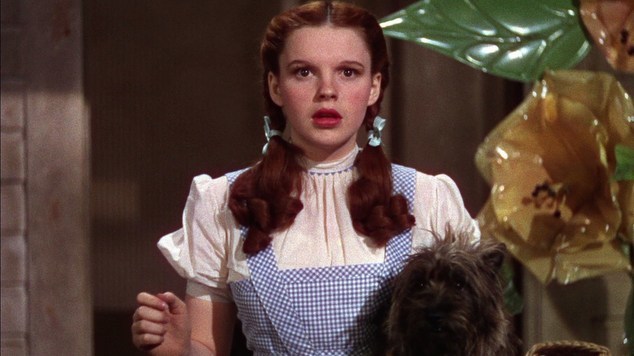
Many LGBTIQA+ people connected with the film and its story of leaving home and finding a brighter world. Dorothy, the Scarecrow, the Tin Man and the Lion can be seen as a “found family”. Dorothy is portrayed as accepting of the people she meets and is happy if the Lion is a “dandy lion”.
Frank L. Baum’s follow-up book, The Road to Oz, also introduces readers to Polychrome who, upon meeting Dorothy’s travelling companions, exclaims, “You have some queer friends, Dorothy.” Dorothy replies, “The queerness doesn’t matter, so long as they’re friends.”
There’s also a line in which Dorothy asks the Scarecrow which way to go down the Yellow Brick Road, and the Scarecrow replies, “Of course, some people go both ways,” which has been interpreted as a nod to bisexuality.
LGBTIQ audiences also connected with star Judy Garland’s challenging and tragic personal story, as well as her song Over the Rainbow.
Frankie Knuckles Day
In 2004, Chicago officially declared this day to be Frankie Knuckles Day in honour of the legendary gay DJ. A section of a street was renamed Frankie Knuckles Way after him. It was the site where the nightclub The Warehouse once stood.
The Illinois state senator who helped recognise the achievements of the producer and DJ was Barack Obama.
Knuckles was known as the Godfather of House Music. Born in the Bronx, New York City, he first started out as a disco DJ in the 1970s, playing alongside childhood friend Larry Levan at venues such as the legendary Continental Baths.
In 1977, Knuckles moved to Chicago to become the resident DJ at a new club called The Warehouse. The club’s name was eventually shortened to “house”, a term that was then given to the distinctive genre of music being played.
Knuckles released music of his own while also promoting other artists through his DJing. He produced many early house tracks, including Jamie Principle’s Baby Wants to Ride and Robert Owens’ Tears. Knuckles also had a major hit of his own in 1991 with The Whistle Song.
His skills as a remixer were sought after by many artists, including Michael Jackson, Lisa Stansfield, Pet Shop Boys, Hercules and Love Affair, Janet Jackson and many others.
Frankie Knuckles was inducted into the Dance Music Hall of Fame in 2005 for his achievements as a DJ. He passed away in 2014 due to complications from Type 2 diabetes.
Ludwig II of Bavaria was born on this day in 1845
In 1845 Ludwig II of Bavaria was born, he has been referred to as the Swan King and the Fairytale King, and outside of Germany was often called ‘Mad King Ludwig’.
He ascended to the throne when he was eighteen years old, and although there was great pressure for him to marry and produce an heir, he called off the marriage that was arranged between himself and his cousin.
During his reign the monarch was less interested in the affairs of state, and fond of dedicating his time and money to his patronage of the arts and his interest in architecture. He was a massive supporter of the composer Richard Wagner.
In his diaries he wrote about his homosexual desires and his struggles to stay true to the teachings of the Catholic Church. His letters later revealed many close male friendships and that the quartermaster of his stables acting as his procurer of attractive young men.
He had a great love of architecture and personally oversaw the specific details of several residences including Neuschwanstein Castle, Linderhof Palace and the partially built Herrenchiemsee.
In 1886, when Ludwig II was 40 years old, he was deposed with his government declaring that he was insane. The following day he went for a walk around the castle ground where he was being held accompanied the doctor who has been assigned to care for him. The bodies of both men were found near a lake, his death was ruled a suicide – something that has been questioned.
Ludwig is referred to as The Swan King because it has been theorised that he was the inspiration for Tchaikovsky’s ballet Swan Lake.
Leonard Bernstein was born in 1918
Composer and conductor Leonard Bernstein was born on this day in 1918. He is best known for composing the music for the musical West Side Story, for which Stephen Sondheim wrote the lyrics.
Bernstein is considered one of the most important orchestral conductors of all time and wrote a wide range of music, including film scores, ballets, musicals, operas, chamber music and solo piano works.
Alongside his creative output, Bernstein was also a civil rights activist, campaigning against the Vietnam War, advocating for nuclear disarmament and supporting increased funding for HIV research.
Bernstein married actress Felicia Montealegre Cohn in 1951, and the couple had three children. Throughout his life, he had many affairs with both men and women. His wife was aware of his sexual orientation.
In 1976, he began living with music scholar Tom Cothran, but he returned to his wife’s side the following year after she was diagnosed with lung cancer. He remained with her until her death in 1978. He continued to have relationships with men until his own death in 1990.
His life was brought to the screen in the 2023 film Maestro, in which Bradley Cooper played Bernstein and Carey Mulligan portrayed Felicia.