


Father Mother Sister Brother | Dir: Jim Jarmusch | ★ ★ ½
Filmmaker Jim Jarmusch’s latest offering is an anthology: three stories centred on fractured families and parent–child relationships.

Jarmusch has a long history of making quirky independent films where characters shine. Over the years he has delivered memorable works including Down By Law, Night on Earth, Dead Man and Broken Flowers. His films feature a regular staple of actors, many of whom return for this latest outing.
Father Mother Sister Brother won the Golden Lion at the 2025 Venice Film Festival, and while it offers insight into the banality of family relationships, it also slips into the realm of simply being dull.
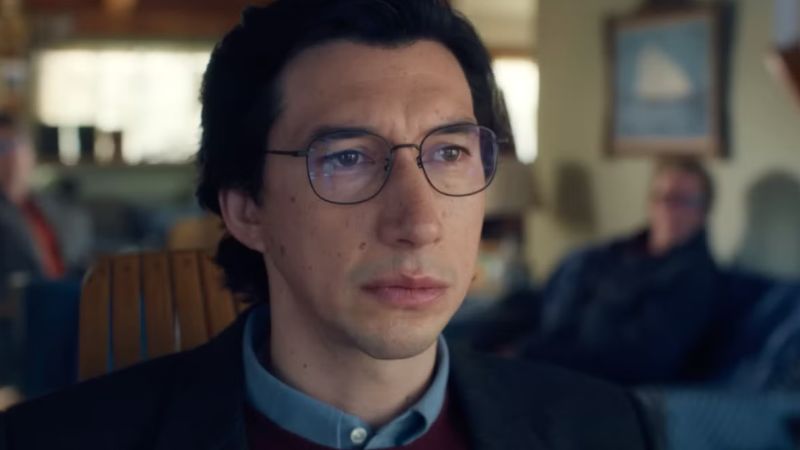
The film comprises three individual stories presented sequentially. First, we follow siblings Jeff (Adam Driver) and Emily (Mayim Bialik) as they drive to the remote property where their father now lives. As they travel through the snow‑covered landscape of meandering roads, it’s clear these two don’t speak often.
Jeff reveals that he has helped their father out on several occasions when financial support was needed. There have been burst pipes and collapsing walls in the ageing house their father now calls home, and he has also needed help with bills. Emily is unaware of these challenges, or that Jeff has been footing the costs.
When they meet their ageing father, played by Tom Waits, the conversations are awkward and uncomfortable. They comment on the impressive view from his lounge room, which stretches across a frigid lake. Emily is surprised to discover books by Noam Chomsky on his shelves, and as they catch up, their father makes a series of clumsy toasts to the past. They are three people with little in common beyond being related.
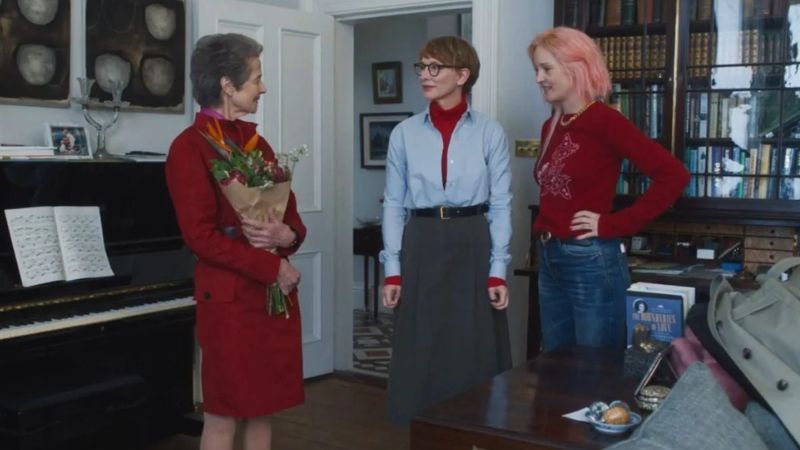
The second story takes us to Ireland, where sisters Lilith (Vicky Krieps) and Timothea (Cate Blanchett) are separately making their way to a catch‑up with their mother, played by Charlotte Rampling. They all live in the same city but only gather in person once a year for an awkward, slow‑paced afternoon tea.
Lilith tells her mother she had to catch an Uber because her Lexus is in the shop, but in reality she was driven by her girlfriend, who dropped her a block away so she could climb into the back seat and maintain the illusion of a ride‑share. Lilith’s descriptions of her successful life are pure fantasy. By comparison, dowdy sister Timothea embellishes nothing; her life is unremarkable. Their reunion is painfully awkward.
The third story follows siblings Sky (Indya Moore) and Billy (Luka Sabbat) as they return to their parents’ Parisian apartment after their unexpected deaths. As they sort through their parents’ belongings—many of which Billy has already begun packing—they realise they didn’t truly know who their parents were.
Across these stories, shared motifs appear, including a line repeated in each segment. What ultimately ties them together is that all three depict people with distant, disconnected relationships with their families. It asks questions about honesty and who is using who, and makes us question what it is that keeps us connected to our own families. The film contains humorous moments, but its tone remains largely uniform throughout.
The film has been praised for its quiet storytelling, meditative narrative approach and mellow atmosphere, but the result can be a repetitive experience that may struggle to hold your attention. Had Jarmusch found more ways to interconnect the stories, or given one of them a radically different tone, the film might have been more engaging.