

Melbourne’s Midsumma Festival is currently underway and People with Disability Australia (PWDA) are joining the parade under the banner InFocus: Queer & Disabled.
The theme, developed in consultation among PWDA members, aims to shine a spotlight on people who are both members of the LGBTIQA+ community and living with disability.

The national disability rights group hope to spark conversations about centring LGBTIQA+ people with disability in public life, policy and community spaces, through celebration, visibility and advocacy.
PWDA President Jeramy Hope said pride events like Midsumma are vital spaces where LGBTQIA+ people with disability can be visible on their own terms.
“Pride is about joy and visibility, but it’s also about belonging. It’s about creating spaces where LGBTQIA+ people with disability feel safe to show up as their whole selves,” Jeramy said.
“Midsumma is an opportunity for people to tell their own stories, to be proud of who they are, and to be safely and authentically who they are. That sense of belonging is powerful, especially for LGBTIQIA+ people with disability who are too often excluded or overlooked.”
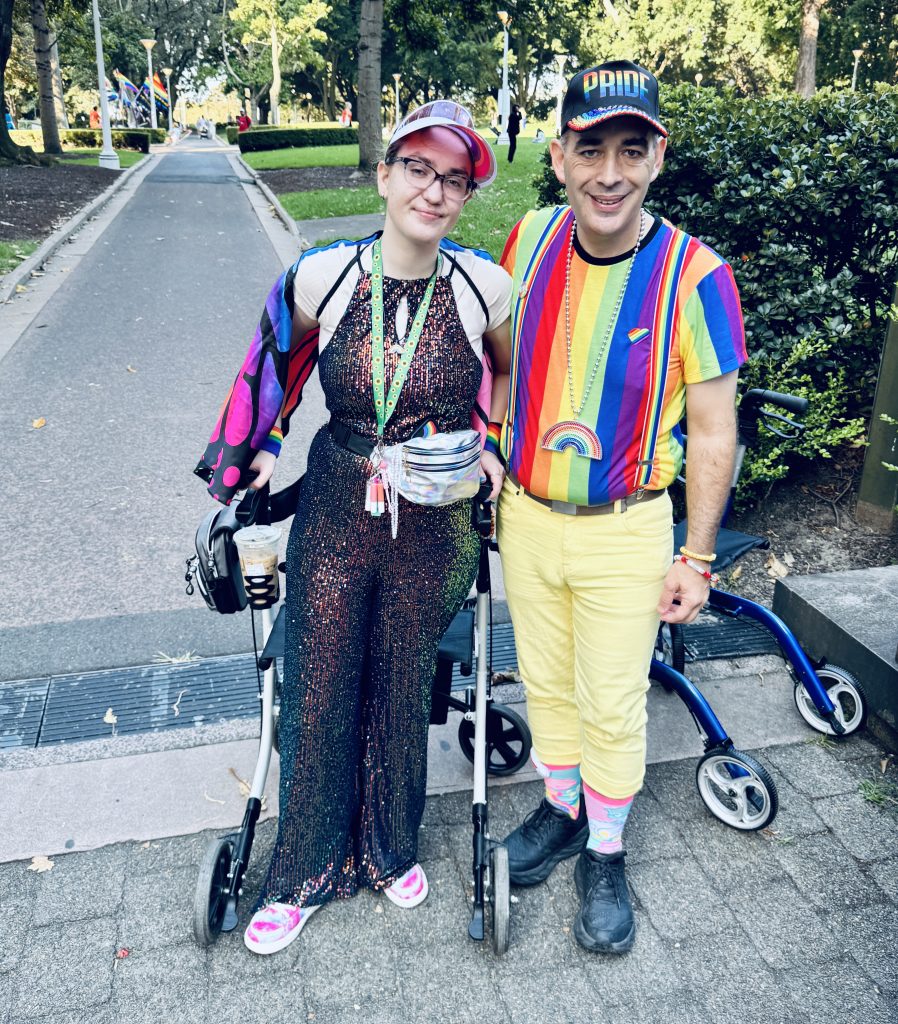
As a parent and ally, Jeramy said showing up publicly is part of how he lives those values.
“Allyship isn’t passive. It’s about listening, standing alongside, and using your voice to help create safer, more inclusive spaces,” he said.
“As a parent, I want my daughter and her community to grow up knowing they are valued, respected and supported. That’s why I am committed to showing up today and every time visibility and support are needed.”
PWDA’s national survey of LGBTQIA+ people with disability found that discrimination and negative experiences remains widespread, particularly in healthcare and support systems.
Sixty-five per cent of respondents reported experiencing discrimination from healthcare workers, support workers, carers or family members because of their LGBTQIA+ identity, while 64 per cent said they had not been believed or had their identity ignored.
Jeramy adds that visibility must be matched by systemic change.
“Pride is powerful because it makes us visible, but visibility alone is not enough. LGBTQIA+ people with disability are still facing discrimination, inconsistency and barriers to healthcare, inaccessible services and exclusion from community spaces,” Jeramy said.
“InFocus is about shifting the narrative. It’s about centring our leadership, demanding inclusion by design, and reminding decision-makers that disability rights and LGBTQIA+ are human rights.”
Jeramy’s daughter and fellow PWDA member Jenna Hope says marching under the InFocus banner feels both personal and powerful.
“For so many of us, being queer and disabled means constantly having to explain ourselves or choose which part of our identity gets seen. InFocus is about refusing that. It’s about saying we deserve to take up space exactly as we are,” Jenna said.
“I want a future where LGBTIQIA+ people with disability don’t have to fight to belong. I want our full identities to be celebrated, our access needs respected and our voices at the centre of shaping the world around us.”
“When we march, we’re not just celebrating our existence we’re showcasing our resistance and persistence.”
“It’s 2026 – the best time to ask yourself how are you showing up for LGBTQIA+ people with disability? If not – why not now?”
Midsumma Pride March will be held this Sunday, 1 February.