


Before law reform and public visibility, many gay men lived behind crafted personas, polished manners and carefully maintained discretion.
Noël Coward’s A Song at Twilight uses this reality as its dramatic engine, presenting the story of a celebrated writer confronted by the emotional consequences of decades spent hiding. For LGBTQ+ audiences, it reads not only as a period drama but as a reflection on a history still within living memory.

The Old Mill Theatre, South Perth, presents Noël Coward’s A Song at Twilight from 13–28 March 2026, directed by Barry Park.
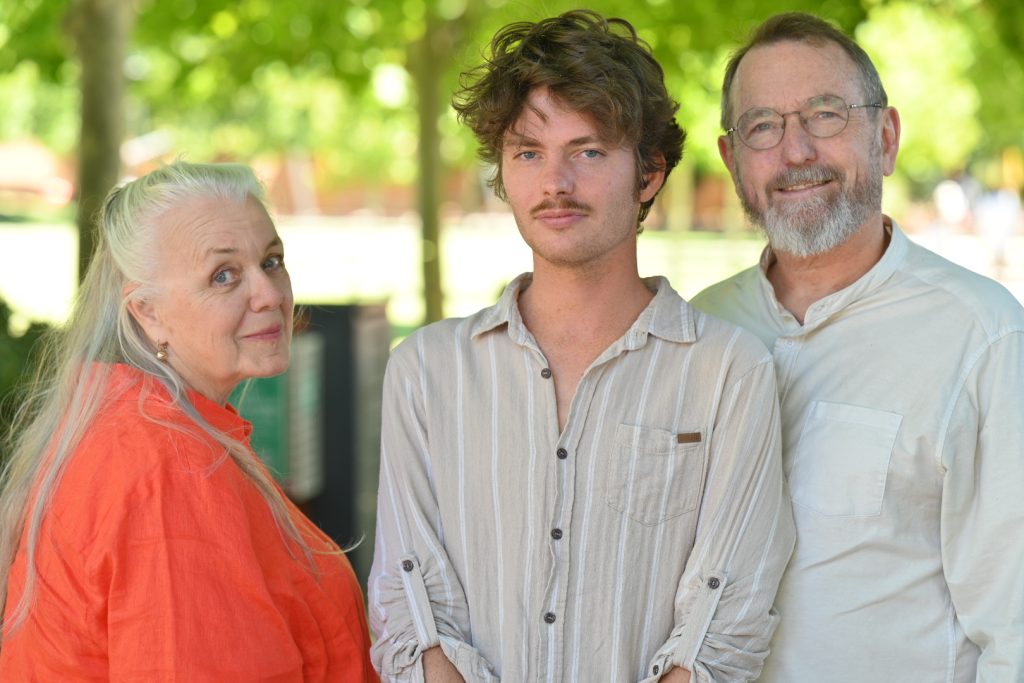
Set in a Swiss hotel suite, the play centres on Sir Hugo Latymer (Neale Paterson), an ageing and internationally acclaimed author whose orderly retirement with his wife Hilde (Jennifer van den Hoek) is disrupted by the unannounced arrival of Carlotta (Emily Howe), a former lover who knows far more about his past than he is comfortable admitting.
What begins as a polite reunion quickly develops into a tense negotiation over memory, responsibility and the suppressed truths contained in a bundle of old letters.
Written in 1966, late in Coward’s career, A Song at Twilight represented a clear departure from the crisp comedies with which he is most associated. When it premiered, homosexual acts between men were still illegal in Britain, and that tension quietly shapes many exchanges in the play. Hugo’s fear of exposure is not a melodramatic device; it reflects the legal and social pressures that defined the lives of many men of his generation.
Hugo’s struggle is not depicted as a tragedy of sexuality but of circumstance. His marriage functions as social camouflage, his public persona as meticulously maintained armour and his wit as a defensive strategy. Coward’s focus is not on the ‘secret’ itself but on the price paid for keeping it — a lifetime of emotional compromise in exchange for safety.
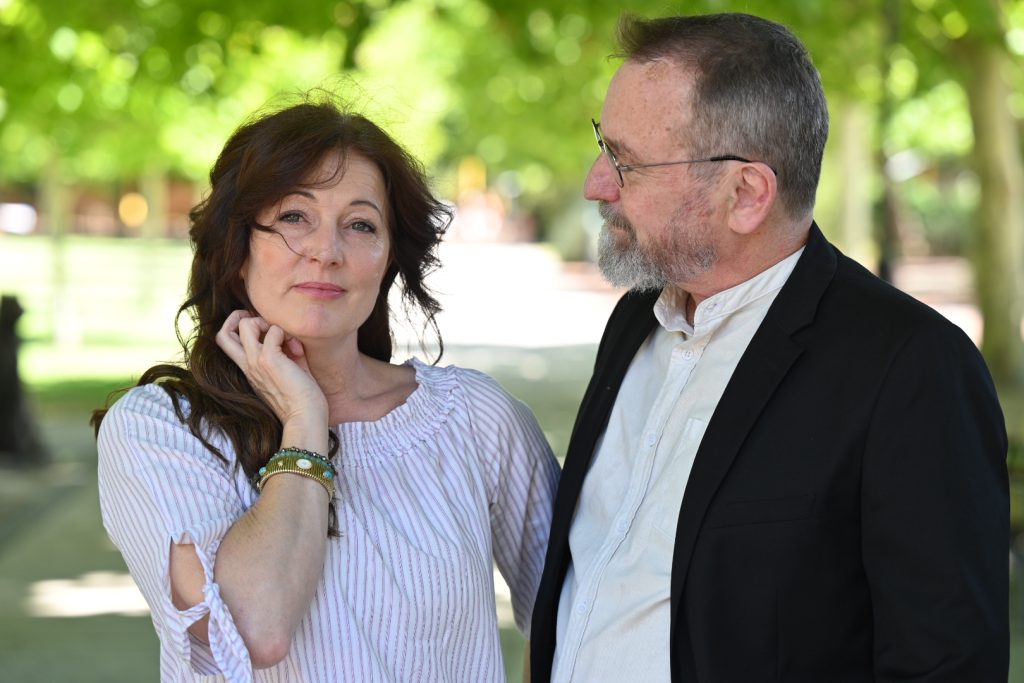
Director Barry Park brings several decades of work in LGBTQ+ theatre to this production. Since the 1980s, Park has earned awards for directing plays that grapple with identity, secrecy and social tension.
Perth audiences will know his work from The Normal Heart and The Boys in the Band for GRADS, as well as Beautiful Thing and Coward’s Design for Living at the Old Mill Theatre. His productions of Hansard, The Lisbon Traviata and The York Realist further demonstrate his long-standing engagement with queer narratives and the pressures that shape them.
Much has been written about the autobiographical shadows that fall across A Song at Twilight. Coward himself acknowledged inspiration from figures such as Max Beerbohm and W. Somerset Maugham; writers who, like Hugo Latymer, cultivated public personas while fiercely guarding their private lives.
Critics at the time noted how Coward even made himself up on stage to resemble Maugham, encouraging comparisons he later half-denied. Yet it seems clear that Hugo is not a portrait of any one man so much as a composite; and, most tellingly, a partial self-portrait.
As Coward bravely fractures Hugo’s immaculate façade, he interrogates his own lifelong obsession with reputation and the heavy emotional toll of subterfuge. The domestic world of A Song at Twilight echoes Coward’s own ‘essential pillars’: the character of Hilde Latymer embodies the fierce, protective loyalty of his long-time secretary and confidante, Lorn Loraine, while the play’s ghosts recall the complex allure of past lovers such as Alan Webb; with whom he had a tempestuous relationship; and Jack Wilson, Coward’s American manager and lover, whose alcoholism and infidelities drove them apart.
Ultimately, the drama navigates the friction between public persona and private truth: a reality Coward lived daily, anchored by the devotion of his longest and most constant companion, Graham Payn.
Coward originated the role himself in what became his final stage performance, adding an additional layer of self-awareness to the character. Through Hugo, Coward examines the costs of maintaining a façade, not only for the individual, but for the culture that demanded it.
More than a late-career experiment, A Song at Twilight remains one of Coward’s most revealing works. It offers LGBTQ+ audiences insight into a generation shaped by secrecy and into the mechanisms of survival that once
defined queer life. Behind the polished surfaces lies a story about the cost of silence — and the recognition, long overdue, of those who lived through it.