


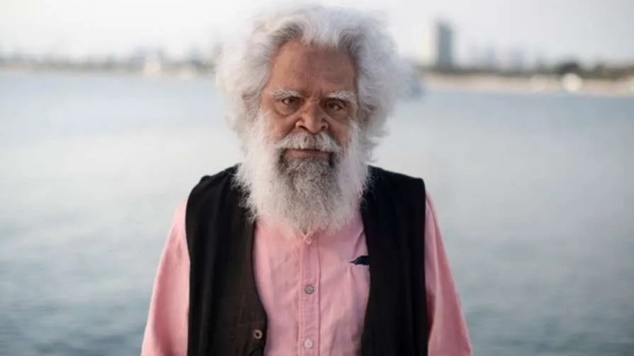
Uncle Jack Charles is an award wining actor, musician and activist, and one of the most recognisable Indigenous Australians.

The living legend has shared that he was shocked when he allegedly received a call from a staffer at the Stolen Generations Advisory Committee asking him if he would be able to prove his Aboriginality.
The organisation is responsible for managing compensation payments to people under the Stolen Generations Reparation scheme. They’ve already paid the actor the first installment of his payment, but apparently then asked for more proof that the was Aboriginal before progressing to the second installment.
Charles, who is a Wiradjuri, Boon Warrung, Dja Dja Wurrung, Woiwurrung and Yorta Yorta man, previously appeared on the popular television series Who Do You Think You Are?
Speaking to ABC Drive on Melbourne radio Charles said the staff member told him more evidence was needed because some people were trying to make false claims. The actor said he found it surprising that despite being a high profile member of society, he could still be accused of faking his identity.
A spokesperson for the Victorian Department of Justice and Community Safety said the program was designed to be culturally sensitive.
“We fully understand that the process of seeking reparations and redress may be confronting and re-traumatising for members of the Stolen Generation. That’s why we worked closely with community to design Victoria’s program to be culturally sensitive and for the onus to be placed on government rather than applicants to do the work in ascertaining if someone is a member of the Stolen Generation.” the spokesperson said.
For Uncle Jack Charles he was left wondering why people would question his ancestry.
“It’s too difficult to be an Aboriginal. Have a look at what I’m struggling through right now, hitting 79 in September and I’m still being bedevilled and perplexed,” Uncle Jack said. “I have been re-traumatised with this very questioning of who I am.”
OIP Staff

You can support our work by subscribing to our Patreon
or contributing to our GoFundMe campaign.