

Dr Daniel Vujcich, CEO of WAAC, turned to explorer Earnest Shackleton to reflect on the Australian theme for this year’s World AIDS Day.
WAAC, formerly the WA AIDS Council, held at event in Hyde Park on Sunday afternoon ahead of World AIDS Day. The gathering brought together communities to honour those lost to AIDS, as well as being a moment to celebrate progress, and recommit to ensuring equitable access to HIV care for all Western Australians.

The theme of the event in Australia this year was “No one left behind”.
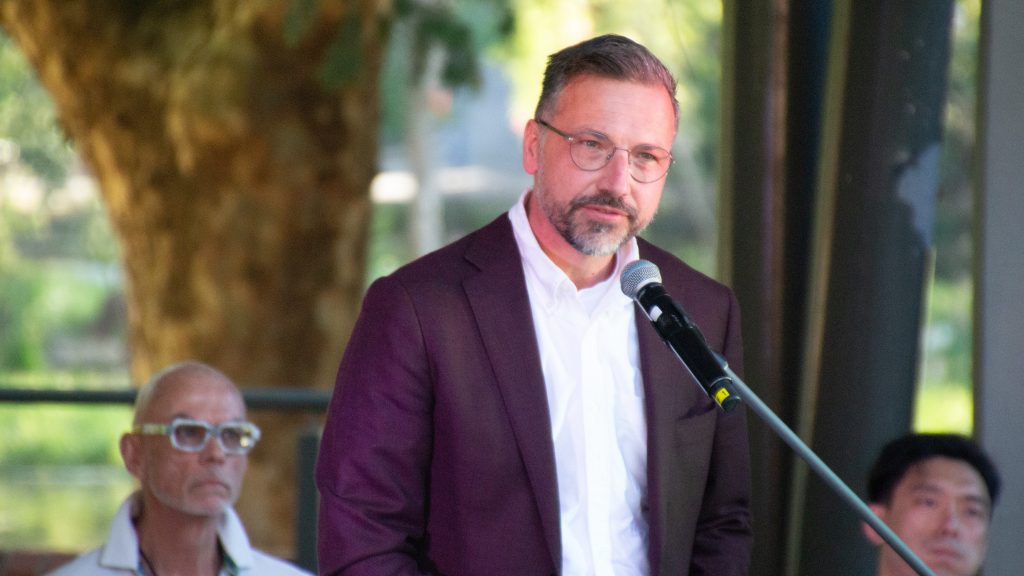
Dr Vujcich shared that when the explorers team were struck with the disaster of their ship Endurance being trapped in Antarctic ice and eventually sinking, most of the crew were stranded on Elephant Island.
“He left 22 men on that barren island and while he and a small crew set out to find help,” Dr Vujcich recounted. “After 128 days at sea, he eventually returned, and he cupped his hands to his mouth, and he called across the shore, he said, ‘Are you all well?’ and from the rocks came the reply that he crossed the ocean for, one of the people that he left behind said, ‘All safe, all well, not one left behind.'”
Dr Vujcich used the story as an analogy for the ongoing journey with HIV, one that has also required a lot of endurance.
The CEO provided a snapshot of HIV in Western Australia in 2025.
“Unfortunately, we cannot yet answer ‘all safe or well’ here in Western Australia, the picture is uneven.” he said.
“Nearly one in ten people living with HIV are unaware of their status, and that lack of timely diagnosis slows down care, and it heightens the risk of unnecessary illness, and it keeps the virus moving where it should have nowhere left to go.
“Late diagnosis is climbing. Five years ago represented about 37% of new cases. Today, it sits at about 48% and each percentage point represents people who should have been reached much sooner.
“We have PrEP, which is this amazing prevention tool with near perfect precision, and yet awareness of it is patchy among migrant people from priority regions. We know that only 16% have ever heard of it. Around half of GPS don’t feel confident prescribing it. People in regional towns stop using it almost at twice the rate of those in Perth, and so the places and the people with the highest need, often have the weakest access.
“Among Aboriginal and Torres Strait Islander people living with HIV, retention in care sits at about 81% so that means one in five almost are losing contact with the services altogether. And that’s unacceptable in a country with our resources.” Dr Vujcich said.
On a global scale tackling HIV is also getting harder with the Trump administration in the USA pulling funding from international programs, and this year officials were told not to celebrate World AIDS Day.
“Now it can be tempting for us to dismiss this as someone else’s problem, but HIV has never stayed within the tidy lines of a map, and our fates remain deeply, deeply connected.
“This week, that interconnection was made starkly clear. The Trump administration has banned the US State Department from commemorating or supporting World AIDS. Day after years of public support for whack our American colleagues have been ordered to step back, and that’s a gut punch, and it’s petty, and it’s an attempt to erase progress that has been fought too hard to win.” Dr Vujcich said.
“But our movement has never been frightened of one single man. We buried too many friends fought too many systems and held each other through too much loss to be cowed. Now we know where the road of fear and discrimination leads.
“We’ve walked it once, and we will not walk it again through every stage of this epidemic. Progress has come from communities who refuse to abandon one another.” he said.
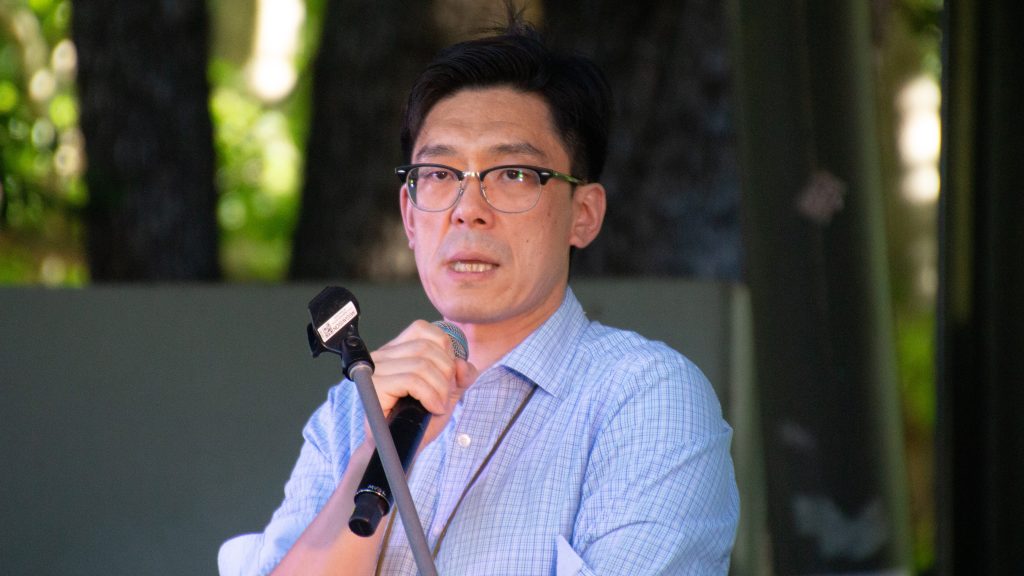
Pierre Yang, MLC, spoke at the event on behalf of the Minister for Health.
“I want you to know that the WA Government stands with you. The work undertaken by the WA AIDS Council remains as vital today as it is in the early days of advocacy, activism and education back in 1985 and indeed it is more so today.” Yang said.
“I want to applaud the WA AIDS Council, your staff, all your volunteers, for your incredible work in ensuring that people living with HIV have access to the best outcome and best possible care that is available.
Yang said this year’s theme for World AIDS Day could not be more fitting.
“We know that starting treatment early leads to better health outcomes and reduce the likelihood of on transmission. While there is plenty of work to do, I’m proud to say that here in WA we have made significant progress in responding to HIV. We have seen the incredible advances in treatment and prevention.”
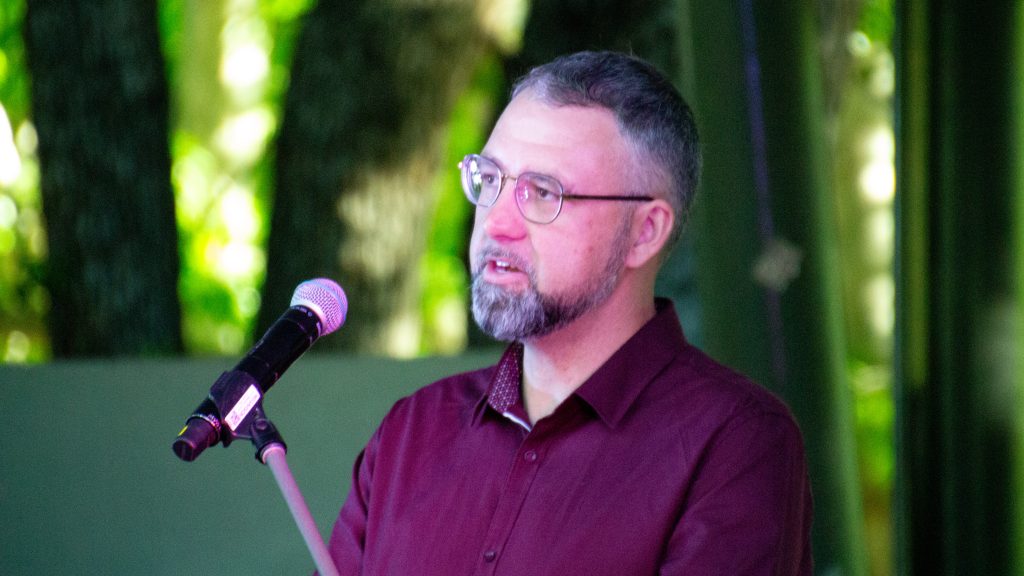
Also speaking at the event was Shaynon Dean, councilor at the City of Swan and director of POWA: Positive Organisation of Western Australia.
“Tonight’s theme,’No one left behind’ is not just a slogan.” Dean said. “It’s a responsibility and a challenge to each of us to keep moving forward together.”
“When I think back to the early years of HIV in Australia, I remember large crowds that once gathered at events like this. Many people attended out of curiosity, fear or misunderstanding, we felt observed rather than understood, talked about rather than spoken to those ears marked by stigma, silence and profound loss.
“Tonight, the room is smaller, and I see that as progress means HIV is no longer a spectacle. It means treatment works, you is understood within our community, and people living with HIV are stepping into ordinary, full lives, even stepping into politics, but not to be the face of HIV, but a smaller crowd must never mean a smaller commitment.” Dean said in his speech to the crowd.
“While open discrimination has eased, subtle stigma still lingers.” Dean said. “People living with HIV are sometimes overlooked for opportunities, judged differently or treated with caution based on outdated fears.”
Dean said there was a challenge to get many members of the Australian community up to spped with the realities of HIV in 2025, rather than relying on outdated myths.
“Anyone who searches HIV online today will find a mix of fear based myths, outdated articles and conspiracy theories, you still see claims that HIV can be spread through casual contacts, that treatments don’t work, or that people who cannot rely on time alone change attitudes.
“We cannot assume someone else will educate the next person. We cannot allow stigma to retreat into silence If we truly want ‘No one left behind’, then we must continue to educate the public’s public so facts replace fear, challenge stigma in all its forms, especially the subtle kind hidden behind polite words.