


On Wednesday, Magistrate Angus Hockton handed down a $4,000 fine to Perth cleaner Garath Mouncey over seven counts of leaving an indecent or obscene article in a public place. In sentencing, he reflected on the impact on community members.
For over a year, flyers appeared across multiple suburbs in Perth. The black-and-white, hand-cut pieces of paper featured photos of people from Perth’s LGBTIQA+ communities alongside false and outrageous claims about their character. Some individuals were falsely accused of being sex offenders, paedophiles, drug dealers, or being involved in kidnapping and medical experiments. In some cases, the flyers included people’s addresses and phone numbers.

Magistrate Hockton said residents would likely have been alarmed to find the materials in their letterboxes, adding that the persistence of the conduct warranted a significant deterrent. Each charge carried a maximum penalty of $5,000, meaning a potential total fine of $35,000. Mouncey, who had no previous criminal record and reportedly experiences paranoid delusions, was fined a total of $4,000.
The victims of his crime were the residents getting the flyer in their mailbox, not the people who were depicted on the flyers. Nor is the wider community of LGBTIQA+ people, who potentially experienced increased stigma, discrimination and fear in their lives.
Now that Garath Mouncey has been identified as the person responsible for the letterbox campaign, he may face civil defamation action from individuals featured in the flyers.
Western Australia currently does not have vilification provisions based on sexuality or gender identity, although other Australian jurisdictions have introduced such protections. Victoria, for example, updated its laws in 2025 to include penalties of imprisonment for the most serious offences involving threats or incitement to violence. OUTinPerth is not suggesting that Mouncey’s actions reach that threshold.
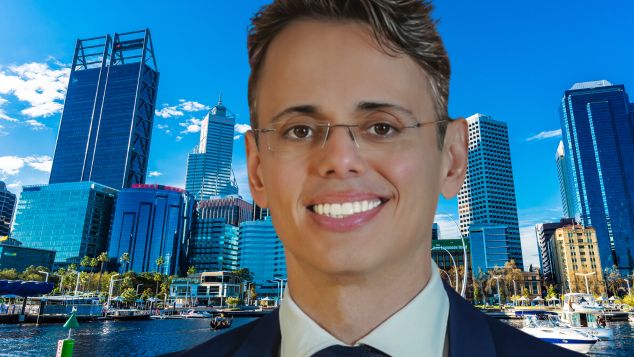
Perth’s Deputy Lord Mayor David Goncalves is among those calling on the Cook Government to update state laws to align with other jurisdictions, ensuring protections include sexuality and gender identity.
While acknowledging the community members who supported those targeted, those who reported the offences, and the police investigation that led to the prosecution, Goncalves said a clear timeline for legislative reform is now a priority.
“The law still fails to recognise the distinct harm done when people are singled out, named, and degraded because of who they are,” Goncalves said.
“Western Australia criminalised racial vilification a generation ago in response to organised hate campaigns on our streets. There is still no equivalent protection when the targets are other marginalised communities.
“Western Australians deserve a clear and accessible remedy when hostility based on identity crosses into targeted humiliation, intimidation, or the incitement of hatred.”

In correspondence to the Deputy Lord Mayor in April, Attorney-General Dr Tony Buti confirmed Western Australia has no civil anti-vilification protections for the LGBTIQA+ community and committed to introducing a new Equal Opportunity Act with such protections.
Buti stated that a government bill was anticipated “in the coming months”, with a review of existing criminal vilification laws also underway. When OUTinPerth recently sought a timeline, the Attorney-General said it was hoped the legislation would be introduced this year.
“The Equal Opportunity Act is Western Australia’s cornerstone anti-discrimination legislation, and it plays a critical role in protecting people from unfair treatment.
“This Government recognises the significant role strong laws play in addressing discrimination and promoting fairness and inclusion.
“The Cook Labor Government is committed to introducing a new Equal Opportunity Act to ensure it remains effective, contemporary, and responsive to community expectations.
“That legislation is expected to be introduced to parliament this year,” the Attorney-General said.
Goncalves welcomed the commitment but emphasised the need for clarity on timing.
“I welcome the commitment from Attorney-General Buti. What the community needs now is a clear public timetable for the introduction and consultation of these reforms,” Goncalves said.
“Western Australia needs accessible civil remedies alongside appropriately targeted criminal provisions for the most serious conduct – reforms designed with the communities they are intended to protect, reflecting the different and intersecting ways people experience vilification.”
The City of Perth has recognised the impact of the flyer campaign on residents. Its response has involved the City’s LGBTQIA+ Advisory Group, whose advocacy contributed to WA Police launching a Hate Crime Team investigation and establishing a centralised Crime Stoppers reporting pathway.
Goncalves said this collaboration reflects the City’s LGBTQIA+ Plan—the first of its kind in WA local government—which prioritises co-design and community capacity-building.
“This is co-design in practice. Community members identified an emerging problem, brought their lived experience to the table, and worked with Council to turn concern into reporting pathways, advocacy and reform,” Goncalves said.
“While local government cannot write the state’s anti-vilification laws – councils have a powerful role in convening, advocating for and building community capacity.”
“Community capacity is public safety infrastructure. When those in community have the relationships, skills and resources to act, people receive support sooner and the whole city is more resilient and stronger for it.”
“The court has dealt with the offences before it. The State Government must now close the gap this campaign has exposed. Perth must be a city where every person can live, work, visit and participate without fear.” the Deputy Lord Mayor added.
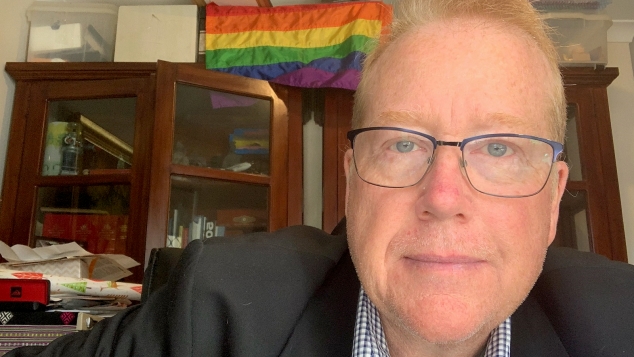
WA Just-Equal spokesperson, Brian Greig, said the penalty applied in the flyer case was manifestly inadequate, and that while individuals could now take personal defamation action that was a difficult path with no guaranteed outcome.
“Clearly we need both incitement to hatred laws in the criminal code, as well as civil avenues for individuals to make claims of vilification, harassment and intimidation, all backed with hefty penalties.”
Greig said the most comprehensive hate speech laws in Australia were adopted in Tasmania in 1998, and these remained the nation’s ‘gold standard.’
Greig, a former federal senator, said the commitment to addressing the issue before the end of the year was welcomed, but it was also important the legislation met community expectations.
“While that offers hope, the strength of any such legislation will be in the detail. As a community we must insist it does not fall short of quality benchmarks set in other states, including the provision that religion cannot be used as an excuse.”
Greig also said any moves to address hate crimes must not serve as political camouflage to hide the government’s ongoing failure to remove special religious exemptions from the Equal Opportunity Act, something it has promised since 2021.
“The government cannot legitimately respond to vilification and hate crimes against LGBTIQA+ people on the one hand, while on the other hand say it’s acceptable for publicly funded faith schools and services to reject LGBTIQA+ staff, students, age care workers, medical officers and administrative employees. Equality protections must apply across the board,” he said.
Concern laws will have carve outs for discrimination in religious settings
Concern that the legislation would carve out huge protections on the basis of religion increased due to recent correspondence from Hannah Beazley, the minister who has guided the state’s LGBTIQA+ Inclusion Plan.
Just.Equal wrote to the Minister asking if the government would make a clear commitment to tackle the laws when they marked International Day Against Homophobia, Biphobia and Transphobia (IDAHOBIT).
Beazley said the new Equal Opportunity legislation would strike a balance of rights and different interest groups.
“The proposed reforms to the Equal Opportunity Act are being informed by extensive consultation with a broad range of stakeholders and community organisations. The reforms will seek to strengthen protections against discrimination while balancing the rights and interests of all Western Australians.” Beazley wrote.
Brian Greig said this was the first time the Cook Government had used the particular language of “balance”, but it was a very familiar term to veteran campaigners, and reason for concern.
“Whenever a government talks about ‘balance’ in relation to LGBTIQA+ law reform, it always means caving-in to the religious right. It means allowing them to discriminate in certain situations. “You will never hear government talk about ‘balance’ when it comes to racial discrimination, antisemitism, or sexism. The notion of ‘balance’ only ever comes up with LGBTIQA+ law reform because our safeguards are seen as expendable,” Greig said.
Just.Equal says maintaining special religious exemptions for “balance”, could mean allowing publicly funded faith schools to refuse to hire LGBTIQA+ staff and to sack them. It may also impact on the enrolment of pupils.
“It could also mean exempting faith-based hospitals from providing particular treatments, as well as exemptions for other faith-based services including age care, disability services, employment providers and charities.
Greig, said the Cook Government keeps pledging to “modernise” the Equal Opportunity Act, but said cementing exemptions to harm teachers and staff across what amounts to 30 percent of the state’s schools fails to achieve that.
“We don’t want to see half-hearted reform of the Equal Opportunity Act that continues to allow discrimination. That would drag the state backwards from the benchmark set by Tasmania three decades ago.
“It would not be modernisation, because it will encourage discrimination against those staff and clients who are still left out in the cold. “It would entrench homophobia and transphobia in legislation from the start of this century, locking-in discrimination adopted 25 years ago when other states had already moved to get rid of it.
“WA will be out of step with most states and territories, while legitimising this discrimination will send a very harmful message to thousands of LGBTIQA+ employees and students.”
Greig said. Greig said that Report 111 (2021) from the Western Australian Law Reform Commission, initiated by former Attorney General, John Quiqley, gave clear recommendations to remove the special religious exemptions.
“Quigley endorsed those recommendations and Premier McGowan promised to implement them but didn’t.
“With the change of Premier in 2023, Roger Cook pledged to pass these reforms in 2024, but then sidelined that promise. Two years later we have not seen any legislation and now the government appears to be wavering on its previous promise to uphold the WALRC recommendations.”
OUTinPerth approached Minister Beazley for comment last week but is yet to receive a response.
Acting Equal Opportunity Commissioner says work on new legislation has taken decades
The amount of time new legislation to address gaps in Western Australia’s Equal Opportunity Act has been in development through successive Western Australian government’s was laid bare when Jeff Rosales Castaneda, Western Australia’s Acting Equal Opportunity Commissioner spoke at a panel celebrating 40 years of the Australian Human Rights Commission in June.
Castaneda shared that work on revised legislation began at the beginning of the century, with ideas on how the 1985 legislation should be be updated. The Equal Opportunity Commission completed its review in 2007, but the report from the Western Australian Law Reform came 14 years later.
Castaneda said the draft legislation, which has not been made public, featured a much more streamlined process, and a positive duty for business and organisations to prevent discrimination from occurring, although it was described as being weaker than that found in recently passed work safety laws. The Acting Equal Opportunity Commissioner also shared that the legislation is currently on it’s 22nd draft since Buti stepped into the role of Attorney-General.
UWA Pro Vice-Chancellor Academic Advancement and Diversity, Professor Fiona McGaughey, who also appeared on the panel, said it was a “shame” that Western Australians had been forced to wait so long for new legislation.
“It’s a real shame that it takes so long for things to happen.” she said.
Professor McGaughey said effective legislation would need to ensure that those who were most vulnerable, and at most risk of being discriminated were protected. While welcoming the move towards legislation that features a positive duty to act, Professor McGaughey said it also needed to be “highly regulated” to be effective.
One measure that highlights the long journey for reform is the 2015 story of a primary school girl who experienced discrimination. A religious based school in Rockingham allegedly told the girl’s father that they would never let the 7-year-old enroll if they knew one of her parents was gay.
Then Opposition leader Mark McGowan said the current laws that allows such an action were unacceptable, and vowed to change them if elected to government. Labor is now in their third term, McGowan has retired from politics, the little girl is probably in university or joined the work force, and the laws remain unchanged.