

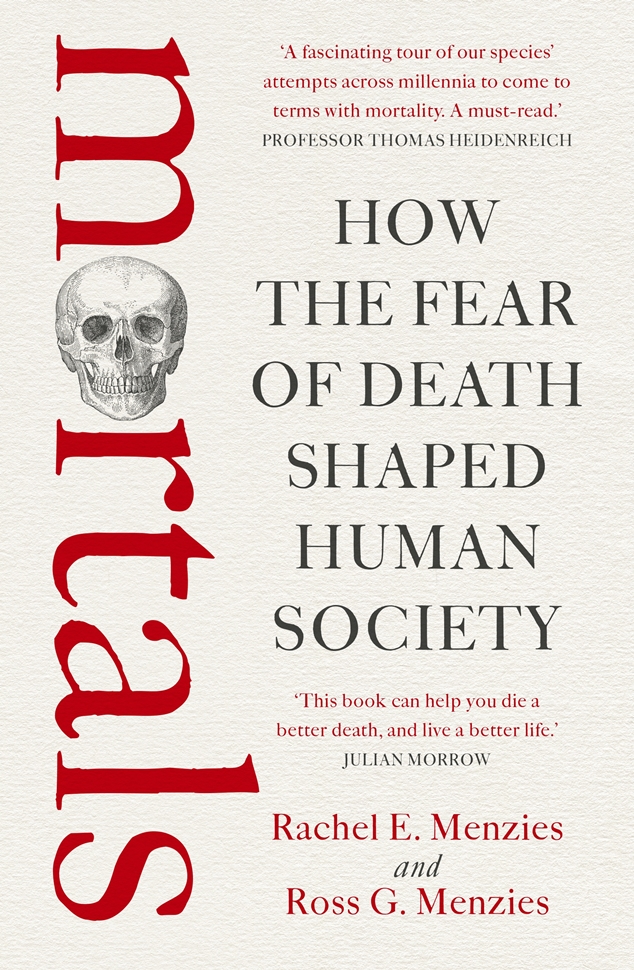
 Mortals
by Rachel E Menzies and Ross G Menzies
Allen & Unwin
Children become aware of death at between the ages of 4 and 5 and can fear it, even though they only become aware of its inevitability from 7 to 10 years of age. Between the ages of 11 and 12, children can contemplate their own death but research shows that older people are less anxious about death than younger people.

Combining historical research with psychological studies, the book is far from morbid and depressing. As it looks at how humans all over the world and throughout history have found ways to partially sedate their anxiety about death and to bargain with the grim reaper.
Thanks to the media, we are surrounded by images of death more than any time in history but religions offer an afterlife and funeral practices comfort the living in their grief. There are also several ways we can leave a legacy that will live on, even though Woody Allen said that he didn’t want to live achieve immortality through his work, but rather through not dying.
Fear of death is quite lucrative. We can buy into the promises made by pharmaceutical, medical and cosmetic practitioners to feed off the illusion that we can extend our expiry date, or even invest in cryogenics for our future. Then funeral companies charge exorbitant costs – and both burials and cremations end up harming the environment.
Father and daughter psychologists Ross and Rachael Menzies believe that humans are coming to the end of their short reign on planet Earth, and “In a tremendous irony, our denial of death will be the central cause of the extinction of our species.” Their fascinating research looks at many things including the connection between the fear of death, overpopulation and consumerism.
Many myths are debunked as they explore where it is all heading. Rather than dying a better death, they come to the conclusion that living your best life is the greatest revenge … and this needs to extend to the life of the planet.
Lezly Herbert

You can support our work by subscribing to our Patreon
or contributing to our GoFundMe campaign.