

Premium Content:

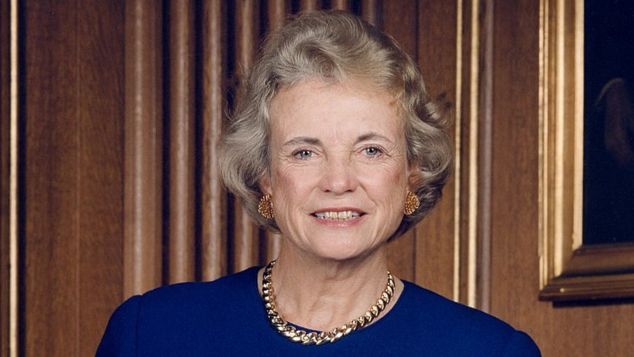
Former US Supreme Court Justice Sandra Day O'Connor dies aged 93

Former US Supreme Court Associate Justice Sandra Day O’Connor has died aged 93.

- Advertisement -

In 1981 she made history as the first woman to be appointed to the US Supreme Court. A moderate conservative she was often seen as the swing vote on important issues, and during her time on the bench she voiced support for women rights and later in her career LGBTIQA+ rights.

The Supreme Court announced her passing saying she died in Phoenix, Arizona due to “complications related to advanced dementia, probably Alzheimer’s, and a respiratory illness.”

Associate Justice Day O’Connor retired from the Supreme Court in 2006 when she was replaced by Samuel Alito. She served on the court for 25 years.

When she was first appointed, she was the only woman in the role, Ruth Bader Ginsberg was the second woman on the Supreme Court, appointed in 1993. Justice Sonia Sotomayor was appointed in 2009, and Justice Elena Kagan joined the following year.

In 2013 Day O’Connor officiated the first ever same-sex marriage held at the Supreme Court, but her support for LGBTIQA+ rights wasn’t always clear cut.

In 1986 she sided with four other justices in a decision that upheld the legality of the state of Georgia’s laws that criminalised sodomy, but a decade later she cast her vote in favour of a decision that extended constitutional protections to gay people.

In a later decision, that was very similar to the 1986 case, Associate Justice Day O’Connor voted in favour of striking down a similar sodomy law in Texas.

After retiring from the court, Justice Day O’Connor set up a civic education program that has reportedly reached more than 7,5 million students.

In 2018 Day O’Connor announced her dementia diagnosis and said, “There is no more important work than deepening young people’s engagement in our nation,”

“I hope that I have inspired young people about civic engagement and helped pave the pathway for women who may have faced obstacles pursuing their careers.”

Graeme Watson 


You can support our work by subscribing to our Patreon
or contributing to our GoFundMe campaign.

Latest

Community celebration to mark the passing of the ART and Surrogacy Reforms

The laws passed parliament earlier this month after ore than a decade of advocacy and campaigning.

On This Gay Day | Remembering Noel Coward and disco star Sylvester

Noel Coward and Sylvester both left their mark on culture on a global scale.

Tasmania leads the way in tackling hate crimes

Advocates say the new approach would provide greater protections to marginalised communities.

Pride in Respect initiative hopes to shine a light on intimate partner violence

The new campaign will shine a light on family, domestic and sexual violence in LGBTIQA+SB communities.

Newsletter

Don't miss

Community celebration to mark the passing of the ART and Surrogacy Reforms

The laws passed parliament earlier this month after ore than a decade of advocacy and campaigning.

On This Gay Day | Remembering Noel Coward and disco star Sylvester

Noel Coward and Sylvester both left their mark on culture on a global scale.

Tasmania leads the way in tackling hate crimes

Advocates say the new approach would provide greater protections to marginalised communities.

Pride in Respect initiative hopes to shine a light on intimate partner violence

The new campaign will shine a light on family, domestic and sexual violence in LGBTIQA+SB communities.

Leading LGBTIQA+ organisations voice solidarity with the Jewish community

People affected by the events in Bondi are being urged to make the most of counselling services.

Community celebration to mark the passing of the ART and Surrogacy Reforms

The laws passed parliament earlier this month after ore than a decade of advocacy and campaigning.

On This Gay Day | Remembering Noel Coward and disco star Sylvester

Noel Coward and Sylvester both left their mark on culture on a global scale.

Tasmania leads the way in tackling hate crimes

Advocates say the new approach would provide greater protections to marginalised communities.

