

More than four decades after its premiere, Hugh Whitemore’s Breaking the Code remains one of theatre’s most moving and intellectually compelling explorations of queerness, genius, and social persecution.
Melville Theatre Company is now bringing the acclaimed play to Perth audiences in a new production directed by Barry Park. The season runs from 26 June to 11 July 2026 at the Main Hall, Melville Civic Centre in Booragoon.

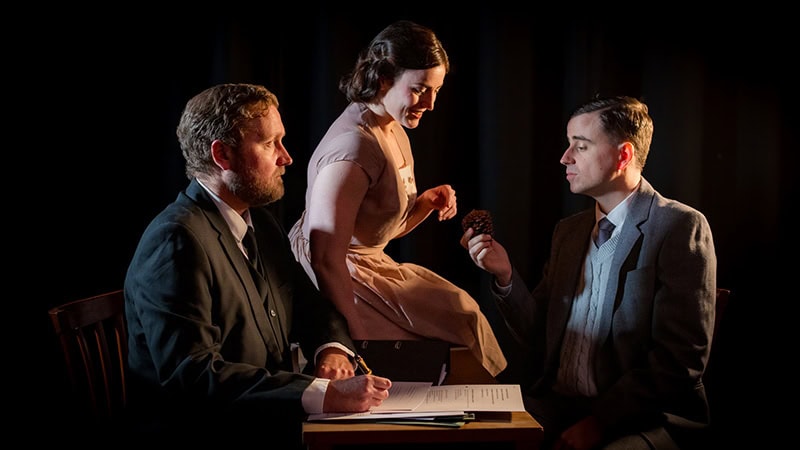
Based on Andrew Hodges’ landmark biography Alan Turing: The Enigma, the play traces the life of Alan Turing – mathematician, wartime codebreaker, pioneer of modern computing, and one of the twentieth century’s most influential minds. Despite helping to secure Allied victory during World War II through his revolutionary work at Bletchley Park, Turing was later prosecuted for homosexuality by the very nation he had helped to protect.
That tension lies at the heart of Whitemore’s play. Through a fluid structure of memories, flashbacks, and police interrogations, Breaking the Code explores not only Turing’s extraordinary intellectual achievements, but also the emotional isolation and social vulnerability that marked much of his private life.
The title resonates on multiple levels, referring both to Turing’s wartime cryptographic work and to the rigid moral and legal “codes” of mid-twentieth-century Britain that criminalised queer identity.
What makes Breaking the Code especially powerful is its humanity. Rather than presenting simplistic heroes and villains, Whitemore depicts a society shaped by institutional obedience, social convention, and quiet prejudice. Turing’s relationships with his mother, colleagues, lovers, and investigators become windows into a world often unable to understand difference.
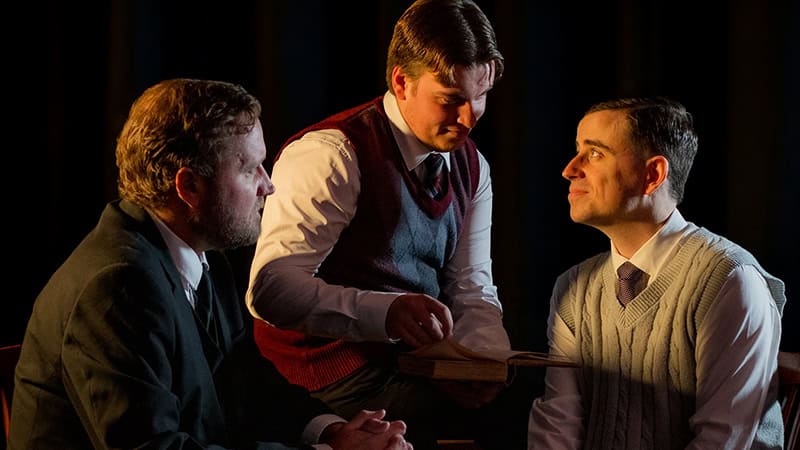
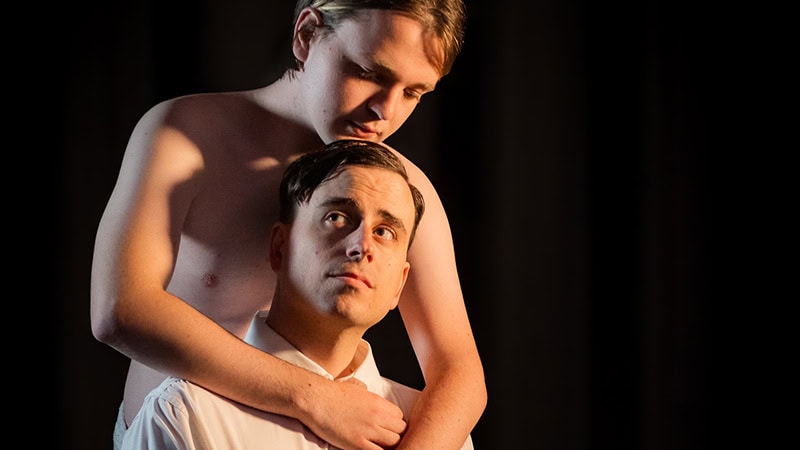
The emotional depth of the play lies particularly in the people who shaped Turing’s inner life. Christopher Morcom, his school friend and first profound emotional attachment, leaves a lasting imprint after his early death, influencing Turing’s fascination with consciousness and mortality. Later relationships reveal further dimensions of longing and intimacy, including the tenderness and betrayal of Ron Miller, Pat Green’s sincere hope for companionship, and the fleeting freedom Turing experiences with Nikos in Greece.
At its core, Breaking the Code is not simply about genius, but about the personal cost of honesty in a society unwilling to accept it. Turing’s refusal to deny his sexuality led to prosecution, chemical castration, and lasting professional and personal consequences. His persecution has since become emblematic of a broader historical injustice.
The 2017 “Alan Turing Law,” which granted posthumous pardons to thousands convicted under historic anti-homosexuality laws in the United Kingdom, stands as both recognition and reminder. Progress may be possible, but the ethical questions raised by Turing’s story remain relevant.
In an era shaped by debates around identity, human rights, surveillance, and artificial intelligence, Turing’s legacy feels strikingly contemporary. His work laid the foundations for modern computing and AI, and his image now appears on the British £50 note. Breaking the Code, however, insists on looking beyond the mythology to reveal the man himself – brilliant, awkward, witty, lonely, contradictory, and deeply human.
Melville Theatre Company brings together an accomplished ensemble to tell Turing’s story. Thomas Dimmick appears in the central role, capturing both the mathematician’s formidable intellect and the vulnerability beneath his achievements.
Patrick Downes portrays Detective Mick Ross, whose encounters with Turing challenge his sense of duty, while Grace Edwards plays Pat Green, whose kindness offers Turing rare acceptance and human connection.
Anna Head plays Turing’s mother, Sara, with emotional nuance, while Martin Forsey appears as cryptographer Dillwyn Knox, one of the first to recognise and encourage Turing’s talent at Bletchley Park.
The supporting cast further enriches the production. Nicholas Mountain appears as government official John Smith, Jack Riches as Ron Miller, Nate Tonkin as Christopher Morcom, and Jamie Brooker as Nikos. Together, they illuminate the relationships, hopes, and losses that shaped one of the century’s most remarkable minds.
The production is directed by multi-award-winning Barry Park, whose work has long engaged with queer storytelling and LGBTQ+ themes. His previous productions include The Lisbon Traviata, The Normal Heart, Beautiful Thing, The York Realist, The Boys in the Band, and M. Butterfly. This sustained engagement brings particular insight to Breaking the Code, situating Turing’s story within a broader cultural history of queer lives lived under scrutiny and repression.
Presented by arrangement with ORiGiN Theatrical on behalf of Samuel French, a Concord Theatricals Company, Breaking the Code promises an intimate and thought-provoking theatrical experience.
The production will play at 7.30pm: 26, 27 June, 3, 4, 9, 10, 11 July and 5.00pm: 28 June, 5 July. Tickets are on sale now.