

Premium Content:

Hilary Swank says trans actor would have been "more right" in 'Boys Don't Cry'

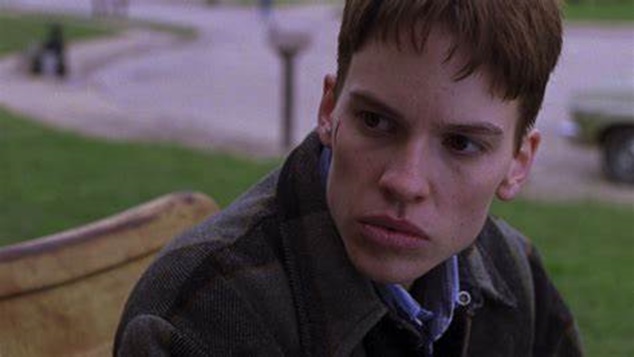
Twenty years after she won the Best Actress statue at the Academy Awards, Hilary Swank has reflected on the role that propelled her into Hollywood’s A-list saying if the film was made today it would definitely have a trans actor in the lead role.

- Advertisement -

Boys Don’t Cry which tells the real life story of transgender man Brandon Teena came out in 1999, and Swank picked up her award the following year. Now in an interview with Variety Swank says the film was made in a different time, and if it was made today there is no way she’d be cast in the part.

Swank says that unlike today where trans roles are being given to actors who have the lived experience, back in the late 90’s they weren’t any well known trans actors.

“I mean, trans people weren’t really walking around in the world saying, ‘Hey, I’m trans.’

“Twenty-one years later, not only are trans people having their lives and living, thankfully. We still have a long way to go in their safety and their inclusivity.

“But we now have a bunch of trans actors who would obviously be a lot more right for the role and have the opportunity to actually audition for the role.”

Swank said she was glad the Academy of Motion Pictures Arts and Sciences has recently announced new guidelines which mean that films that do not embrace diversity and inclusion will not be eligible for awards, saying it can only be good for storytelling and ensuring everyone is represented on screen.

After picking up her Academy Award in 2000 Swank got a second statuette in 2004 for her role in Million Dollar Baby. In 2019 Boy’s Don’t Cry was added to the US Library of Congress recognising it as a work of cultural significance.

OIP Staff


Love OUTinPerth Campaign

Help support the publication of OUTinPerth by contributing to our
GoFundMe campaign.
 

Latest

Largest trans sex and health survey highlights resilience and progress

The second Australian Trans and Gender Diverse Sexual Health Survey paints an encouraging picture of progress in Australia.

On This Gay Day | Australia updated passport gender rules

The changes were brought in by the Gillard Labor government.

The Last Mile | HIV diagnoses in Australia show more work needed to reach some groups

Australia has achieved global HIV testing and treatment targets, but late diagnoses and disparities among key communities remain.

Calls for Wear It Purple Day to be banned

Former ACT principal Janelle Rowe says opposition to Wear It Purple Day led to her resignation and prompts calls for schools to ban the initiative.

Newsletter

Don't miss

Largest trans sex and health survey highlights resilience and progress

The second Australian Trans and Gender Diverse Sexual Health Survey paints an encouraging picture of progress in Australia.

On This Gay Day | Australia updated passport gender rules

The changes were brought in by the Gillard Labor government.

The Last Mile | HIV diagnoses in Australia show more work needed to reach some groups

Australia has achieved global HIV testing and treatment targets, but late diagnoses and disparities among key communities remain.

Calls for Wear It Purple Day to be banned

Former ACT principal Janelle Rowe says opposition to Wear It Purple Day led to her resignation and prompts calls for schools to ban the initiative.

Alan Carr honoured by the British television industry

Alan Carr was left emotional after receiving the National Television Awards' Special Recognition Award during a surprise presentation by friends.

Largest trans sex and health survey highlights resilience and progress

The second Australian Trans and Gender Diverse Sexual Health Survey paints an encouraging picture of progress in Australia.

On This Gay Day | Australia updated passport gender rules

The changes were brought in by the Gillard Labor government.

The Last Mile | HIV diagnoses in Australia show more work needed to reach some groups

Australia has achieved global HIV testing and treatment targets, but late diagnoses and disparities among key communities remain.
