

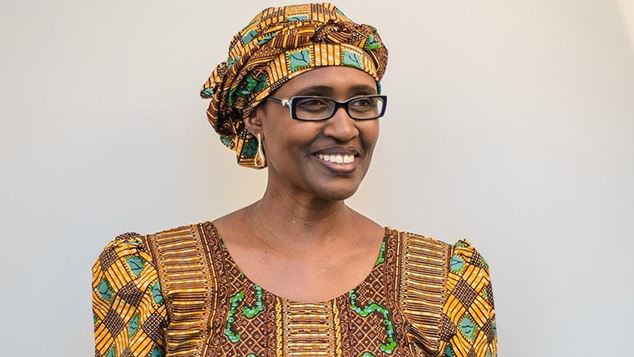
UNAIDS Executive Director Winnie Byanyima has delivered a message on International Human Rights Day saying recognising human rights is central to tackling the challenges of HIV around the world.

Human rights are key to ending AIDS and have been at the heart of every struggle and every success we have had since the beginning of the epidemic.
Without us demanding our human rights and the tireless call to ensure that human rights remain central to the AIDS response, we would not have more than 24 million people on treatment today and four in five people living with HIV would not know their HIV status. Vulnerable and marginalized populations and people living with HIV would not have access to stigma-free health care or the ability to hold governments to account.
Yet the AIDS response is not over, and barriers to human rights remain. HIV is still an epidemic of inequality, stigma, discrimination and violence. Where people’s rights are breached, they are at higher risk of infection and are less likely to take an HIV test or to be on treatment.
Key populations now account for 54% of new infections globally―75% of new infections outside of sub-Saharan Africa. Globally, in 2018, 6000 adolescent girls and young women became infected with HIV every week. Let me be clear, these communities are not being left behind―they are being pushed behind, by laws, policies and practices that are created, enacted and implemented.
Intersecting forms of discrimination and inequality push women in key populations to experience unique vulnerabilities and barriers. We know, for example, that women who use drugs are disproportionately incarcerated and are at higher risk of HIV than their male counterparts.
Sex workers, gay men and other men who have sex with men, transgender people and people who use drugs face harsh and unforgiving barriers in the form of criminal laws. These laws increase stigma and discrimination and stop people accessing harm reduction and HIV testing, treatment and prevention services. They prevent communities from coordinating and working together, they isolate and render communities invisible and they increase levels of violence.
These laws affect lives and the rights of people and communities to equality, health, privacy, family and even life itself.
But, in a stroke of the pen we could reverse this. Decriminalization of sex work could reduce between 33% and 46% of new HIV infections among sex workers and their partners over 10 years. New evidence in sub-Saharan Africa has shown that knowledge of HIV status among gay men and other men who have sex with men who were living with HIV was three times higher in countries with more supportive laws for lesbian, gay, bisexual, transgender and intersex people, and countries that decriminalize drug use and provide harm reduction see HIV infections plummet among people who use drugs.
This is no longer about a need for evidence―it’s about leadership, political courage and action.
The first obligation of a country for its human rights is “respect”―the obligation to respect, not breach, people’s human rights. By keeping such criminal laws in place, we are failing at the first hurdle.
The law should protect, not persecute, the most vulnerable and must support, not sabotage, public health and human rights efforts.
This Human Rights Day, I call on all of us to look at our own laws and create a justice system that protects, rather than breaches, the human rights of the people who are being left behind.
Winnie Byanyima
Executive Director of UNAIDS
Under-Secretary-General of the United Nations