

Prime Minister Anthony Albanese has bowed to public pressure and announced that a federal Royal Commission will be held in to the events leading up to the Bondi terrorist attack that occurred in December 2025.
At the same time the government has vowed to bring in new laws that protect Australian’s from hate speech.

Opposition leader Sussan Ley, who has been issuing daily demands for a Royal Commission, says the focus however should be solely on Islamic extremism and antisemitism and should ignore calls for protections from hate speech relating to sexuality and gender.

Independent MP Allegra Spender, who represents the New South Wales seat of Wentworth, responded saying an approach that encompassed all forms of hate speech was needed.
“Stopping all hate speech must be part of our response to December 14. Words that seek to drive hate create the context for violent extremism.
“I am and have been advocating for laws to criminalise hate speech whether based on race, religion, sexuality or other characteristics.” Spender said on social media platform X.
The call for a more wide ranging inquiry was met with a blunt response from the Australian Jewish Association who said the idea of protections for LGBTIQA people had already been rejected by both sides of politics.
“Please don’t use the murder of Jewish people at a Chanukah event to push your ‘LGBTQIA’ laws which have already been rejected by both sides of politics.” the group said.
The baton was then picked up by Sky News presenters who had a message for Australia’s LGBTIQA+ communities. Speaking on The Great Debate Sky News host Kel Richards said the response to the Bondi attacks should only be directed at Islamic extremism and serious vilification based on race.
“It doesn’t need to cover the LGBTQ.” Richards argued. “The LGBTQ community, without being unkind to them, are inclined to think that whatever is happening is about me, me, me, me, make something about this about me, it’s got to cover me, and look after me all of the time.”
“I’m sorry its not about you. Its about the wider community and the Jewish community, so get over that and accept that it’s not about you.” was Richards’ message for LGBTIQA+ people around the country.
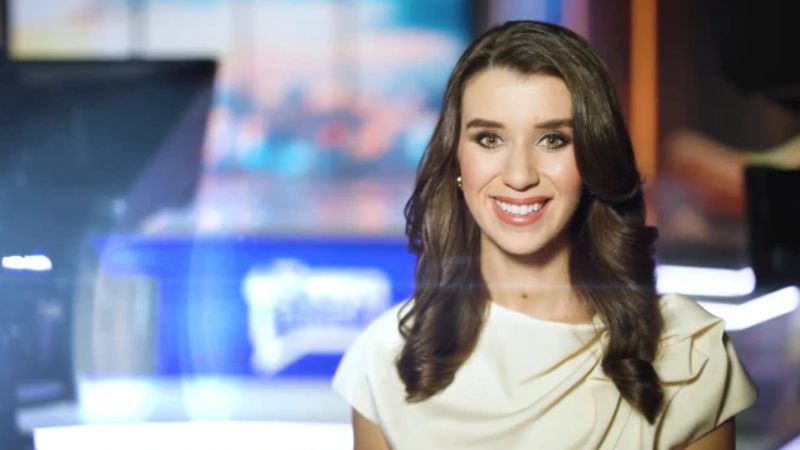
Colleague Freya Leach said she believed that protections against hate speech should not extend to sexuality because it would impinge on free speech and religious freedom.
“When you add in things like LGBT protections, that is just not the core issue at the moment, we had an antisemitic terror attack that killed 15 people only a couple of weeks ago, that is what we should be focusing on.
‘Once you start adding LGBT protections into hate speech laws it has massive implications for freedom of religion and the kinds of stuff you can preach in churches, and that is just not a core issue that we need to be dealing with right now.” Leach said.
While the Australian Jewish Association has taken an anti-LGBTIQA+ stance, other Jewish groups including the Executive Council of Australian Jewry have called for a more wide ranging approach that encompasses other minority groups.
LGBTIQA+ Community groups call for a inclusive approach
Today multiple LGBTIQA+ groups called on the government’s response to be one that serves all Australians. They highlighted that Australia’s LGBTIQA+ community was also showing growing rates of vilification and violent assaults.
Equality Australia Legal Director Heather Corkhill said there was disagreeing that protections were needed against antisemitic hate speech, but the Jewish community were not alone in facing growing levels of hate speech and violence.
“Strengthening protections against antisemitic hate speech is vital, but those protections must apply to all forms of hate.
“Extremist groups such as neo-Nazis target multiple communities, and the government must take this opportunity to protect every Australian affected by hate.
“We are seeing an alarming rise in violent, deliberately targeted attacks against LGBTIQ+ people and others, driven by a dangerous and deeply entrenched form of hatred.
“These threats are real, persistent and escalating, and the need for stronger, comprehensive protections against hate and vilification has never been more urgent.” Corkhill said.
“The government can send a clear message that hatred and division have no place in Australia by guaranteeing protection for every community targeted by hate.
“Getting hate laws right requires care and consideration. These are complex reforms that should not be rushed – and all affected communities need a seat at the table.”
Corkhill said the federal government missed an opportunity to stamp out serious forms of hate in February last year.
“The federal government failed to take a decisive stand against hate when it excluded serious vilification from its Hate Crimes Bill.
“As a result, LGBTIQ+ people and other minority communities remain unprotected from those who deliberately spread hatred, contempt and abuse.
“Criminalising incitement to violence while turning a blind eye to the rhetoric and harassment that fuels it is a superficial fix which fails to deal with an underlying cause.”
Leading health organisation Thorne Harbour Health said the government risk creating a significant gap in protections when it was needed the most.
““Thorne Harbour Health welcomes the government’s commitment to strengthening Australia’s hate speech and anti-vilification laws in response to antisemitism and racism.” said Acting CEO Kent Burgess.
“But if these reforms do not explicitly include LGBTIQ+ communities, they will leave a significant gap in protection at a time when our communities are facing serious and escalating anti-LGBTIQ+ hate. We urge the government to protect all Australians who are vulnerable to harmful vilification.”
The message was echoed by New South Wales based organisation ACON.
“”While there is a pressing need to address antisemitism and protect members of the Jewish community, any community that is vulnerable to hate deserves the full protection of the law, and that must include LGBTQ+ people.” said Justin Koonin, President of ACON.
“Across Australia, our communities continue to be subjected to hate speech, both online and in public spaces, with serious consequences for health, safety and wellbeing.
“We know this is not abstract; national research shows that more than one in three LGBTIQ+ Australians have experienced verbal abuse, and one in four have faced harassment in a single year because of who they are.
“LGBTIQ+ people have the right to live free from fear, violence, discrimination and vilification. We strongly urge the federal government to ensure that sexuality and gender diverse communities are explicitly included in any hate speech and vilification reforms.”
Sydney Gay and Lesbian Mardi Gras, Trans Justice Project, the Justice and Equity Centre, Transcend, Albany Pride, and Rainbow Futures also called for federal government action.
Hannah Halls from Albany Pride said people in her community had been experiencing ongoing hate speech.
“In Albany, Western Australia we have experienced first-hand the terrible impact that occurs when hate speech is used to increase division within the community. For three elections in a row have seen hate speech that encourage people to fear and reject LGBTIAQ+ people based on nothing more than outdated, unfounded and prejudiced stereotypes.” Halls said.
“The increase of this hate speech has led to increased experiences of prejudice and aggression from strangers in public spaces, more exposure to discriminatory language within family, workplaces, schools and online. This reduces the sense of safety and wellbeing, increases pressures on mental health and makes it even harder for young LGBTIAQ+ people to be safe and thrive in the region.
“It is critical that the government enact legal protections from hate speech and vilification on the basis of sexuality, gender identity, and innate variations in sexual characteristics.”
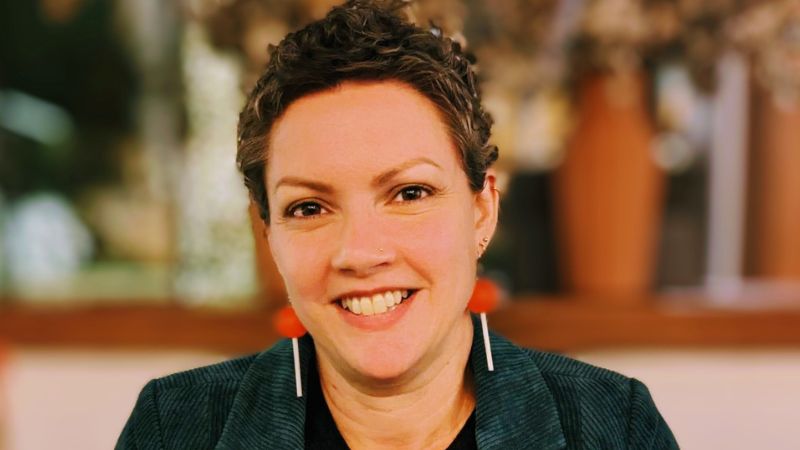
Dr Misty Farquar, CEO of Western Australia’s peak body for LGBTIQA+ communities said it was clear hate speech directed at the LGBTIQA+ communities was on the rise.
“LGBTIQA+ hate speech is certainly not new, but it’s on the rise and there is genuine concern within the community about it worsening in line with current US and UK politics.
“It’s particularly rife online, but people are increasingly experiencing it in person as well. Expanding federal and state-based protections against this is important for all individuals and communities experiencing structural inequalities.” Dr Farquhar said.
Prominent LGBTIQA+ Australians highlight that Jewish and LGBTIQA+ communities overlap and have shared history and experiences.
“The Bondi attack was an act of hatred against the Jewish community. History tells us that what starts with the Jews extends to other groups. The extremist ideologies that target Jews also target LGBT+ people and other minorities. In the Nazi death camps the Jews wore yellow Stars of David. Those deemed “Homosexuals” wore pink triangles.” the letter noted.
“As LGBTQIA+ people we know what it is like to experience fear, including fear of violence. Many among us remember when it was common for groups of young men to engage in “gay bashing” as a weekend sport, roaming the streets hunting Rainbow people in packs. Transgender people, “butch” lesbians and same-sex couples holding hands also suffered from this targeted violence.
“Much has been done to rebuild trust between law enforcement and the Rainbow community. Similarly, a Royal Commission will have the time and resources to take submissions from the Jewish community on the rebuilding of trust and confidence in the capacity of security services and police nationally to address community concerns.
“As Rainbow people we share with Jewish people a history of condemnation, rejection and persecution by key social institutions. At the personal level, Rainbow people have a shared history with Jewish people of fearing a negative reaction if we reveal our identity to a new friend or employer. This fear of rejection, hostility or personal violence is rampant now in Australia among Jewish people.”
Among the signatories are prominent Australians including Jennifer Westacott, Dr Kerryn Phelps, and several people who, like McCrossin, marched in the first Mardi Gras in 1978.
Rodney Croome from rights group Just.Equal said laws should cover all forms of hate.
“We endorse better laws against anti-Semitism, but they should also protect against other forms of hate as well.”
“If we only guard against one form of hate it send the message that other forms of hate are somehow more legitimate.” Croome said.
The Australian Jewish Association has been contacted for comment.