

Major landmarks across Australia will be lit up in green and blue to mark National Stroke Week, which begins tomorrow.

The Big Banana in Coffs Harbour, the Story Bridge in Brisbane, Adelaide’s Convention Centre and the Bell Tower in Perth are among a number of key destinations to proudly don the Stroke Foundation colours during this major awareness week.
Stroke is one of Australia’s biggest killers and a leading cause of disability. Each year an estimated 27,000 people experience their first stroke, which is one stroke every 19 minutes.
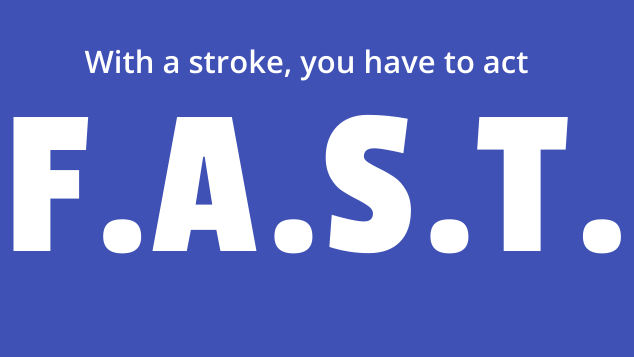
This National Stroke Week (August 8-14) Stroke Foundation is encouraging the community to learn the F.A.S.T (Face, Arms, Speech, Time) message to ensure more people recognise when a stroke is happening and call triple zero (000) for urgent help immediately.
Most strokes show one or more signs mentioned in the F.A.S.T. acronym.
Receiving emergency medical treatment quickly gives more people the chance to survive to keep enjoying life’s precious moments after stroke – Precious Moments is this year’s Stroke Week theme.
For survivor of stroke Peter Hocking, a precious moment was receiving his modified car to help restore his independence and confidence.
“I will always remember the day I picked up my car. Stroke has become part of my life, just like anything else. I don’t let it dominate my life, I have just learned to live with it,” Mr Hocking said.
A busy working mum-of-two young kids, Shazia Haider will be forever grateful to her husband Sadiq for knowing the F.A.S.T signs, recognising she was having a stroke, and calling an ambulance immediately.
“My family are the most precious things in my life. My children are happy, healthy and are my driving force. I am so grateful for a second chance on life,” Mrs Haider said.
Stroke Foundation Chief Executive Officer Sharon McGowan says she is grateful for the support of the Australian cities which are lighting their landmarks to draw attention to the way stroke impacts communities.
“Stroke can happen to anyone, of any age, at any time. Stroke takes a person out of their community, and that might be for a short time, or permanently – the impact is always far reaching for families, for workplaces, and for community groups,” she said.
“The good news is that stroke can be treated, and people can recover well but only if more people can recognise the F.A.S.T message. Calling an ambulance at the first sign of stroke saves and reduces life long disability.
Lighting up so many Australian landmarks to raise awareness of stroke will emphasise that this is something we should all take notice of.”
She reiterated why the F.A.S.T. acronym is so important.
“The message is simple – time is brain. The faster a stroke is treated, the better the chance of recovery. The first step is recognising the F.A.S.T signs of stroke and calling triple zero (000).”
Think F.A.S.T and ask these questions if you suspect a stroke:
- Face – Check their face. Has their mouth drooped?
- Arms – Can they lift both arms?
- Speech – Is their speech slurred? Do they understand you?
- Time – Time is critical. If you see any of these signs, call triple zero (000) straight away
This National Stroke Week, Stroke Foundation is encouraging Australians to share the F.A.S.T message with others – through conversations, social media, by getting creative and holding a virtual event.
It is also an opportunity for stroke survivors to share their own precious moments on social media using #StrokeWeek or for workplaces or community groups to book an online StrokeSafe presentation.

You can support our work by subscribing to our Patreon
or contributing to our GoFundMe campaign.