

Born in Frankfurt in 1867, then part of Prussia, George Cecil Ives was an early campaigner for homosexual law reform.
He was the illegitimate son of English army officer Gordon Maynard Ives and Jane Violet Tyler. He was raised in England by his paternal grandmother, Emma Ives, the daughter of the 3rd Viscount Maynard.

As a young man, Ives developed an interest in cricket and went on to become a first-class cricketer. He also played for a cricket club made up of authors but later resigned after hearing fellow players make violent and prejudicial comments about homosexuals.
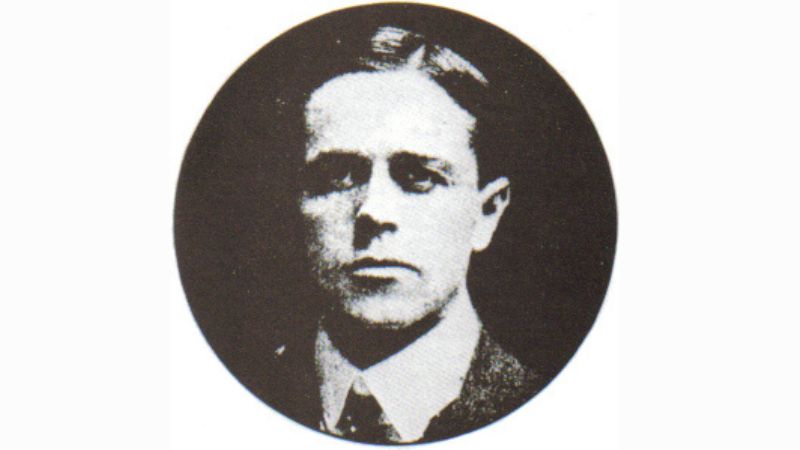
Ives was a member of the Humanitarian League, which was regarded as a radical advocacy group, and he began speaking publicly about the oppression of homosexual people.
He met Oscar Wilde in 1892 but was disappointed when Wilde declined to become involved in advocacy. The following year, Ives had a brief affair with Lord Alfred “Bosie” Douglas, who was also Wilde’s lover.
In 1897, Ives founded the Order of Chaeronea, a secret society of homosexuals who met to discuss law reform and social injustice. No formal membership records survive, but it is believed the group had more than 300 members, mostly men, though some lesbians were also involved.
In 1914, alongside Edward Carpenter, Magnus Hirschfeld, Lawrence Housman and others, Ives helped form the British Society for the Study of Sex Psychology.
During his lifetime, Ives wrote extensively on penal methods throughout history and travelled widely while researching prisons and law reform.
Ives died in London in 1950 at the age of 82. He left behind a substantial archive, and in 1977 his papers were acquired by the Harry Ransom Center at the University of Texas at Austin.