


In 1991 Salt-n-Pepa urged us to talk about sex
Rappers Salt-N-Pepa scored one of their biggest hits in 1991 with Let’s Talk About Sex. The song encouraged people to have open and honest discussions about sex and challenged restrictions on sexual topics in popular media.
Released at the height of the AIDS crisis, the trio also recorded an alternative version of the song titled Let’s Talk About AIDS, which more directly addressed the spread of the disease and encouraged people to confront misconceptions and stigma surrounding it.

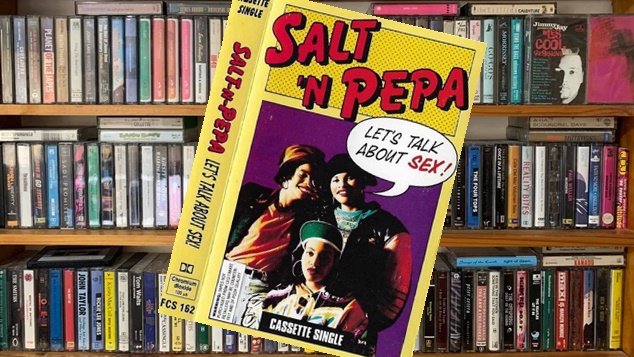
The song was written by the group’s producer, Hurby Azor, and heavily samples The Staple Singers’ 1970s hit I’ll Take You There.
MP Wilson Tuckey made controversial comments about HIV in 1988
In 1988, activists, medical professionals and politicians converged for the Third National Conference on HIV/AIDS, which ran from 4 to 6 August.
At the time, Western Australian Liberal MP Wilson Tuckey was the shadow health spokesperson. In an address to delegates, Tuckey described AIDS as the result of “unnatural activity”.
“AIDS is very much a disease that results from deliberate and possibly unnatural activity. You don’t catch AIDS, you let someone give it to you,” Tuckey said.
Tuckey argued that, rather than spending money on HIV education, governments should consider introducing HIV blood testing among gay men, comparing the proposal to random breath testing for motorists. He also questioned why people diagnosed with HIV were entitled to keep their medical information private.
The speech generated significant controversy. It prompted discussion in the media and on talk-back radio, including commentary that blamed people living with HIV for the spread of the disease.
In Perth, The Sunday Times published a controversial opinion piece by radio broadcaster Howard Sattler, who argued that gay men and intravenous drug users were responsible for acquiring the disease.
“It is a case of, if the implication fits, wear it. AIDS ‘victims’ … who acquired the disease through homosexuality or intravenous drug use are guilty of a dangerous act which they could have prevented. They also suffer from their own mistakes, unlike their medically acquired counterparts, who were fatally misled by a health service they believed was beyond reproach,” Sattler wrote.
Within a month, Tuckey was replaced as the Coalition’s health spokesperson.
The Westside Observer reported extensively on the controversy.
“Professor John Dwyer, who was attacked by Tuckey at the National Conference on AIDS in Hobart recently, slammed the proposals, charging that Tuckey would be responsible for many more Australians dying if funds were diverted from education on a large scale.”
The report also quoted Dwyer as saying the proposal was unworkable and that gay men “might as well wear pink triangles”.
Michelle Kosky, who was director of the WA AIDS Council at the time, told The Westside Observer:
“I’d like to think that it (Tuckey’s demotion) was due to his remarks at the National Conference, but my feeling is that he was an inappropriate person to be the shadow minister for health.”
Tuckey remained in Parliament until he was defeated at the 2010 federal election by Nationals candidate Tony Crook.
Andy Warhol was born on this day
Andy Warhol first came to prominence during the late 1950s and became one of the leading figures of the Pop Art movement. His work explored the relationship between advertising, consumerism and celebrity culture.
His best-known works include the Campbell’s Soup Cans series and his screen prints of celebrities such as Marilyn Monroe and Elvis Presley.
Warhol founded Interview magazine, made films including Chelsea Girls and Empire, and produced recordings by the influential experimental rock band The Velvet Underground.
Warhol also surrounded himself with a circle of creative personalities he dubbed “Warhol Superstars”. Among them were Edie Sedgwick, Candy Darling, Ultra Violet, Jayne County, Joe Dallesandro and Holly Woodlawn. Lou Reed’s song Walk on the Wild Side references several of the figures who moved through Warhol’s creative world during the 1960s and early 1970s.
His work has since become extraordinarily valuable. In 2008, his painting Eight Elvises reportedly sold for around USD$100 million, while Silver Car Crash (Double Disaster) fetched approximately USD$105 million in 2013.
Warhol was just 58 years old when he died unexpectedly in 1987 while recovering in hospital from gallbladder surgery.
Throughout much of his life, Warhol kept a diary. From 1976 until just five days before his death, he began each weekday by telephoning his friend Pat Hackett. She recorded their conversations and later transcribed them.
Warhol also used this diary system to track his personal spending, carefully recording how much he spent each day.
His diary eventually grew to more than 20,000 pages. Following his death, a condensed edition of the diaries was published and remains a fascinating insight into his life, work and social circle.