


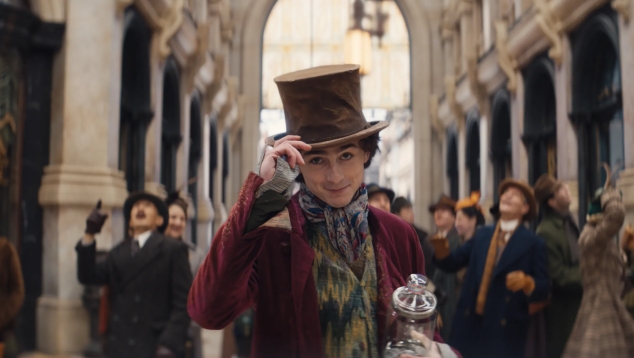
Wonka | Dir: Paul King | ★ ★ ★ ★

Roald Dahl’s 1964 book Charlie and the Chocolate Factory has been made into two unforgettable films – Willy Wonka and the Chocolate Factory in 1971 with Gene Wilder as the crazy, scary chocolatier and Charlie and the Chocolate Factory in 2005 with Johnny Depp as a wacky Wonka overseeing his chocolate empire.
The Willy Wonka characters in both these previous films were quite scary. Although the films appealed to children and adults alike, they were morality tales to teach children lessons about greed, ingratitude, selfishness and dishonesty, with Wonka punishing naughty children and rewarding the good.
Now Timothée Chalamet teams up with Paul King, the director of the Paddington movies, in a Wonka origin story that takes audiences into “a world of pure (singing and dancing) imagination”. While displaying the quirkiness of his older incarnation, Chalamet’s Wonka is charming, naïve and full of dreams for his future.
Wonka arrives in an anonymous whimsical city with the dream of setting up a chocolate factory, though it seems that he can magically conjure up the sweet treats at will. Unfortunately the town’s Chocolate Cartel doesn’t want anyone competing with their chocolate selling businesses.
Dahl’s stories always have a nasty element and this comes out in the cartel consisting of Slugworth (Paterson Joseph), Fickelgruber (Mathew Baynton) and Prodnose (Matt Lucas). They pay the head of the town’s police (Keegan-Michael Key) in chocolate to remove Wonka which only results on an on-going gag about the police chief’s increasing size.
There are more baddies and some good people who are co-opted to help Wonka in his quest, but no children in the main roles except for the orphan Noodle (Calah Lane). Then there is the orange Oompa Loompa (Hugh Grant) who steals Wonka’s chocolate as well as every scene he is in.
Feeling more like a musical theatre production than a film, Wonka is loaded with special effects to make it a sweet (had to say it), warm-hearted film about making your dreams come true.
Lezly Herbert

You can support our work by subscribing to our Patreon
or contributing to our GoFundMe campaign.