


A world-first study has found an education approach used widely by sport organisations to stop harmful homophobic behaviour and other forms of discrimination is ineffective.

Published in the British Journal of Sports Medicine, the Monash University study evaluated the effectiveness of using professional rugby athletes to deliver education to young people about the harm caused by their behaviour.
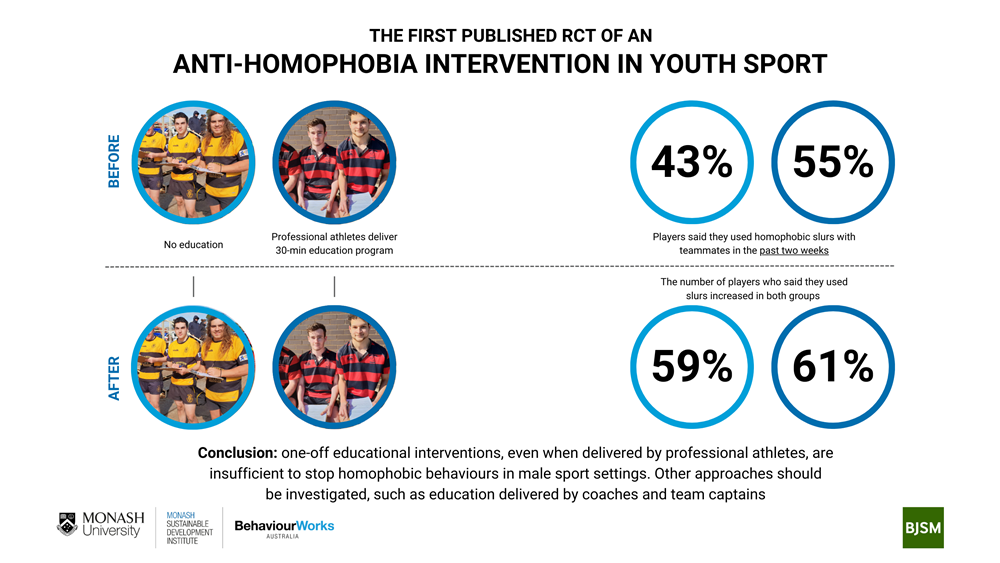
The study found this ‘go to’ approach for prejudice reduction had no effect on the homophobic language, which continued to be used by 61% of the athletes who had received the education.

Lead author and Monash University Behaviour Science Laboratory researcher Erik Denison said the volunteer coaches were not enforcing existing policies to protect children from harmful homophobic behaviours, and without the support of coaches, education programs for young athletes would fail.
“Sports organisations often use professional athletes to deliver education to children about the harm caused by homophobic, sexist, or racist language. This is the first study to test whether this approach is effective,” Dr Denison said.
“Unfortunately, we found no changes to the frequent use of homophobic language by the teenage athletes in our study.”
In order to change homophobic behaviours, the study recommends sport leaders and governments ensure coaches in children’s sport are enforcing policies which prohibit discriminatory and harmful behaviour.
“We found coaches were not supporting the education that was being delivered by the professional athletes. The coaches, who are volunteers, were not enforcing policies which ban this very harmful language,” Dr Denison said.
“This is concerning because the constant use of homophobic language in youth sport is harmful to the mental health of all children, regardless of their sexuality.”
The International Olympic Committee has also found the frequent use of homophobic language by peers and coaches in sport puts children at higher risk of suicide, self-harm, and sexual abuse.
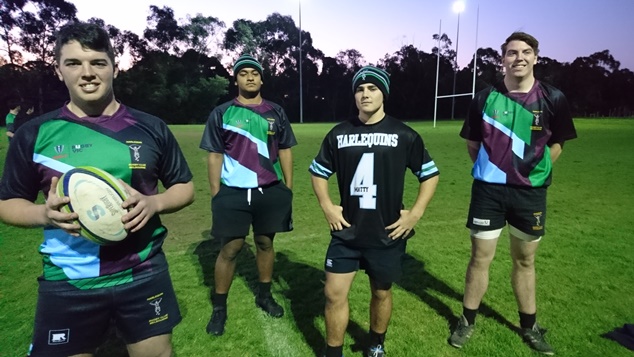
Every rugby union team (total population) in Victoria with players, aged 16 to 20, took part in the research, which was supported by the Australian Government, Rugby Australia and Rugby Victoria.
The study measured the frequency of homophobic language used by the rugby players before and after the education was delivered. The behaviour on teams that received the education was then compared to the behaviour of teams that did not receive the education.
“The study offers the latest evidence supporting the need for sport leaders to take strong action to stop discrimination in sport, but they are unlikely to take this firm action without government intervention,” Dr Denison said.
“Studies consistently find sport leaders view ending discriminatory behaviours as optional, and a distraction from delivering their sport and winning games.”
Former Melbourne Rebels Captain Tom English, who was one of six professional rugby players who helped deliver and co-develop the education, said more needs to be done to change behaviours.
“I think we still have a lot of work to do to change this language and change what the boys think is acceptable behaviour in rugby and in sport,” English, who now plays professional rugby in Japan, said.
“People use this language to prove they are tough and a ‘man.’ Regardless of the reasons, players need to understand this language is hurtful, that it is deterring people from playing rugby, and also causing young people to try to hurt themselves.”
The study’s findings support the conclusions of the IOC that multi-pronged intervention strategies are needed to stop discrimination in sport, which should include education delivered by respected peers.
This is the first study to test the effectiveness of ‘diversity’ and ‘sensitivity’ training in sport, but the results are consistent with similar studies conducted in workplaces and schools.
Source: Media Release, images Monash University.

You can support our work by subscribing to our Patreon
or contributing to our GoFundMe campaign.