


Alfred Kinsey’s reports on human sexuality were groundbreaking when they were first released in the 1940s.
Alfred Kinsey’s reports on human sexuality were groundbreaking when they were first released in the 1940s.

Kinsey was an American sexologist, biologist and professor of entomology and zoology. He founded the Institute for Sex Research at Indiana University.
In 1948, Kinsey released his landmark study into male human sexuality. The report introduced the Kinsey Scale, which ranked men’s sexuality on a scale of zero – exclusively heterosexual – to six – exclusively homosexual.
Kinsey suggested that around 10 percent of men are gay, a statistic that remained influential in public discourse for decades.
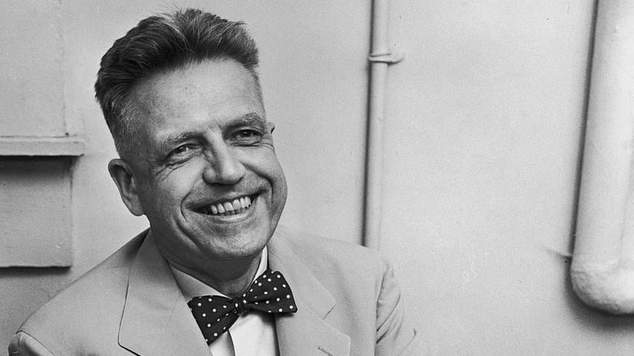
His research was highly controversial at the time of its release, and some of his methods have since been questioned. However, his work is widely regarded as foundational in the field of sexology.
Five years later, he followed his report on male sexuality with a study of female sexuality. His work is credited with contributing to changing public attitudes about how women experience sexual pleasure.
A 2016 review of sexuality research argued that Kinsey’s reports may have overestimated the proportion of people who are non-heterosexual.
The release of the report in 1948 sparked widespread public interest, and Kinsey made a significant impact on popular culture. His work is referenced in Cole Porter’s song Too Darn Hot.
Kinsey, who was bisexual, had an open marriage with his wife, Clara. Accounts suggest that as a young man he struggled with homoerotic feelings, but later came to accept his sexuality.
He died in 1956 at the age of 62. His life was dramatised in the 2004 film Kinsey, in which actor Liam Neeson portrayed the researcher.
In 2019, he was named as one of the 50 inaugural pioneers, trailblazers and heroes inducted into the USA’s National LGBTQ Wall of Honour at the Stonewall National Monument.
Alan Turing was born on this day in 1912
Alan Turing is widely regarded as the father of theoretical computer science and artificial intelligence. The work of the English mathematician, computer scientist, logician, cryptanalyst, philosopher and theoretical biologist was not fully recognised until years after his death.
Born in London, he was raised in southern England. His father worked in India for the British Civil Service but wanted his children to be educated in England, so Turing was sent to live with a retired army couple.
He studied mathematics at King’s College, Cambridge, after winning a scholarship. He later continued his studies at Princeton University in the United States, where he earned a PhD.
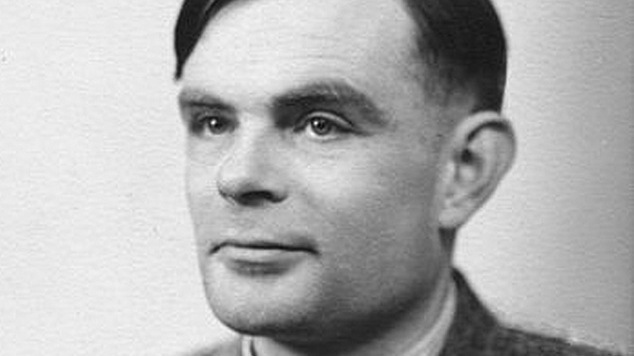
During World War II, Turing was involved in codebreaking work at Bletchley Park and played a key role in several breakthroughs that are often credited with helping to shorten the war. He went on to work on some of the earliest computers, and his theories contributed significantly to the development of computing.
In 1952, Turing was prosecuted for gross indecency after it was discovered that he was homosexual. He accepted chemical castration as an alternative to imprisonment. Two years later, he died by suicide at the age of 41.
In 2009, following an online campaign, British Prime Minister Gordon Brown issued a public apology for the way Turing had been treated.
“Thousands of people have come together to demand justice for Alan Turing and recognition of the appalling way he was treated. While Turing was dealt with under the law of the time and we cannot put the clock back, his treatment was, of course, utterly unfair. I am pleased to have the chance to say how deeply sorry I and we all are for what happened to him. So, on behalf of the British government, and all those who live freely thanks to Alan’s work, I am very proud to say: we are sorry, you deserved so much better,” the British prime minister said.
In 2013, Queen Elizabeth II granted him a posthumous pardon. In 2017, the British government apologised to all people who had been prosecuted under historical laws and created a pathway for their convictions to be removed. This legislation is commonly referred to as Alan Turing’s Law.
Turing now appears on the Bank of England’s fifty-pound note and has been honoured through statues, awards and portrayals in film and television.