


Singapore’s annual Pink Dot celebration took place on Saturday 27 June.
The event traditionally involves people gathering for a nighttime celebration and shining torches covered with pink cellophane into the sky to show support for the LGBTIQA+ communities. The colour pink was chosen because it is created when you mix the red and white of the Singaporean flag.

Pink Dot was originally created to draw attention to the lack of law reform in Singapore, where colonial-era British laws meant homosexuality was still illegal. In 2022, after decades of campaigning, the government finally removed the laws, while at the same time introducing new legislation to prevent the progress of marriage equality.
While decriminalisation has progressed, the local LGBTIQA+ community continues to highlight ways the lives of Singaporeans can be improved. This year was the event’s 18th edition.
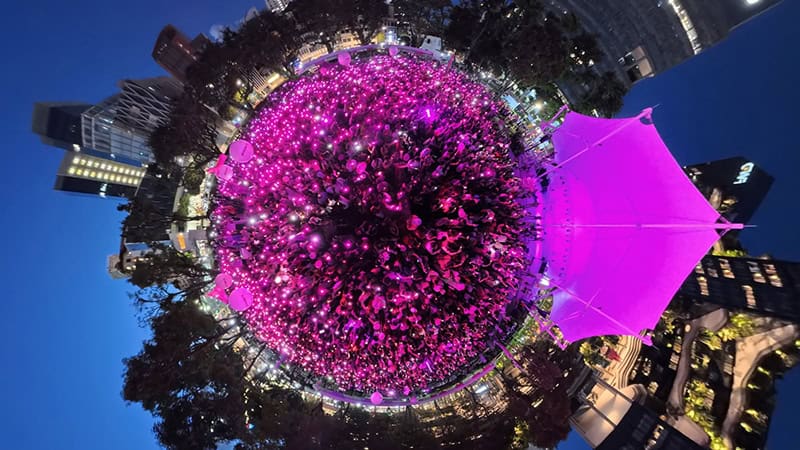
In Singapore Hong Lim Park is the only location where citizens are permitted to express political opinions in the form of protest or demonstration. The Pink Dot event took over the entire park with thousands of people flocking to visit stalls from community groups, enjoy entertainment and listen to speeches.
The even is strictly for Singaporean citizens and permanent residents only, foreigners are not permitted to attend, but can show their support from outside the barricaded areas.
The 2026 theme as ‘Come get personal’, and atendees were encouraged to make new friends and speak to people they have never met before, so they can connect with experiences beyond their own.
Pink Dot spokesperson Andee Tay told local media outlets that the theme aimed to remind people that behind the issues being discussed were the lives of real people.
“A lot of Singaporeans probably have never met a queer person, don’t understand the realities and the experiences that queer people in Singapore live, and we want to bring that back into the park, we want to create an opportunity for people to come and get personal with the queer community in Singapore,” he said.
In previous years the event has been built around events taking place on a centre stage, but this year organisers opted for a different set up where a series of smaller and more intimate talks and performances occurred. Following the decriminalisation of homosexuality in Singapore one of the biggest changes at the annual event is more politicians are attending and getting to know constituents who are part of the LGBTIQA+ community.