


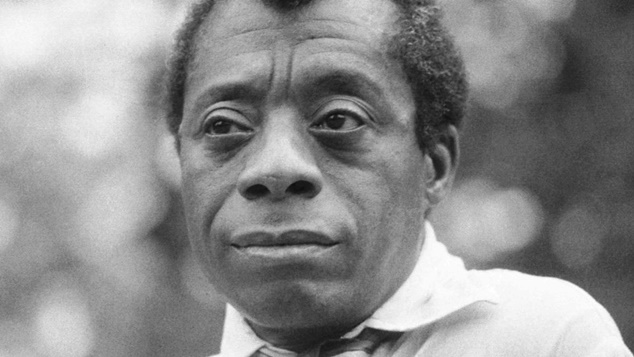
Author James Baldwin was born in 1924
James Baldwin was born on this day in 1924 in Harlem, New York City. Baldwin would become a celebrated author whose characters often sought acceptance within society. He included gay and bisexual men as characters in many of his works.
Baldwin wrote essays, plays and novels, frequently exploring themes of race, masculinity, sexuality and class. His first novel, Go Tell It on the Mountain, was released in 1953 and is largely autobiographical, focusing on the role of the Pentecostal Church in the lives of African Americans.

Baldwin’s second novel, Giovanni’s Room, was released in 1956 and tells the story of an American man living in Paris while exploring the city’s gay bars. The novel is widely regarded as an influential work in discussions of sexuality and identity and was published several years before the Stonewall riots.
Baldwin continued to feature gay and bisexual characters in later novels, including Another Country (1962) and Tell Me How Long the Train’s Been Gone (1968).
In the 1960s, Baldwin was a prominent contributor to the civil rights movement and later published the book-length essay No Name in the Street, which reflected on his friendships with Sidney Poitier, Martin Luther King Jr., Malcolm X and Medgar Evers, all of whom were assassinated.
Baldwin’s 1974 novel If Beale Street Could Talk was adapted into a film in 2018. During his life, Baldwin counted Nina Simone, Marlon Brando, Jean Genet, Toni Morrison, Miles Davis, Richard Avedon and Jean-Paul Sartre among his friends, along with many other leading creative and literary figures.
He died in Paris in 1987 after battling stomach cancer. He is widely regarded as one of the most important writers of the 20th century.
In June 2019, he was one of the inaugural 50 American “pioneers, trailblazers and heroes” inducted into the National LGBTQ Wall of Honor at the Stonewall National Monument.
Author William Burroughs died in 1997
William S. Burroughs was a leading figure of the Beat Generation and a major postmodern author whose work had a significant influence on popular culture. Before publishing his first books, Burroughs lived a turbulent life that took him across several countries and brought repeated encounters with the law.
While studying English and anthropology at Harvard University, he frequently travelled to New York on weekends, exploring lesbian bars in Harlem and the gay underground of Greenwich Village.
In the 1930s, Burroughs moved to Europe and attended medical school in Vienna. There he immersed himself in the city’s vibrant LGBTQ culture and met Ilse Klapper, a Jewish woman seeking to escape Nazi persecution. Although they were never romantically involved, Burroughs married Klapper to help her immigrate to the United States. The couple soon divorced but remained friends for many years.
Burroughs enlisted in the US Army during the Second World War in 1942. By the following year he was living in New York, where he developed a drug addiction that would remain with him throughout much of his life. During this period he became friends with Allen Ginsberg and Jack Kerouac, whose work helped establish the Beat Generation and influenced later counterculture movements.
In 1944, Burroughs began living with Joan Vollmer. She already had a daughter from a previous relationship, and the couple later had a son together. Both struggled with addiction and mental health challenges. After spending time in Louisiana and Texas, they relocated to Mexico following Burroughs’ conviction for forging a doctor’s prescription.
Biographers have described Burroughs and Vollmer’s life in Mexico City as increasingly strained. According to several accounts, Burroughs resumed relationships with men while Vollmer struggled with alcoholism.
In 1951, during an evening in a Mexico City bar, Burroughs reportedly suggested performing a “William Tell” routine. Vollmer placed a glass on her head and Burroughs fired a pistol, fatally striking her. He was later convicted of homicide in absentia after leaving Mexico before the conclusion of legal proceedings.
While awaiting trial, Burroughs worked on material that would later become Queer.
Following his departure from Mexico, Burroughs spent several months in South America searching for yagé, a psychoactive plant whose effects fascinated him. His correspondence with Allen Ginsberg from this period formed the basis of The Yage Letters, published in 1963.
Burroughs’ first book, Junkie, was published in 1953. Queer followed later. He subsequently relocated to Tangier, Morocco, where he spent four years writing Naked Lunch.
The novel became celebrated for its experimental structure but also faced obscenity challenges because of its depictions of drug use and homosexuality. In Massachusetts, legal proceedings ultimately determined the work was not obscene.
After achieving literary success in the 1960s, Burroughs lived in Paris and London before returning to the United States during the 1970s. In the early 1980s he settled in Kansas.
Among his best-known novels are The Soft Machine, Nova Express, The Ticket That Exploded and The Wild Boys.
Burroughs was admired by many musicians, including David Bowie, Kurt Cobain, Ian Curtis, Tom Waits, Patti Smith and Genesis P-Orridge.
In his later years he frequently collaborated with musicians, recording Seven Souls with Bill Laswell and working with Disposable Heroes of Hiphoprisy, Kurt Cobain, Kris Novoselic, R.E.M., Yellow Magic Orchestra and Spring Heel Jack.
Although many critics described Burroughs’ novels as difficult to adapt, several reached the screen.
In the 1980s, director Russell Mulcahy planned to create a film adaptation of The Wild Boys. Duran Duran recorded material connected to the project, but the film never materialised. Mulcahy instead directed Arena, a concert film featuring the band.
In 1991, David Cronenberg directed an adaptation of Naked Lunch starring Peter Weller, Judy Davis, Ian Holm and Roy Scheider. While commercially unsuccessful, it received strong critical reviews and later achieved cult status.
Director Luca Guadagnino found greater commercial success with his 2024 adaptation of Queer, starring Daniel Craig, Drew Starkey, Jason Schwartzman and Lesley Manville.
William S. Burroughs died on 2 August 1997 at the age of 83 after suffering a heart attack the previous day.
Photograph of James Baldwin by Allan Warren published under Creative Commons 3.0 SA.
This post was originally published on 2nd August 2020 and has been updated.