

On this day in 2015, the LGBTIQ+ community gathered outside the US Supreme Court to anxiously await the decision in Obergefell v. Hodges. The stakes were high. If the nine-judge bench voted in favour of Ohio man Jim Obergefell, marriage equality would be achieved across the country.
The landmark decision saw the court rule that it is unconstitutional for states to ban same-sex marriage. The decision, delivered 5-4 in favour of allowing same-sex couples to marry, established that regardless of where couples live in the USA, they have the right to wed.

“The court now holds that same-sex couples may exercise the fundamental right to marry. No longer may this liberty be denied to them,” Justice Anthony Kennedy wrote in the majority opinion.
“No union is more profound than marriage, for it embodies the highest ideals of love, fidelity, devotion, sacrifice and family. In forming a marital union, two people become something greater than once they were,” Justice Kennedy wrote. “As some of the petitioners in these cases demonstrate, marriage embodies a love that may endure even past death.”
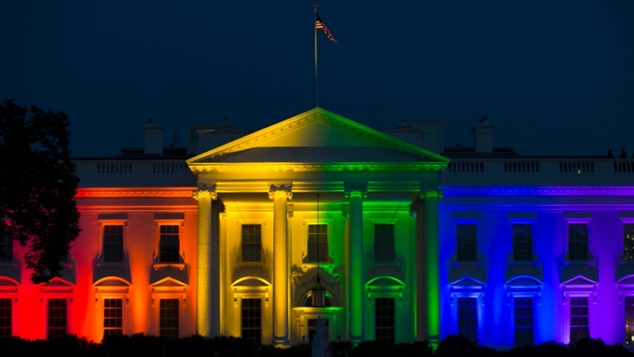
JJustice Kennedy was joined by Ruth Bader Ginsburg, Stephen G. Breyer, Sonia Sotomayor and Elena Kagan. The five justices in favour of marriage equality authored a single opinion.
All four of the court’s more conservative justices dissented. Chief Justice John G. Roberts Jr., along with Justices Antonin Scalia, Clarence Thomas and Samuel A. Alito Jr., each wrote separate dissenting opinions.
Delivering his dissent, Chief Justice Roberts argued that the decision should have been made through the political process rather than through the courts. He described the issue as having been taken from the people.
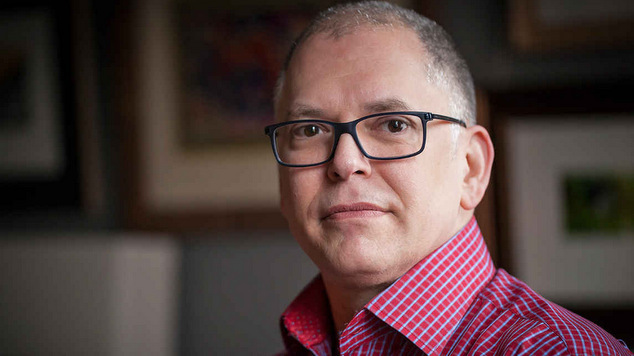
Shortly after the ruling, President Barack Obama called Jim Obergefell and thanked him for fighting for recognition of his marriage.
Jim Obergefell has been described as an accidental activist. More than 20 years earlier, he fell in love with John Arthur. The couple lived in Cincinnati, Ohio, where LGBT people were often discriminated against, including being arrested or dismissed from their jobs because of their sexuality.
In 2013, Jim and John travelled to Maryland, where same-sex marriage was legal, and exchanged vows. John was dying from the neurodegenerative disease Amyotrophic Lateral Sclerosis (ALS). They were married aboard a private plane chartered for the journey.
However, their union was not recognised in Ohio. John’s death certificate would have listed him as a single man, and Jim would not only have had to mourn the loss of his husband but also face the denial of their shared life.
The couple met civil rights lawyer Al Gerhardstein, and together they began a long and challenging legal battle. John died just five days after they were married.
Jim continued the fight for recognition of their union. By the time the case reached the Supreme Court, it had grown to include several other couples. Jim Obergefell became the lead plaintiff.
Reflecting on the day of the ruling, Obergefell told OUTinPerth:
“On that day, being the 26th of June, we were more optimistic about the ruling. June 26 has been an important date for the community in the US. We were feeling positive that morning.
“When we were standing outside the courthouse, a police officer was handing out tickets for entry. Instead of being bright orange, the ticket that morning was lavender. It felt like a sign that we might be getting good news.
“Once I got to the courtroom, I was feeling optimistic.”
Outside the Supreme Court, supporters celebrated the decision. Obergefell later spoke to the media and received a call from President Barack Obama.
Later in the day President Obama addressed the nation and commented on the historic legal decision. Speaking from the Rose Garden at The White House, President Obama said it was a day when America should be proud.
“This ruling will strengthen all of our communities by offering to all same sex couples the dignity of marriage all across this great land.” President Obama said.
“This ruling is a victory for Jim Obergefell and the other plaintiffs in the case. Its a victory for gay and lesbian couples who have fought so long for their basic civil rights. It’s a victory for their children, whose families will now be recognised as equal to any other.
“It’s a victory for the allies and friends and supporters who spent years, even decades, working and praying for change to come. And this ruling is a victory for America.
“This decision affirms what millions of Americans already believe in their hearts. When all Americans are treated as equal we are all more free.” President Obama said in his address describing the union of America as a “little bit more perfect” because of the ruling.
“That’s the consequence of a decision from the Supreme Court, but more importantly it’s the consequence of the countless small acts of courage of millions of people, across decades, who stood up, who came out, who talked to parents. Parents who loved their children no matter what. Folks who were willing to endure bullying and taunts, and stayed strong, and came to believe in themselves and who they were.
“And slowly made an entire country realize that love is love.” President Obama told the American people.
The ruling allowed LGBTI couples in all 50 states of the USA the ability to wed. The decision was described as the biggest changes to marriage laws in the USA since the court struck down bans on inter-racial marriages five decades earlier.
Fourteen states had implemented bans against same-sex marriage; Alabama, Arkansas, Georgia, Kentucky, Louisiana, Michigan, Mississippi, Missouri, Nebraska, North Dakota, Ohio, South Dakota, Tennessee and Texas.
Read OUTinPerth’s interview with Jim Obergefell.
Graeme Watson, this post was first published in 2021.