


Opera singer Peter Pears passed away on this day in 1986, aged 75. His career was closely linked with his partner, composer Benjamin Britten; they worked together and were a couple for nearly 40 years.
The English tenor performed more than ten different roles in operas written by Britten, and the pair were also highly regarded as recitalists of works by other composers, especially the lieder of Schubert and Schumann.

Pears began performing and made his first recording in the 1930s. He met Britten in 1936 through a mutual friend. When their friend was killed in a car crash in 1937, they volunteered to clear his cottage of possessions, and it was during those few days that their friendship — initially platonic — was cemented.
Two years later, the pair travelled to North America, and it was during this time that they became romantically involved. Britten began writing song cycles for Pears, and they collaborated closely, remaining a couple until their respective deaths.
In 1948 the couple created the Aldeburgh Festival in a small seaside community in Suffolk. It still runs today and is a major cultural event in the region. Pears was awarded a CBE in 1957 and was knighted in 1978.
Britten died of congestive heart failure in 1976, aged just 63. Pears died a decade later in Aldeburgh, aged 75. He was buried next to Britten in the local church.
Take a look at this concert the pair delivered for the BBC in 1964; the recital focuses on traditional English songs.
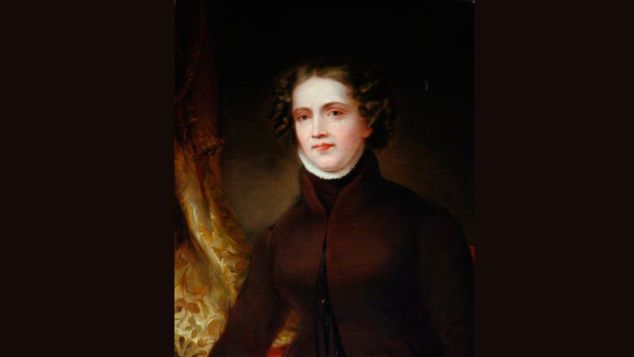
‘Gentleman Jack’ Anne Lister was born in 1791
Anne Lister was a remarkable 19th‑century English landowner, diarist, and mountaineer who defied the norms of her time.
Born in Halifax, West Yorkshire, on April 3, 1791, Lister was an accomplished scholar and linguist, fluent in several languages. Her diaries, written in a combination of English and a coded shorthand, provide a fascinating insight into her life, including her relationships with women and her quest to find a life partner.
Lister inherited her family’s estate, Shibden Hall, in 1826 and became one of the wealthiest landowners in the area. She was known for her unconventional lifestyle, dressing in masculine clothing and pursuing same‑sex relationships in secret.
Her relationship with her partner, Ann Walker, was a central theme in her diaries, which she kept meticulously and often in great detail. She documented everything from her financial affairs to her intimate thoughts and feelings, giving readers a vivid picture of life in 19th‑century England.
Lister was also an avid traveller and mountaineer. She climbed numerous peaks throughout Europe, including Mont Blanc and the Vignemale, becoming one of the first women to do so. She recorded her mountaineering adventures in her diaries, offering a unique perspective on the early days of the sport.
Lister’s diaries were written in a code she developed herself, which she called her “crypt hand.” The code, designed to protect her private thoughts, was not deciphered until many years after her death. Today, the diaries are considered a valuable historical resource, providing a glimpse into the life of a woman who consistently defied social expectations.
By the time of her death, she had written 26 volumes of her diary, and it was many years before people were able to crack the codes she used to keep her personal life secret.
Lister died on September 22, 1840, at the age of 49 while travelling in Georgia. She was buried in the local cemetery there, but her remains were eventually returned to Halifax and interred in the Lister family vault at Halifax Parish Church. She is now remembered as a pioneering feminist and LGBTIQ icon whose life and writings continue to inspire people around the world.
The television series Gentleman Jack recounts her life, with Suranne Jones playing Lister and Sophie Rundle portraying Ann Walker.
Axel Axgil was born in 1915
Axel Axgil was a Danish LGBTIQA+ rights campaigner. Alongside his partner, Eigil Axgil, he was part of the first gay couple to enter into a registered partnership when Denmark became the first country in the world to introduce civil unions.
Born Axel Lundahl‑Madsen in 1915, he later changed his surname to Axgil — a combination of both his and his partner’s first names. In 1948 the couple formed Denmark’s first LGBTIQA+ rights organisation, originally called F‑48, which later became the Danish National Association of Gays and Lesbians.
The couple also launched a queer magazine, Vennen, which translates as The Friend.
On 1 October 1989, Axel and Eigil made history when they became the first couple to enter into a registered partnership. They had been together for 40 years. In 2013 Axel Axgil was named by Equality Forum as one of the 31 Icons of Gay History Month, and Denmark’s annual Rainbow Awards are known as The Axgils.
Eigil Axgil passed away in 1995 at the age of 73. In 2012 a biography revealed that in 1943 he had enlisted in the Waffen‑SS during the Nazi occupation of Denmark, remaining in service until the end of the war. The revelation sparked angry responses from the local LGBTIQA+ community.
Axel Axgil died in 2011 at the age of 96.
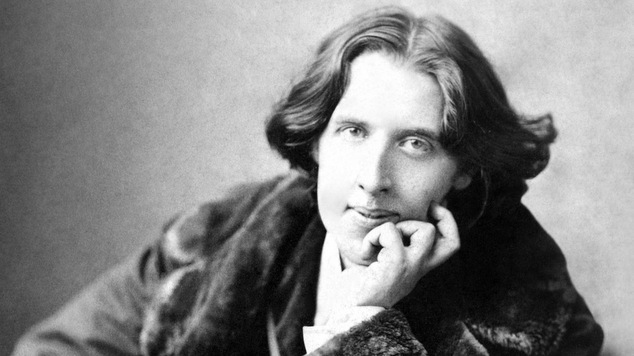
In 1895 the Oscar Wilde libel trial began
On this day in 1895, a libel trial between author Oscar Wilde and the Marquess of Queensberry began at the Old Bailey in London.
On 18 February, the Marquess of Queensberry left his calling card at Wilde’s club, the Albemarle, inscribed “For Oscar Wilde, posing somdomite,” a misspelling of “sodomite.”
Wilde had a homosexual relationship with Lord Alfred “Bosie” Douglas, the son of the Marquess. At the time, such a relationship was against the law, and any public suggestion that someone was gay could lead to public shaming and potential arrest.
Encouraged by Douglas, and against the advice of his friends, Wilde initiated a private prosecution of Queensberry, which resulted in the Marquess being arrested for criminal libel. If found guilty, he would have faced up to two years in prison.
The case became a cause célèbre as salacious details of Wilde’s private life were aired in court. Queensberry argued that his accusation was true, and to prove his case he hired investigators to seek out sex workers from London’s Victorian underground who had interacted with Wilde in the past.
At the trial, Wilde was questioned about his association with young men from lower social classes. When the defence announced they had several witnesses willing to testify that they had been engaged by Wilde as sex workers, the author withdrew the charges. Subsequently, the Marquess of Queensberry was acquitted.
After Wilde left the court, a warrant was issued for his arrest on charges of sodomy and gross indecency. Wilde was arrested on 6 April, and authorities moved quickly to put him on trial. The case against him opened on 26 April, just weeks after he had been charged.
When the jury was unable to reach a verdict, Wilde was released on bail, but the government persisted with the charges. He returned to court the following month, where a judge found him guilty of gross indecency.
In sentencing Wilde, Mr Justice Wills described the maximum penalty as “totally inadequate for a case such as this,” calling it “the worst case I have ever tried.”
Wilde was sentenced to two years’ hard labour, which included walking a treadmill and separating fibres from scraps of old navy rope. He was released from prison in 1897 and immediately sailed to France, never to return to the United Kingdom.
He died three years later, on 30 November 1900, after contracting meningitis. He is buried in Paris.
In 1995 Wilde was commemorated with the installation of a stained‑glass window in Poets’ Corner at Westminster Abbey. In 2017 Wilde was one of 50,000 men pardoned for historical homosexual offences under what is informally known as the Alan Turing law. Wilde’s poems, novels, and plays have remained enduringly popular since his death.
OIP Staff, this post was first published in 2021 and subsequently updated. AI technology was used to generate sections of this post.