

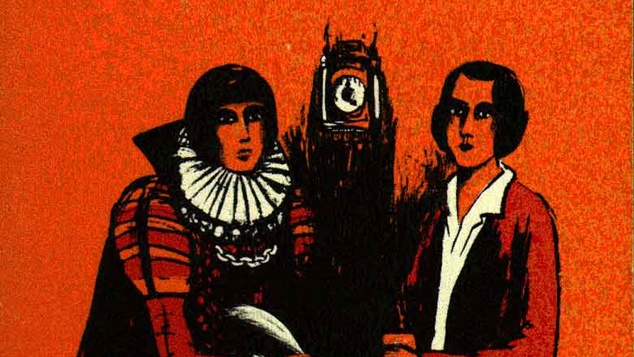
In 1928, Virginia Woolf’s ‘Orlando: A Biography’ was released
In 1928, Virginia Woolf’s Orlando: A Biography was published.
Author Virginia Woolf released her satirical novel Orlando: A Biography on this day in 1928. One of Woolf’s most popular works, it tells the story of a poet who becomes a woman and lives for several centuries.

Considered a feminist classic, the novel is also widely regarded as an early literary exploration of gender fluidity and is often interpreted as a transgender allegory. In the story, Orlando is a male nobleman living during the reign of Elizabeth I. At around the age of 30, he suddenly awakens to find he has become a woman. Orlando then lives for another 300 years without ageing, encountering numerous historical figures across the centuries.
Woolf was inspired by the tumultuous family history of her friend and lover, Vita Sackville-West. Both women were members of the Bloomsbury Group, a collection of writers, academics and philosophers who embraced progressive ideas about sexuality, gender and society.
The work has been adapted for both stage and screen. Actor Miranda Richardson starred in a 1989 theatrical adaptation created by director Robert Wilson and writer Darryl Pinckney. Sally Potter’s 1992 film adaptation starred Tilda Swinton as Orlando and Quentin Crisp as Queen Elizabeth I.
A second theatrical adaptation was created by playwright Sarah Rahul. Following its American debut, the Sydney Theatre Company staged a production starring Jacqueline McKenzie.
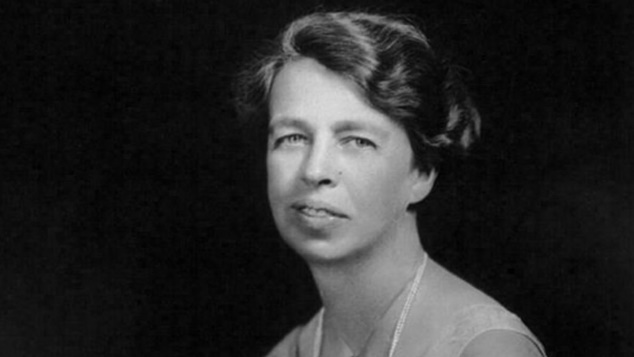
Eleanor Roosevelt was born in 1884
Eleanor Roosevelt was born on this day in 1884, a member of the prominent Roosevelt and Livingston families. She was a niece of US President Theodore Roosevelt.
Her early life was marked by tragedy. Both her parents and one of her brothers had died by the time she was 15 years old. She was educated at a British boarding school and, upon returning to the United States, married her distant cousin, Franklin D. Roosevelt.
Her husband went on to become the 32nd President of the United States. During her time as First Lady, Eleanor Roosevelt became known for her outspoken advocacy on civil rights and social justice issues. She was the first presidential spouse to regularly give speeches, hold press conferences, write newspaper columns and host a radio programme. At times, she held views that differed from those of her husband.
Following Franklin Roosevelt’s death in office in 1945, she remained politically active. President Harry S. Truman appointed her as a United States delegate to the United Nations, where she became the first chair of the United Nations Commission on Human Rights. During her time at the UN, Roosevelt played a key role in drafting the Universal Declaration of Human Rights.
Later, she chaired President John F. Kennedy’s Presidential Commission on the Status of Women.
During her lifetime, she also authored more than 25 books.
While the couple had six children, Roosevelt also formed close friendships with women and wrote deeply personal letters to them. Historians have long debated the nature of her relationship with journalist Lorena Hickok. Their correspondence has led some biographers and scholars to suggest that Roosevelt may have been bisexual or that the relationship was romantic.
Eleanor Roosevelt died in 1962 at the age of 78.
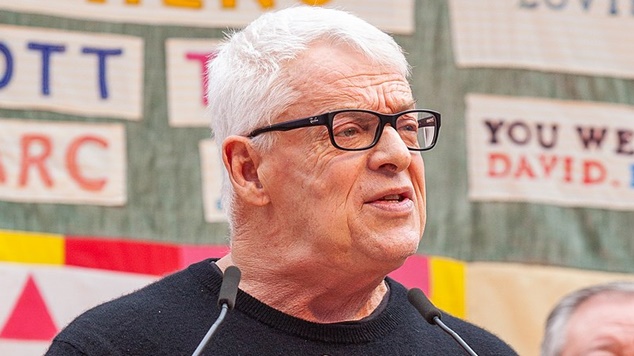
LGBTIQA+ rights activist Cleve Jones was born in 1954
rominent LGBTQIA+ rights activist Cleve Jones was born on this day in 1954.
Jones’ work as an activist began in the 1970s when he became friends with Harvey Milk. He later worked as an intern in Milk’s office.
In 1982, he co-founded the San Francisco AIDS Foundation, which has grown to become one of the largest HIV support organisations in the world.
In 1985, at a memorial for Harvey Milk, Jones proposed the idea of a memorial quilt to honour people lost to the AIDS epidemic. In 1987, he created the quilt’s first panel in honour of his friend, Marvin Feldman.
The project grew to become the world’s largest community art project, with more than 94,000 panels created, each representing a person who died as a result of AIDS.
Jones has also spoken publicly about his own experiences of living with HIV. In the film Milk, he is portrayed by Émile Hirsch.
Jones’ autobiography When We Rise, which documents the fight for LGBTQIA+ rights, was later adapted into a television miniseries. Guy Pearce and Austin P. McKenzie both portrayed Jones at different stages of his life.
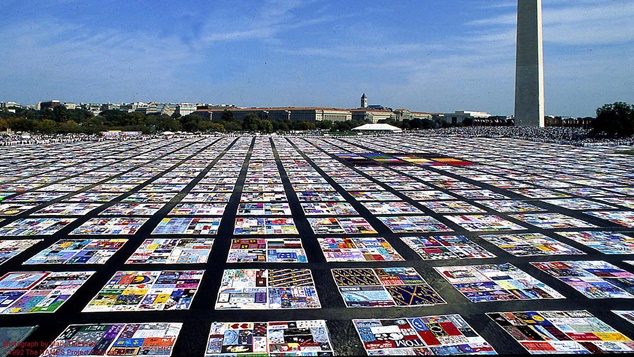
The first showing of the AIDS Quilt also took place on this day, in 1987. It was presented in Washington as part of a national march for gay and lesbian rights. At the rally in 1987 the Reverend Jesse Jackson addressed the crowd calling for more funding for AIDS research and assistance, and end to violence against gay and lesbian people and civil rights protections.
The following year the USA’s National Coming Out Day was established on the same day, and October was declared Gay History Month.
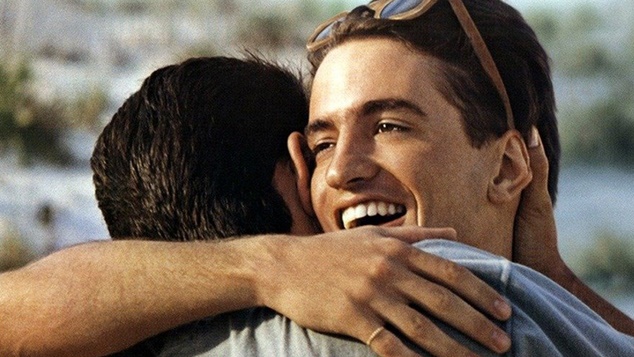
In 1989 the film ‘Longtime Companion’ was released
Longtime Companion was the first film, that was widely released, that dealt with the AIDS crisis in the 1980s.
Directed by Norman Rene, it starred Bruce Davison, Campbell Scott, Patrick Cassidy and Mary-Louise Parker. The film takes it name from the euphemism the New York Times would use to describe the partners of men who died of AIDS-related illness.
The story charts a group of friends whose lives and friendships are dramatically changed with the discovery of HIV and AIDS.
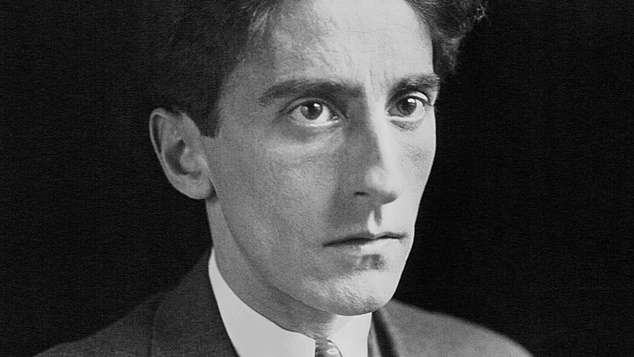
Jean Cocteau died on this day in 1963
Cocteau was an author, playwright, poet, designer, filmmaker, visual artist and critic. Born in 1889 he never hid his homosexuality and his sexuality was central to many of his works.
Cocteau died, aged 74, after a period of ill health. His close friend singer Edith Piaf died the day before, but her death was not announced until the morning on the 11th of October.
Image of Cleeve Jones by Pax Ahimsa Gethen – Own work, CC BY-SA 4.0, image of the AIDS Quilt By US National Institutes of Health.